Al-Najjar Waleed, Krabbe David, Strandberg Joakim, Sunnerhagen Katharina S
Borås hospital, Region Västra Götaland, Borås, Sweden; Section for Clinical Neuroscience, Institute of Neuroscience and Physiology, the Sahlgrenska Academy, University of Gothenburg, Gothenburg, Sweden.
Borås hospital, Region Västra Götaland, Borås, Sweden; Department of Rehabilitation medicine, Sahlgrenska University Hospital, Gothenburg, Sweden.
J Rehabil Med. 2025 Jan 8;57:jrm40718. doi: 10.2340/jrm.v57.40718.
To evaluate the usefulness of electromyography at a polio clinic in identifying unperceived muscle denervation. Second, to compare people who perceived themselves as weak in 1 or both legs with those who did not.
Cross-sectional study.
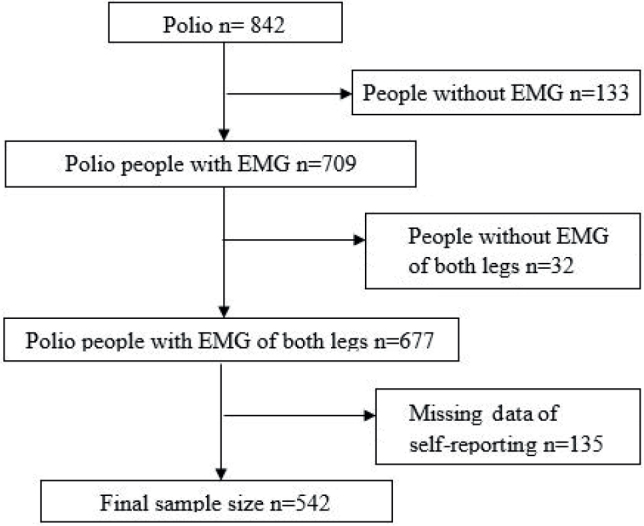
The study included 542 persons with late effects of polio in Sweden. Mean age 58 at the first visit, 312 were female. Data used are from a clinical quality registry.
At the first visit patients answered sent-out questionnaires. They underwent an electromyography test, walk test, and muscle strength assessment.
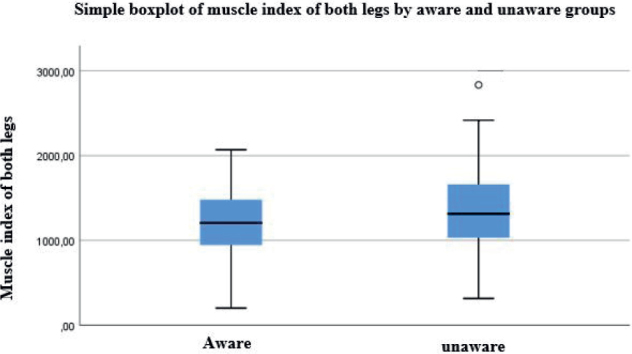
Electromyography identified signs of chronic neurogenic changes in lower limb muscles (n = 260) where the patient reported no previous involvement, comprising 239 of the participants. Significant differences in values shows that the group who did not perceive themselves as weak exhibited better performance, demonstrating greater speed, strength, and reduced reliance on wheelchairs.
Electromyography can identify signs of muscle denervation in association with weakness in people with late effects of polio who perceived themselves as healthy. This comparison suggests that those that do not perceive weakness may unknowingly overuse their muscles. These findings contribute to our understanding of the late effects of polio and importance of early detection and rehabilitation.
评估在一家脊髓灰质炎诊所进行肌电图检查以识别未被察觉的肌肉失神经支配的效用。其次,比较自认为单腿或双腿无力的人与不这么认为的人。
横断面研究。
该研究纳入了瑞典542名有脊髓灰质炎后遗症的患者。首次就诊时的平均年龄为58岁,其中312名女性。所使用的数据来自一个临床质量登记系统。
患者在首次就诊时回答发放的问卷。他们接受了肌电图测试、步行测试和肌肉力量评估。
肌电图检查发现下肢肌肉存在慢性神经源性改变的迹象(n = 260),而患者此前报告这些部位未受累,其中包括239名参与者。数值上的显著差异表明,自认为不虚弱的组表现更好,展现出更快的速度、更强的力量以及对轮椅的依赖减少。
肌电图检查可以在自认为健康的脊髓灰质炎后遗症患者中识别出与无力相关的肌肉失神经支配迹象。这种比较表明,那些未察觉到虚弱的人可能在不知不觉中过度使用了他们的肌肉。这些发现有助于我们理解脊髓灰质炎后遗症以及早期检测和康复的重要性。