Chow Dana, Matungwa Dunstan J, Blackwood Elizabeth R, Pronyk Paul, Dow Dorothy
Duke-NUS Medical School, Singapore.
National Institute for Medical Research (NIMR), Mwanza, Tanzania.
Glob Ment Health (Camb). 2024 Dec 16;12:e1. doi: 10.1017/gmh.2024.149. eCollection 2025.
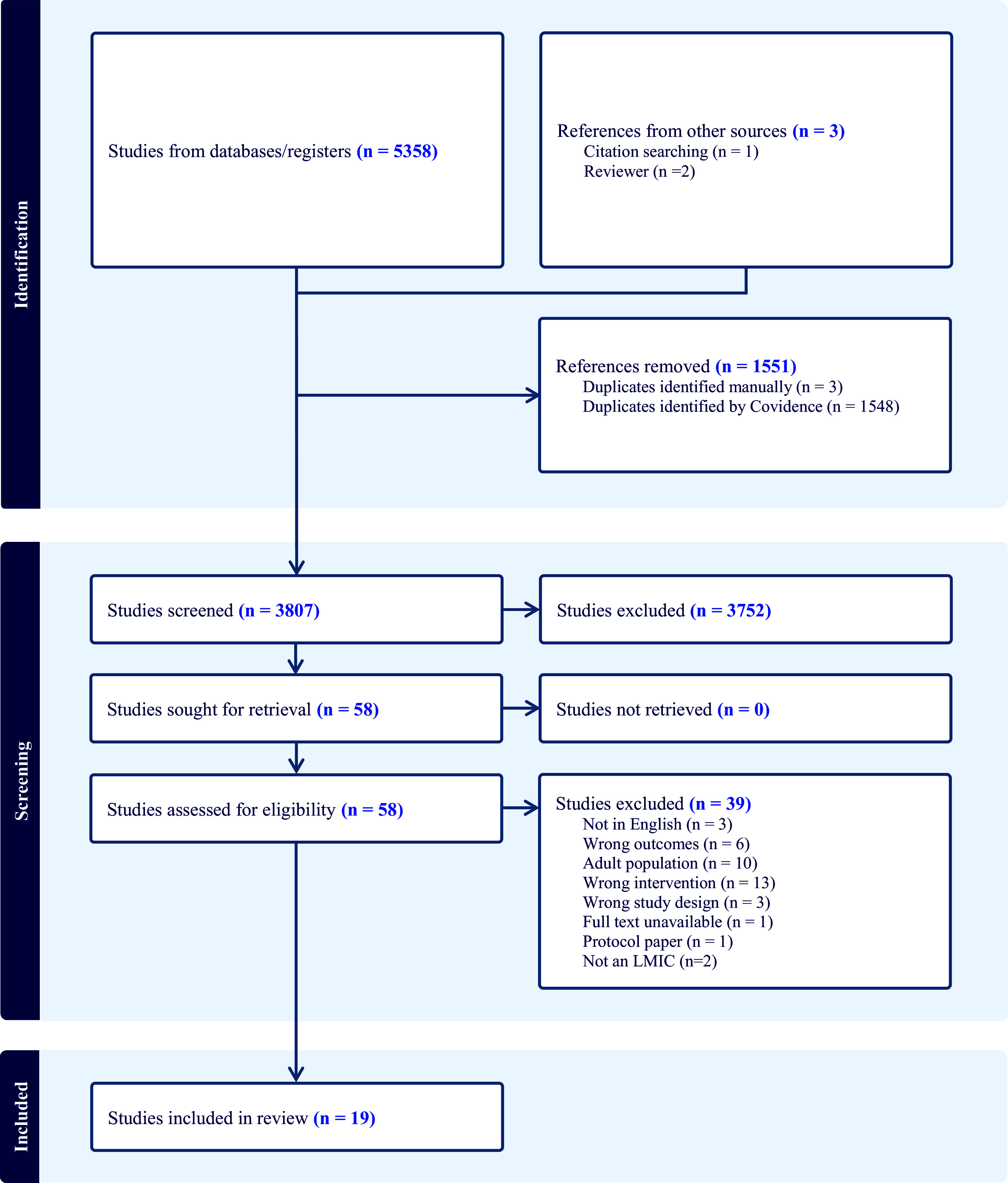
Youth living in low- and middle-income countries (LMICs) have an increased vulnerability to mental illnesses, with many lacking access to adequate treatment. There has been a growing body of interventions using task sharing with trained peer leaders to address this mental health gap. This scoping review examines the characteristics, effectiveness, components of peer delivery and challenges of peer-led mental health interventions for youth aged 10-24 in LMICs. A key term search strategy was employed across MEDLINE, Embase, Web of Science, Global Health and Global Index Medicus. Eligibility criteria included young people aged 10-24 and a peer-led component delivered in any setting in an LMIC. Study selection and extraction were conducted independently by the first and second authors, with discrepancies resolved by the senior author. Study characteristics were summarised and presented descriptively. The search identified 5,358 citations, and 19 studies were included. There were 14 quantitative, four qualitative and one mixed methods study reporting mental health outcomes. Types of interventions were heterogenous but fell within three broad categories: (1) peer education and psychoeducation, (2) peer-led psychotherapy and counselling and (3) peer support. All studies reported improved mental health outcomes as a result of the peer-led interventions. Peer-led interventions are versatile in terms of both the types of interventions and mode of delivery. Lived experience, mutual respect and reduced stigma make this method a highly unique and effective way to engage this age group. However, implementing peer-led youth interventions is not without challenges. Adequate training, supervision, cultural appropriateness and support from established institutions are critical to safeguarding and ensuring the sustainability of such programs. Our findings suggest that peer-led models are a valuable intervention strategy that policymakers can leverage in current and future efforts to address youth mental health in LMICs. Future areas of research should expand to include the perspectives of other key stakeholders involved in the implementation of peer-led mental health interventions, focusing on factors including fidelity, feasibility and acceptability to enhance implementation insights.
生活在低收入和中等收入国家(LMICs)的年轻人更容易患精神疾病,许多人无法获得足够的治疗。越来越多的干预措施通过与经过培训的同伴领袖进行任务分担来解决这一心理健康差距。本范围综述考察了LMICs中针对10至24岁青少年的同伴主导的心理健康干预措施的特点、有效性、同伴提供的组成部分和挑战。在MEDLINE、Embase、科学网、全球健康和全球医学索引中采用了关键术语检索策略。纳入标准包括10至24岁的年轻人以及在LMICs的任何环境中提供的同伴主导部分。研究选择和提取由第一作者和第二作者独立进行,如有分歧由资深作者解决。研究特征进行了总结并以描述性方式呈现。检索共识别出5358条引文,纳入了19项研究。有14项定量研究、4项定性研究和1项混合方法研究报告了心理健康结果。干预措施的类型多种多样,但可分为三大类:(1)同伴教育和心理教育,(2)同伴主导的心理治疗和咨询,(3)同伴支持。所有研究均报告称,同伴主导的干预措施改善了心理健康结果。同伴主导的干预措施在干预类型和实施方式方面都具有多样性。生活经历、相互尊重和减少污名化使这种方法成为吸引这一年龄组的一种非常独特且有效的方式。然而,实施同伴主导的青少年干预措施并非没有挑战。充分的培训、监督、文化适宜性以及来自现有机构的支持对于保障和确保此类项目的可持续性至关重要。我们的研究结果表明,同伴主导模式是一种有价值的干预策略,政策制定者可以在当前和未来解决LMICs青少年心理健康问题的努力中加以利用。未来的研究领域应扩大到包括参与实施同伴主导的心理健康干预措施的其他关键利益相关者的观点,重点关注包括保真度、可行性和可接受性等因素,以增强实施方面的见解。