Nishino Jinsuke, Hu Wenhuo, Kishtagari Ashwin, Shen Bo, Gao Xiang, Blackman Caroline M, Kassim Adetola, Marneni Naimisha, Cherukuri Abhisar V, Vittrup Russell, Kalkan Fatma N, Shah Rahul, Ahn Chul, Gao Ang, Ahmedrabie Abeer, Collins Robert H, Zeidan Amer M, Bidikian Aram, Gowda Lohith, Shaffer Brian C, Madanat Yazan F, Zhao Zhiyu, Chung Stephen S, Morrison Sean J
Children's Research Institute and the Department of Pediatrics, University of Texas Southwestern Medical Center, Dallas, Texas.
Department of Pathology, Center of Excellence for Leukemia Studies, St. Jude Children's Research Hospital, Memphis, Tennessee.
Cancer Discov. 2025 Apr 2;15(4):748-766. doi: 10.1158/2159-8290.CD-24-0719.
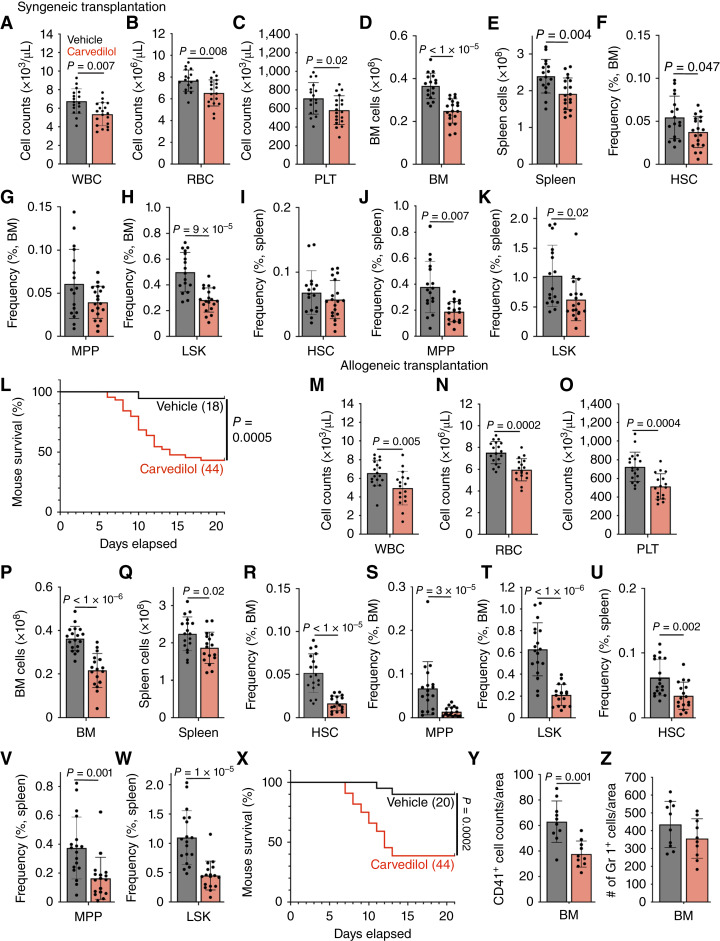
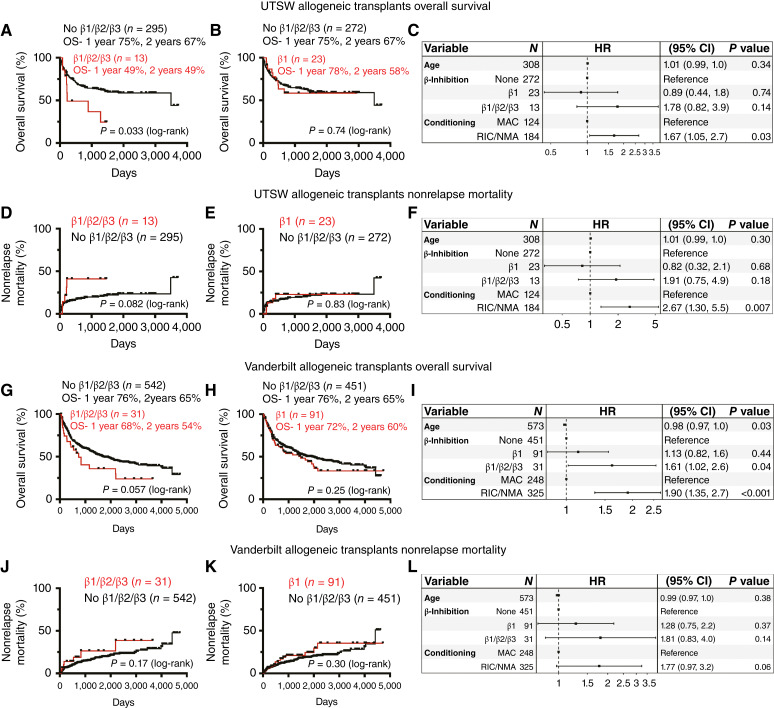
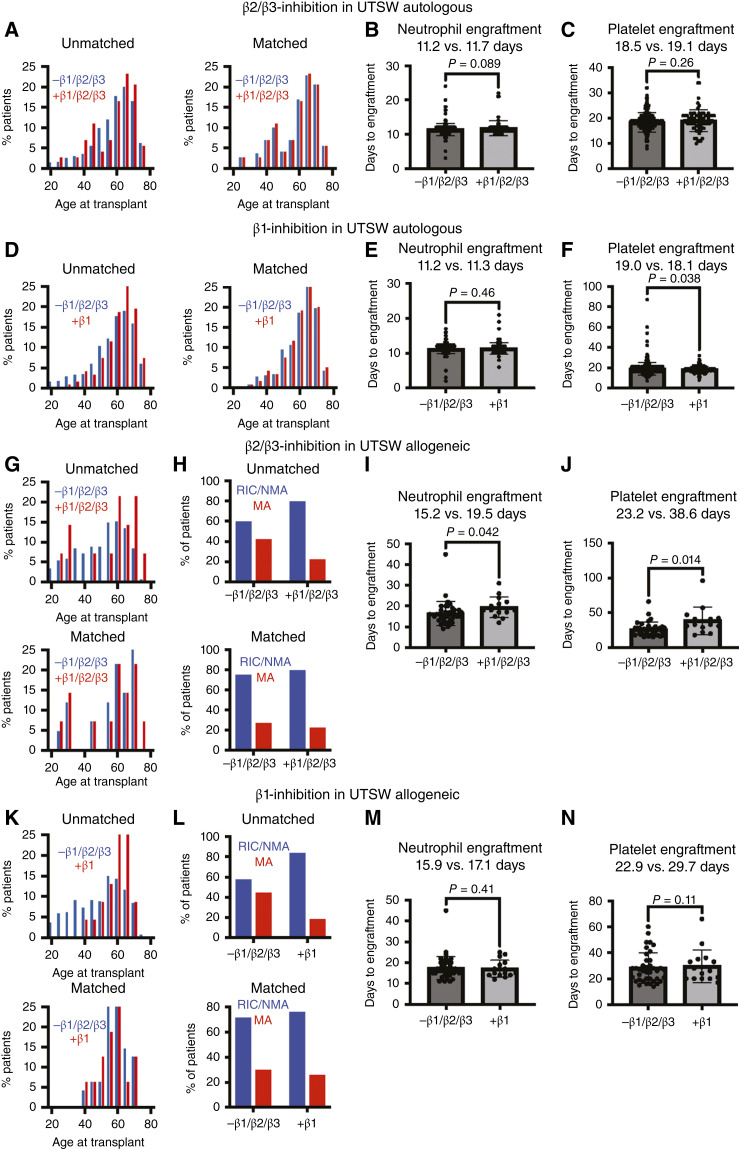
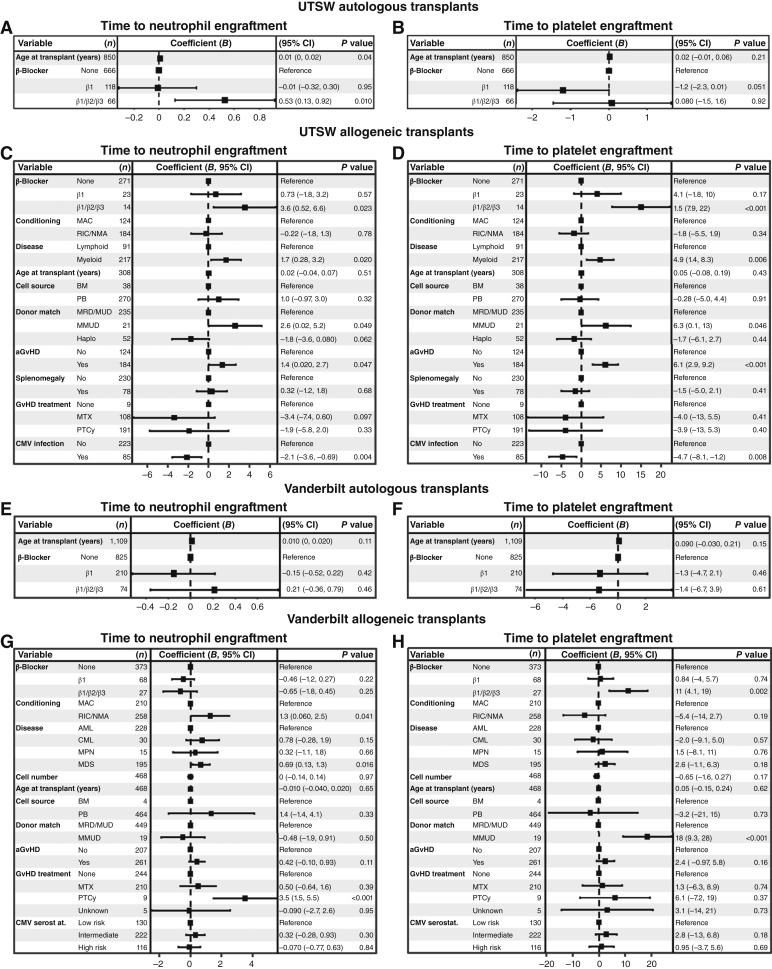
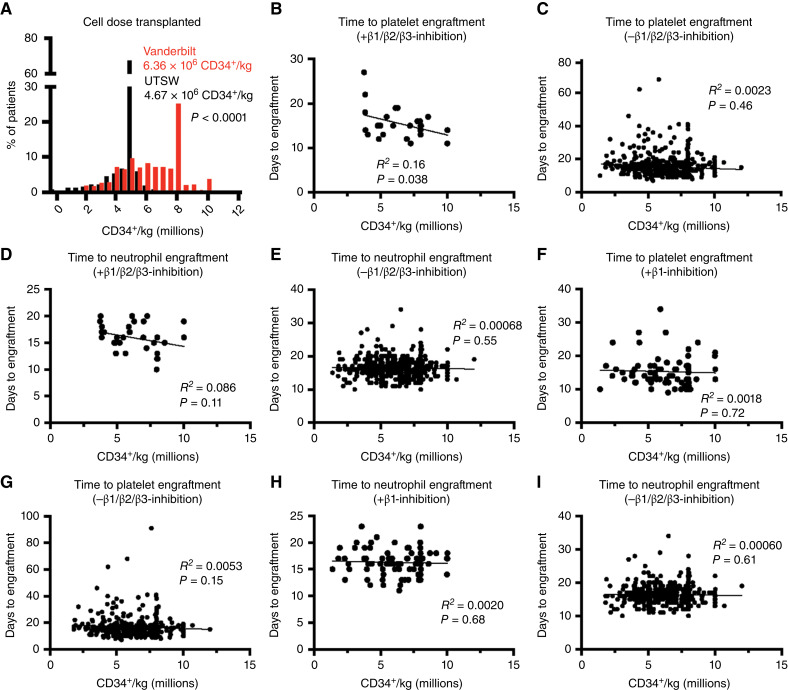
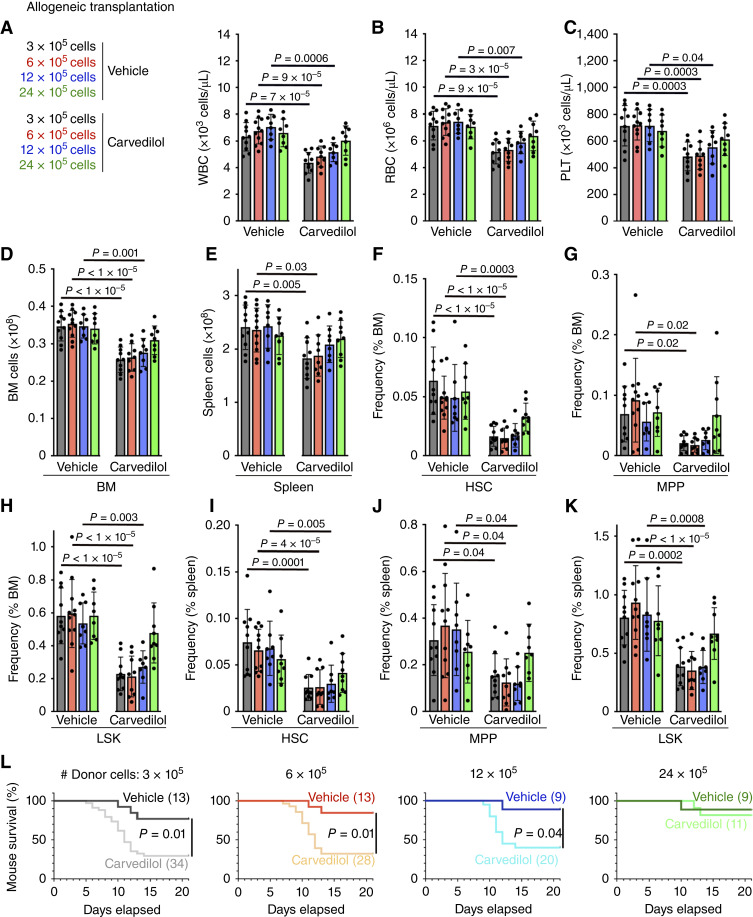
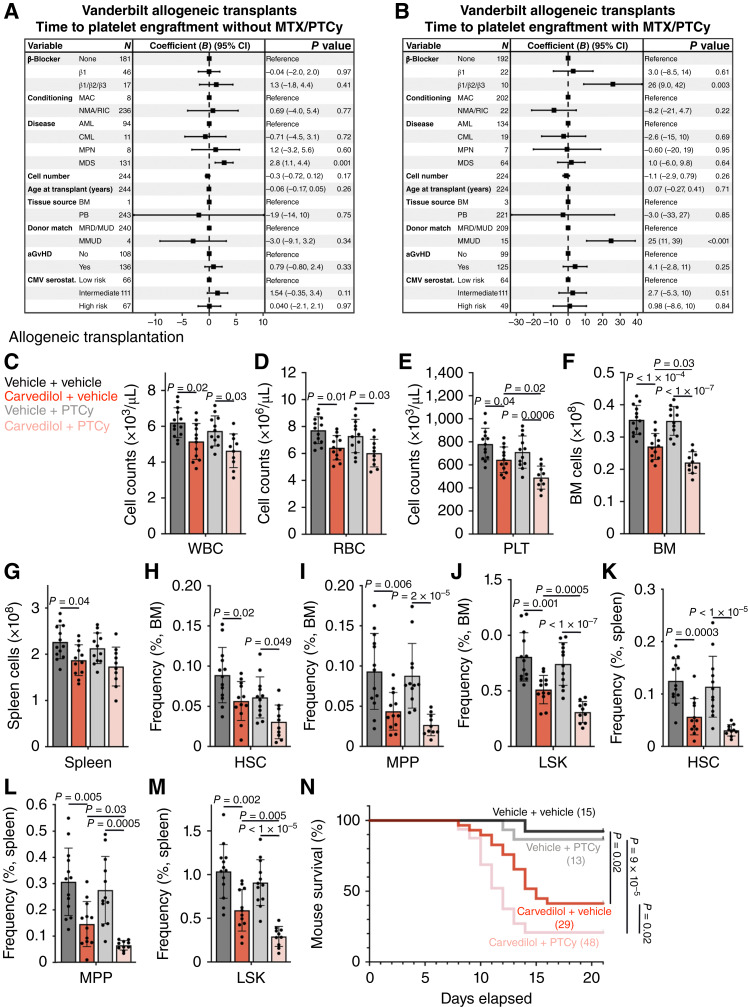
Peripheral nerves promote mouse bone marrow regeneration by activating β2- and β3-adrenergic receptor signaling, raising the possibility that nonselective β-blockers could inhibit engraftment after hematopoietic cell transplants (HCT). We observed no effect of β-blockers on steady-state mouse hematopoiesis. However, mice treated with a nonselective β-blocker (carvedilol), but not a β1-selective inhibitor (metoprolol), exhibited impaired hematopoietic regeneration after syngeneic or allogeneic HCTs. At two institutions, patients who received nonselective, but not β1-selective, β-blockers after allogeneic HCT exhibited delayed platelet engraftment and reduced survival. This was particularly observed in patients who received posttransplant chemotherapy for graft-versus-host disease prophylaxis, which also accentuated the inhibitory effect of carvedilol on engraftment in mice. In patients who received autologous HCTs, nonselective β-blockers were associated with little or no delay in engraftment. The inhibitory effect of nonselective β-blockers after allogeneic HCT was overcome by transplanting larger doses of hematopoietic cells. Significance: Patients who receive allogeneic HCTs followed by posttransplant chemotherapy for graft-versus-host disease prophylaxis may be at risk of delayed engraftment and increased mortality if administered nonselective β-blockers after transplantation. Transient discontinuation of nonselective β-blockers or transitioning to β1-selective inhibitors after HCT may accelerate engraftment and improve clinical outcomes. See related commentary by Bhatia, p. 666.
外周神经通过激活β2-和β3-肾上腺素能受体信号通路促进小鼠骨髓再生,这增加了非选择性β受体阻滞剂可能抑制造血细胞移植(HCT)后植入的可能性。我们观察到β受体阻滞剂对稳态小鼠造血没有影响。然而,用非选择性β受体阻滞剂(卡维地洛)而非β1选择性抑制剂(美托洛尔)治疗的小鼠,在同基因或异基因HCT后造血再生受损。在两个机构中,接受异基因HCT后使用非选择性而非β1选择性β受体阻滞剂的患者,血小板植入延迟且生存率降低。这在接受移植后化疗以预防移植物抗宿主病的患者中尤为明显,这也加剧了卡维地洛对小鼠植入的抑制作用。在接受自体HCT的患者中,非选择性β受体阻滞剂与植入延迟很少或没有延迟相关。通过移植更大剂量的造血细胞可克服异基因HCT后非选择性β受体阻滞剂的抑制作用。意义:接受异基因HCT并随后接受移植后化疗以预防移植物抗宿主病的患者,如果在移植后使用非选择性β受体阻滞剂,可能有植入延迟和死亡率增加的风险。HCT后暂时停用非选择性β受体阻滞剂或改用β1选择性抑制剂可能会加速植入并改善临床结果。见Bhatia的相关评论,第666页。