Tsovoosed Uyanga, Sumi Yukiyoshi, Ozeki Yuji, Harada Akiko, Kadotani Hiroshi
Department of Psychiatry, Shiga University of Medical Science, Otsu, Japan.
Department of Communication Skills, Mongolian National University of Medical Sciences, Ulaanbaatar, Mongolia.
Sleep. 2025 May 12;48(5). doi: 10.1093/sleep/zsaf007.
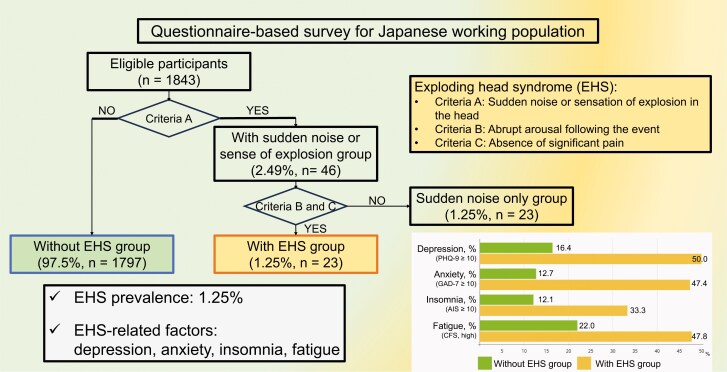
Exploding head syndrome (EHS) is a parasomnia characterized by the perception of loud noises, or explosions inside the head during the sleep-to-wake transition. The prevalence of EHS remains unclear. This survey aimed to elucidate the prevalence of and factors associated with EHS in this cohort.
As part of the Night in Japan Home Sleep Monitoring Study (NinjaSleep study), a cross-sectional survey was conducted among government employees in Koka City, Shiga Prefecture, Japan, in 2022. Participants were queried regarding their experiences with EHS as defined in the International Classification of Sleep Disorders, 3rd Edition, including sudden loud noises or sensations of explosions, subsequent abrupt awakenings and feelings of fright. Various standardized instruments were employed to evaluate depression, anxiety, insomnia, quality of life, and fatigue.
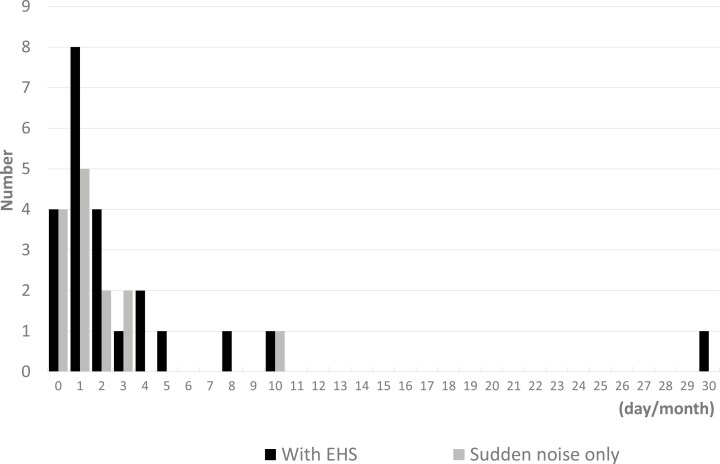
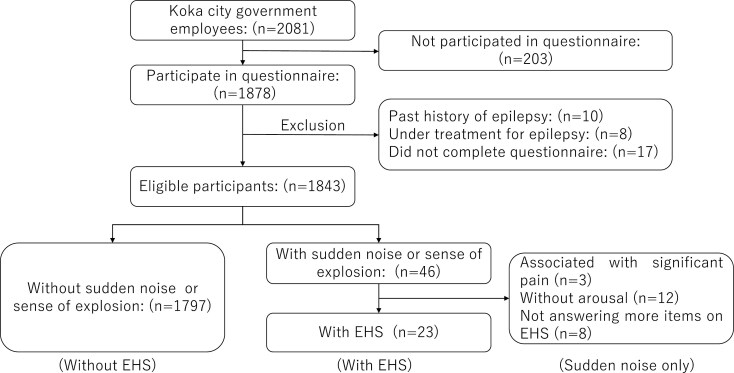
Of the 2081 employees invited to participate, 1878 completed the survey. After excluding respondents with epilepsy and incomplete responses, 1843 participants were deemed eligible for analysis. Among them, 46 (2.49%) reported experiencing sudden noises or sensations of explosions, with 23 (1.25%) meeting the diagnostic criteria for EHS. The EHS was significantly related to the scores on the Patient Health Questionnaire-9, Generalized Anxiety Disorder-7, Athens insomnia scale, and Chalder fatigue scale, even after adjusting for age, sex, body mass index, and categorized mean sleep duration.
This study elucidates the prevalence of EHS among the Japanese population and underscores its potential association with insomnia symptoms and various psychological factors.
爆炸头综合征(EHS)是一种异态睡眠,其特征是在从睡眠到觉醒的转换过程中,感觉到头部内部有巨大噪音或爆炸声。EHS的患病率尚不清楚。本次调查旨在阐明该队列中EHS的患病率及其相关因素。
作为日本家庭睡眠监测夜间研究(NinjaSleep研究)的一部分,2022年在日本滋贺县甲贺市的政府雇员中进行了一项横断面调查。询问参与者有关《国际睡眠障碍分类》第3版中定义的EHS经历,包括突然的巨响或爆炸感、随后的突然觉醒和恐惧情绪。使用各种标准化工具评估抑郁、焦虑、失眠、生活质量和疲劳。
在受邀参与的2081名员工中,1878人完成了调查。在排除患有癫痫和回答不完整的受访者后,1843名参与者被认为符合分析条件。其中,46人(2.49%)报告经历过突然的噪音或爆炸感,23人(1.25%)符合EHS的诊断标准。即使在调整了年龄、性别、体重指数和分类平均睡眠时间后,EHS仍与患者健康问卷-9、广泛性焦虑障碍-7、雅典失眠量表和查尔德疲劳量表的得分显著相关。
本研究阐明了日本人群中EHS的患病率,并强调了其与失眠症状和各种心理因素的潜在关联。