Dong Qun, Tan Minjia, Zhou Yingchun, Zhang Yue, Li Jing
Department of Bioinformatics and Biostatistics, School of Life Sciences and Biotechnology, Shanghai Jiao Tong University, Shanghai, China.
State Key Laboratory of Drug Research, Shanghai Institute of Materia Medica, Chinese Academy of Sciences, Shanghai, China; University of Chinese Academy of Sciences, Beijing, China; Zhongshan Institute for Drug Discovery, Shanghai Institute of Materia Medica, Chinese Academy of Sciences, Guangdong, China.
Mol Cell Proteomics. 2025 Mar;24(3):100905. doi: 10.1016/j.mcpro.2025.100905. Epub 2025 Jan 9.
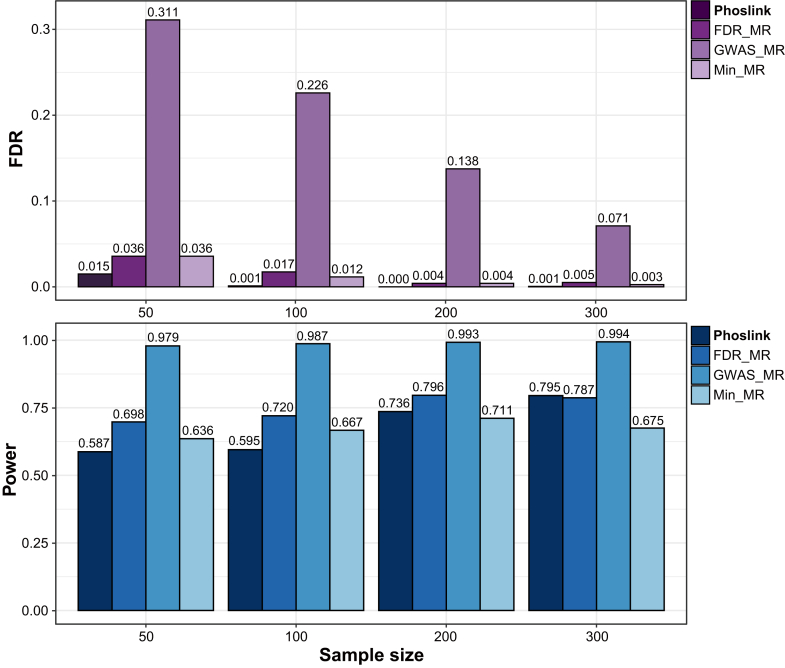
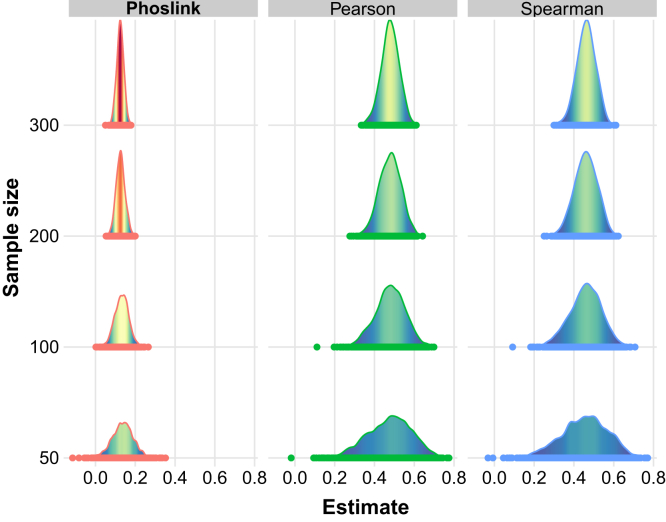
Protein phosphorylation plays a crucial role in regulating diverse biological processes. Perturbations in protein phosphorylation are closely associated with downstream pathway dysfunctions, whereas alterations in protein expression could serve as sensitive indicators of pathological status. However, there are currently few methods that can accurately identify the regulatory links between protein phosphorylation and expression, given issues like reverse causation and confounders. Here, we present Phoslink, a causal inference model to infer causal effects between protein phosphorylation and expression, integrating prior evidence and multiomics data. We demonstrated the feasibility and advantages of our method under various simulation scenarios. Phoslink exhibited more robust estimates and lower false discovery rate than commonly used Pearson and Spearman correlations, with better performance than canonical instrumental variable selection methods for Mendelian randomization. Applying this approach, we identified 345 causal links involving 109 phosphosites and 310 proteins in 79 lung adenocarcinoma (LUAD) samples. Based on these links, we constructed a causal regulatory network and identified 26 key regulatory phosphosites as regulators strongly associated with LUAD. Notably, 16 of these regulators were exclusively identified through phosphosite-protein causal regulatory relationships, highlighting the significance of causal inference. We explored potentially druggable phosphoproteins and provided critical clues for drug repurposing in LUAD. We also identified significant mediation between protein phosphorylation and LUAD through protein expression. In summary, our study introduces a new approach for causal inference in phosphoproteomics studies. Phoslink demonstrates its utility in potential drug target identification, thereby accelerating the clinical translation of cancer proteomics and phosphoproteomic data.
蛋白质磷酸化在调节多种生物过程中起着至关重要的作用。蛋白质磷酸化的扰动与下游通路功能障碍密切相关,而蛋白质表达的改变可作为病理状态的敏感指标。然而,由于存在反向因果关系和混杂因素等问题,目前很少有方法能够准确识别蛋白质磷酸化与表达之间的调控联系。在此,我们提出了Phoslink,一种因果推断模型,用于推断蛋白质磷酸化与表达之间的因果效应,该模型整合了先验证据和多组学数据。我们在各种模拟场景下证明了我们方法的可行性和优势。与常用的Pearson和Spearman相关性相比,Phoslink表现出更稳健的估计和更低的错误发现率,并且比孟德尔随机化的典型工具变量选择方法具有更好的性能。应用这种方法,我们在79个肺腺癌(LUAD)样本中鉴定出345个因果联系,涉及109个磷酸化位点和310种蛋白质。基于这些联系,我们构建了一个因果调控网络,并鉴定出26个关键调控磷酸化位点作为与LUAD密切相关的调控因子。值得注意的是,其中16个调控因子是通过磷酸化位点-蛋白质因果调控关系专门鉴定出来的,突出了因果推断的重要性。我们探索了潜在的可成药磷酸化蛋白,并为LUAD中的药物再利用提供了关键线索。我们还通过蛋白质表达确定了蛋白质磷酸化与LUAD之间的显著中介作用。总之,我们的研究为磷酸化蛋白质组学研究中的因果推断引入了一种新方法。Phoslink展示了其在潜在药物靶点识别中的效用,从而加速了癌症蛋白质组学和磷酸化蛋白质组学数据的临床转化。