Pfaar Oliver, Peters Anju T, Taillé Camille, Teeling Thijs, Silver Jared, Chan Robert, Hellings Peter W
Department of Otorhinolaryngology, Head and Neck Surgery, Section of Rhinology and Allergy, University Hospital Marburg, Philipps-Universität Marburg, Marburg, Germany.
Allergy-Immunology Division and the Sinus and Allergy Center, Feinberg School of Medicine, Northwestern University, Chicago, Illinois, USA.
Clin Transl Allergy. 2025 Jan;15(1):e70010. doi: 10.1002/clt2.70010.
Chronic rhinosinusitis with nasal polyps (CRSwNP) is a recurrent inflammatory disease associated with several comorbidities and a significant disease burden for patients. Treatments include corticosteroids and sinonasal surgery, but these can be associated with the risk of adverse events and nasal polyp recurrence. Biologic treatments such as mepolizumab can be used as an add-on treatment and are effective at reducing surgery and corticosteroid use.
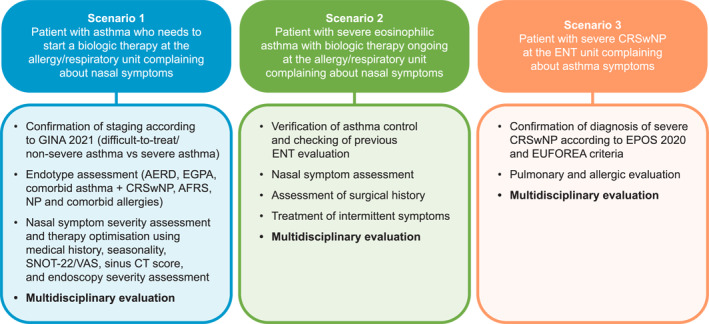
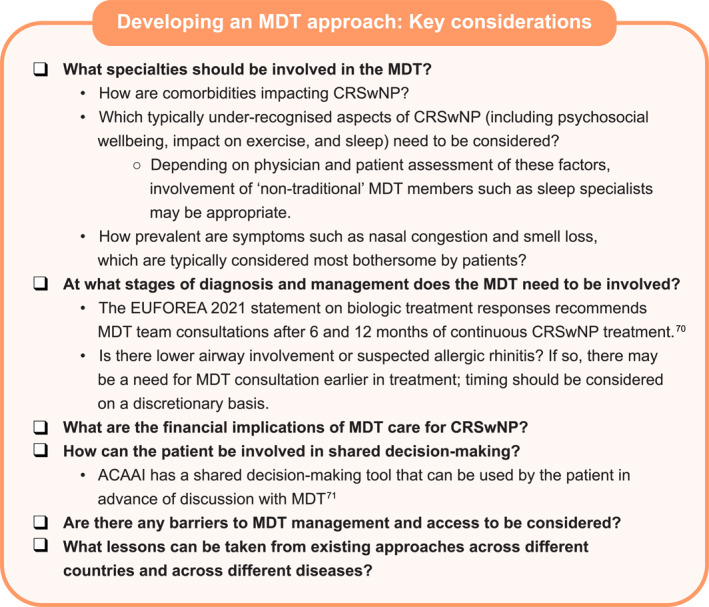
Patients with CRSwNP may be seen by a specialist in one of several different areas and often experience delayed diagnosis due to the need to see multiple physicians, as well as misdiagnosis resulting from lack of sufficient expertise within any one speciality. Multidisciplinary team (MDT) approaches have been shown to be effective in optimising the treatment and clinical management of other respiratory diseases, such as aspirin-exacerbated respiratory disease and severe asthma. In CRSwNP, an MDT approach may reduce diagnostic delays, mitigate secondary disease burden, and reduce overprescription of corticosteroids and antibiotics.
This article provides an overview of the patient perspective of MDTs, existing approaches and barriers to adoption, lessons learnt from allied and rare diseases, how to address under-recognised aspects of CRSwNP, and other key considerations for developing an MDT approach.
伴鼻息肉的慢性鼻-鼻窦炎(CRSwNP)是一种复发性炎症性疾病,与多种合并症相关,给患者带来重大疾病负担。治疗方法包括使用皮质类固醇和鼻窦手术,但这些治疗可能会带来不良事件风险和鼻息肉复发。诸如美泊利单抗等生物治疗可作为附加治疗使用,在减少手术和皮质类固醇使用方面有效。
CRSwNP患者可能会由多个不同领域的专科医生诊治,由于需要看多位医生,往往会出现诊断延迟,而且由于任何一个专科缺乏足够的专业知识,还会导致误诊。多学科团队(MDT)方法已被证明在优化其他呼吸系统疾病(如阿司匹林加重的呼吸系统疾病和重度哮喘)的治疗和临床管理方面有效。在CRSwNP中,MDT方法可能会减少诊断延迟,减轻继发性疾病负担,并减少皮质类固醇和抗生素的过度处方。
本文概述了患者对MDT的看法、现有的方法和采用的障碍、从相关疾病和罕见病中学到的经验教训、如何解决CRSwNP未被充分认识的方面,以及开发MDT方法的其他关键考虑因素。