Hirano Mitsuhiro, Miura Koyo, Ohtsu Naofumi
Faculty of Engineering, Kitami Institute of Technology, 165 Koen-cho, Kitami 090-8507, Hokkaido, Japan.
Materials (Basel). 2025 Jan 1;18(1):140. doi: 10.3390/ma18010140.
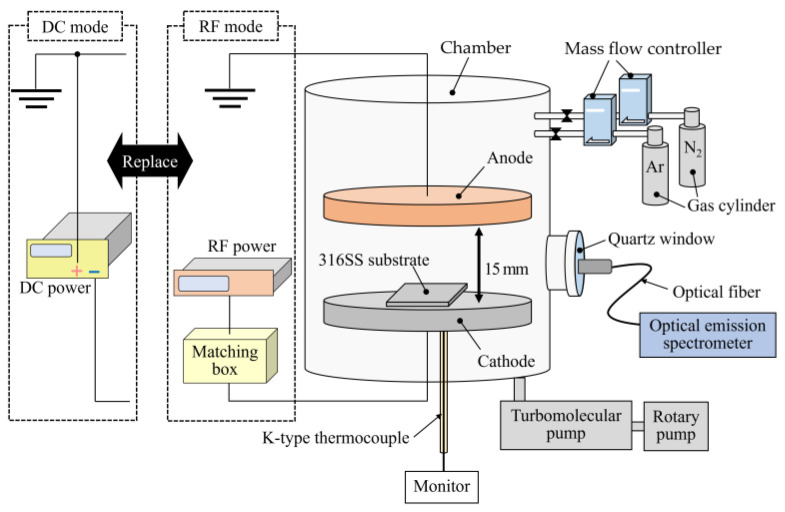
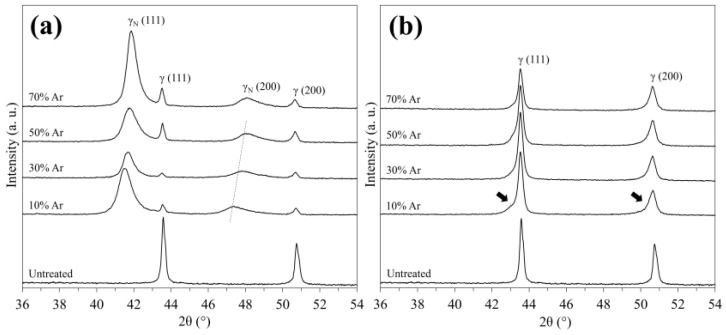
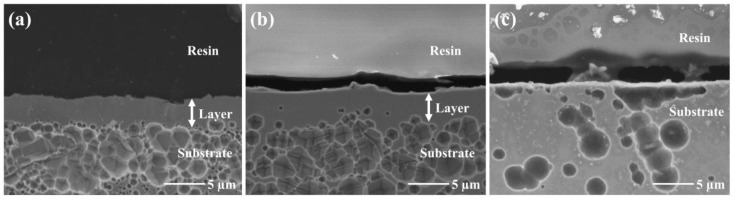
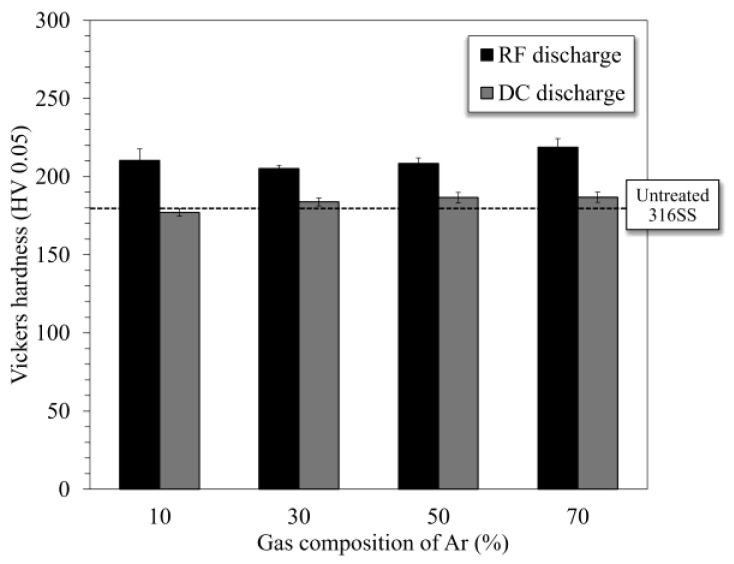
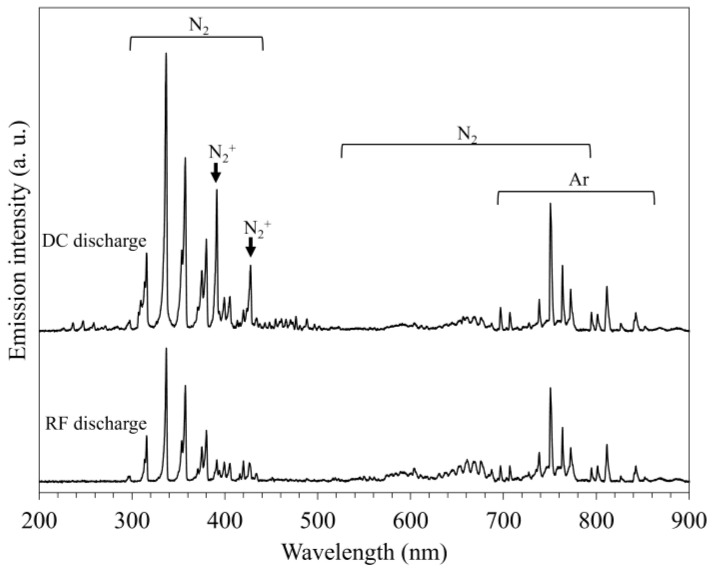
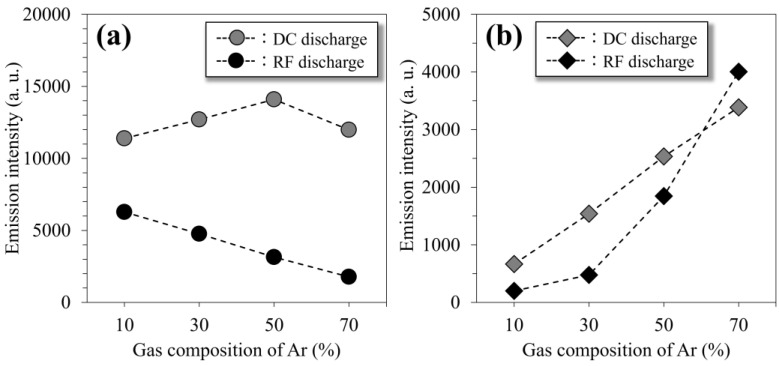
The addition of hydrogen to nitrogen facilitates the formation of nitride phases in the plasma nitriding processes of stainless steels, though it also induces the deterioration of their mechanical properties. This study presents a hydrogen-free plasma nitriding process for fabricating a nitrogen-expanded austenite phase (γ) on an AISI 316 stainless steel surface. The steel substrate was nitrided in N-Ar plasma with various gas compositions discharged by radio frequency (RF) and direct current (DC) modes. The process using the RF mode enabled the fabrication of a layer composed of a γ phase with a thickness of approximately 3 μm on the steel surface regardless of the gas composition, thereby enhancing its surface hardness. In contrast, such a layer was not observed in the DC mode, and the steel's hardness was similar to that of the untreated surface. This difference in layer formation was attributed to the mitigation of surface etching by the Ar active species using the RF mode because of the lower bias voltage compared with that of the DC mode. This phenomenon suppresses the removal of the nitride phase formed during the process, which is a key factor contributing to nitrogen penetration. In conclusion, an N-Ar plasma nitriding process using the RF mode is demonstrated to be a hydrogen-free process for fabricating a layer of a γ phase.
在不锈钢的等离子体渗氮过程中,向氮气中添加氢气有助于氮化物相的形成,不过这也会导致其机械性能下降。本研究提出了一种无氢等离子体渗氮工艺,用于在AISI 316不锈钢表面制备氮扩展奥氏体相(γ)。将钢基体在由射频(RF)和直流(DC)模式放电的具有不同气体成分的N - Ar等离子体中进行渗氮处理。使用RF模式的工艺能够在钢表面制备出由厚度约为3μm的γ相组成的层,而与气体成分无关,从而提高其表面硬度。相比之下,在DC模式下未观察到这样的层,并且钢的硬度与未处理表面的硬度相似。这种层形成的差异归因于与DC模式相比,RF模式下Ar活性物种对表面蚀刻的减轻,这是由于较低的偏置电压。这种现象抑制了在该过程中形成的氮化物相的去除,这是有助于氮渗透的关键因素。总之,使用RF模式的N - Ar等离子体渗氮工艺被证明是一种用于制备γ相层的无氢工艺。