Moryl Magdalena, Szychowska Paulina, Dziąg Julia, Różalski Antoni, Torzewska Agnieszka
Department of Biology of Bacteria, Institute of Microbiology, Biotechnology and Immunology, Faculty of Biology and Environmental Protection, University of Lodz, 90-237 Lodz, Poland.
Int J Mol Sci. 2024 Dec 24;26(1):11. doi: 10.3390/ijms26010011.
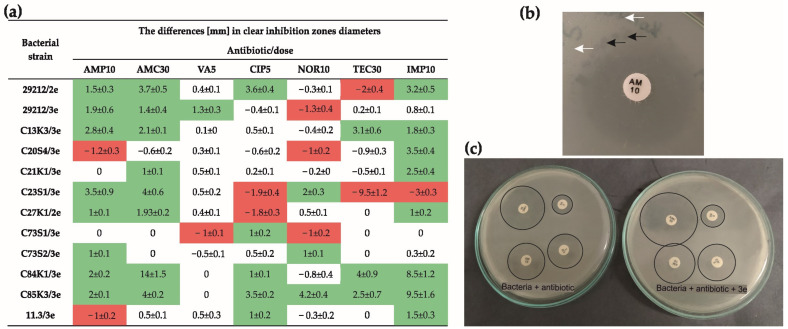
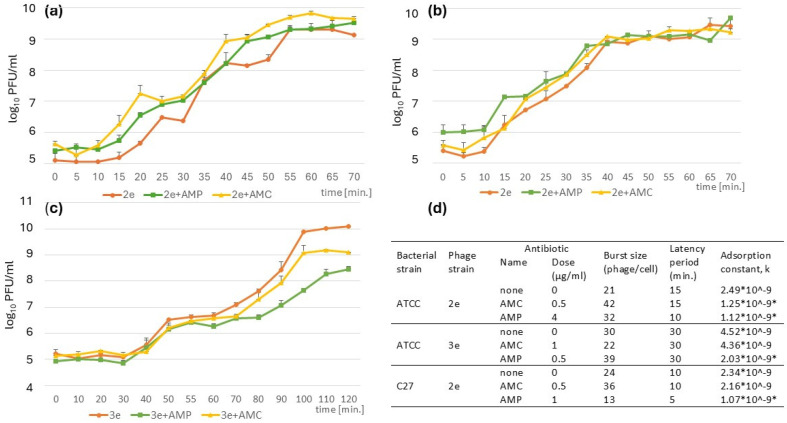
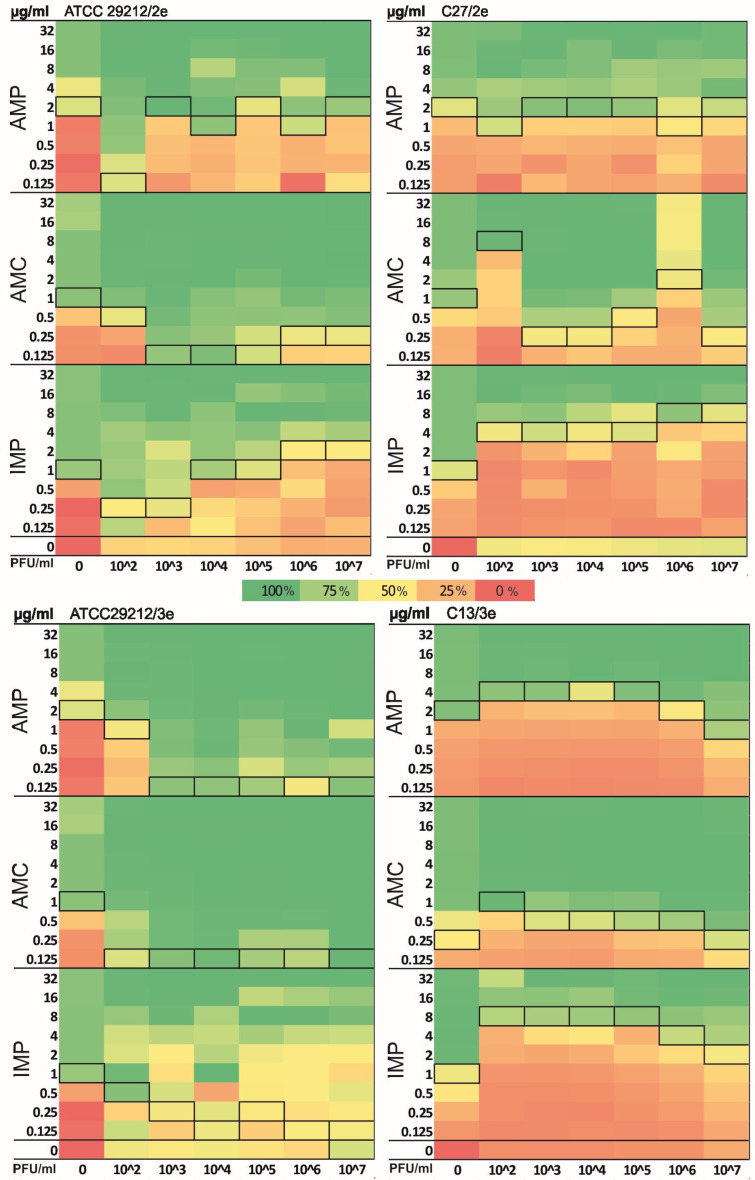
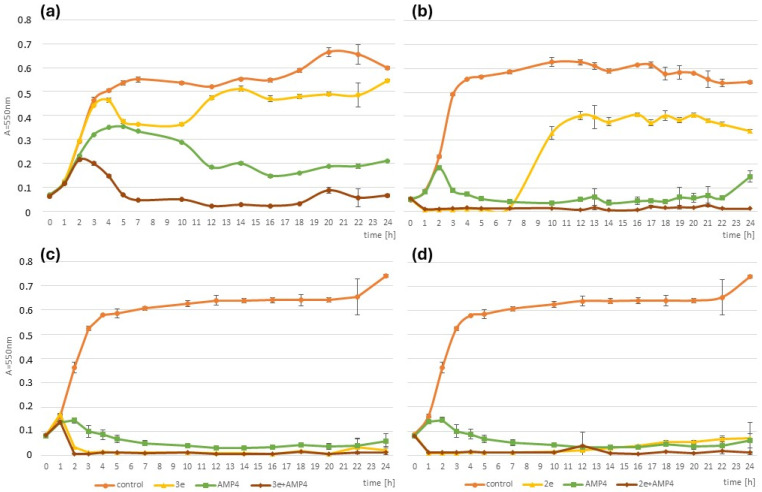
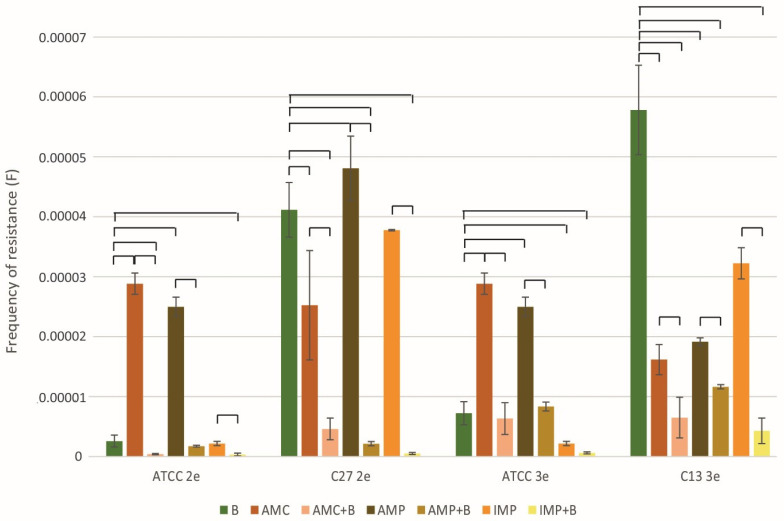
A phage-antibiotic synergy could be an alternative in urinary tract infection (UTI) therapy, as it leads to the elimination of bacteria and to the reduction in variants resistant to phages and antibiotics. The aims of the in vitro study were to determine whether phages vB_Efa29212_2e and vB_Efa29212_3e interact synergistically with selected antibiotics in the treatment of infections, to optimize antibiotic concentrations and phage titers for the most effective combinations, and to assess their impact on the number of spontaneous resistant variants and on the phages' reproductive cycles. The modified double-layer disc diffusion method, checkboard, time-kill assays, one-step growth method and the double agar overlay plaque assay were implemented. Synergistic interactions were most often observed after the combined action of phages 2e or 3e and β-lactam antibiotics on strains. The beneficial effects depended on the bacterial strain, phage and antibiotic used. The lowest minimum inhibitory concentration (MIC) values of the antibiotics were recorded, after the application of low titers of phage 2e, and high titers of phage 3e. The combined use of the tested agents resulted in a significant reduction in the number of resistant variants and had an impact on the reproductive cycle of the tested phages, e.g., a 50% increase in burst size, and a 5 min reduction in the latency period of 2e were observed. The study confirmed beneficial interactions between phages and β-lactam antibiotics against growth.
噬菌体 - 抗生素协同作用可能是治疗尿路感染(UTI)的一种替代方法,因为它能导致细菌的清除,并减少对噬菌体和抗生素耐药的变体。这项体外研究的目的是确定噬菌体vB_Efa29212_2e和vB_Efa29212_3e在治疗感染时是否与选定的抗生素产生协同相互作用,优化最有效组合的抗生素浓度和噬菌体滴度,并评估它们对自发耐药变体数量以及噬菌体繁殖周期的影响。采用了改良的双层平板扩散法、棋盘法、时间 - 杀菌试验、一步生长法和双层琼脂覆盖噬菌斑试验。噬菌体2e或3e与β - 内酰胺类抗生素联合作用于菌株后,最常观察到协同相互作用。有益效果取决于所使用的细菌菌株、噬菌体和抗生素。在应用低滴度的噬菌体2e和高滴度的噬菌体3e后,记录到抗生素的最低最低抑菌浓度(MIC)值。所测试药剂的联合使用导致耐药变体数量显著减少,并对所测试噬菌体的繁殖周期产生影响,例如,观察到爆发量增加50%,噬菌体2e的潜伏期缩短5分钟。该研究证实了噬菌体与β - 内酰胺类抗生素对[细菌名称未给出]生长之间存在有益的相互作用。