Ghatbale Pooja, Sah Govind Prasad, Dunham Sage, Khong Ethan, Blanc Alisha, Monsibais Alisha, Garcia Andrew, Schooley Robert T, Cobián Güemes Ana G, Whiteson Katrine, Pride David T
Department of Pathology, University of California, San Diego, California, USA.
Department of Molecular Biology and Biochemistry, University of California, Irvine, California, USA.
Antimicrob Agents Chemother. 2025 Feb 13;69(2):e0074024. doi: 10.1128/aac.00740-24. Epub 2024 Dec 19.
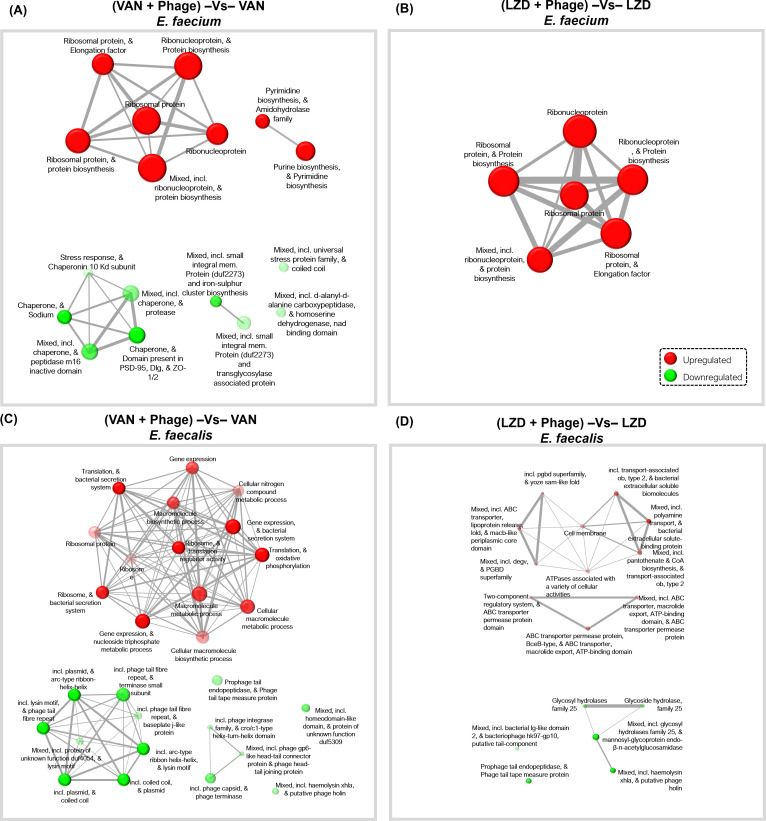
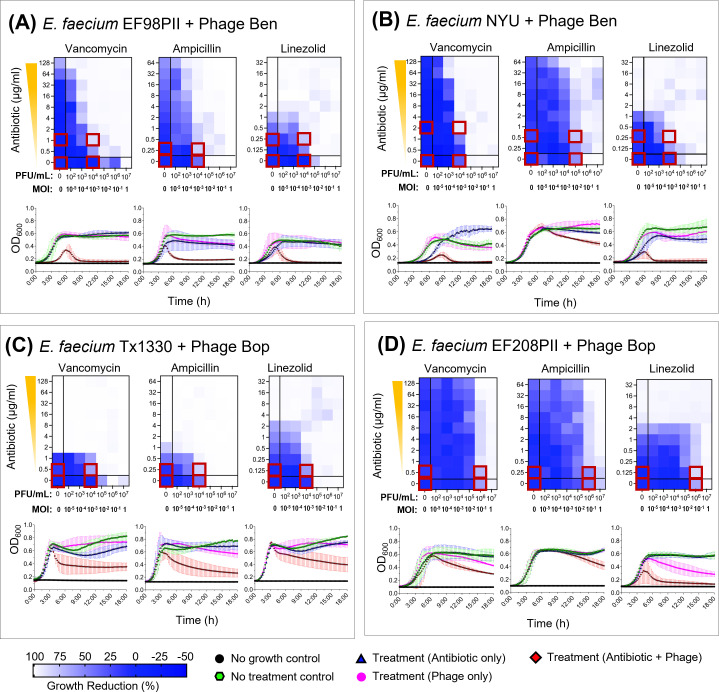
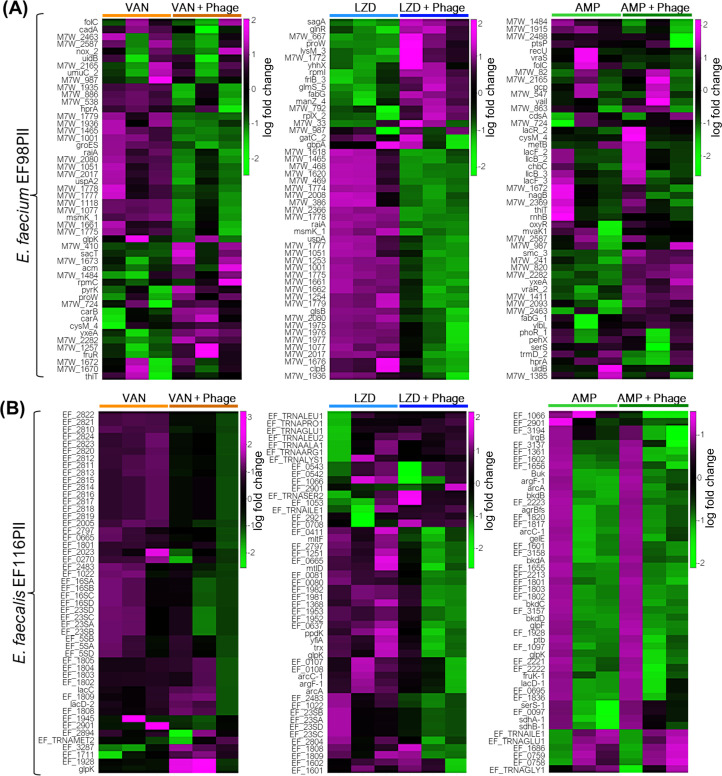
Bacteriophages are an increasingly attractive option for the treatment of antibiotic-resistant infections, but their efficacy is difficult to discern due to the confounding effects of antibiotics. Phages are generally delivered in conjunction with antibiotics, and thus, when patients improve, it is unclear whether the phages, antibiotics, or both are responsible. This question is particularly relevant for enterococcus infections, as limited data suggest phages might restore antibiotic efficacy against resistant strains. Enterococci can develop high-level resistance to vancomycin, a primary treatment. We assessed clinical and laboratory isolates of and to determine whether we could observe synergistic interactions between phages and antibiotics. We identified synergy between multiple phages and antibiotics including linezolid, ampicillin, and vancomycin. Notably, antibiotic susceptibility did not predict synergistic interactions with phages. Vancomycin-resistant isolates ( = 6) were eradicated by the vancomycin-phage combination as effectively as vancomycin-susceptible isolates ( = 2). Transcriptome analysis revealed significant gene expression changes under antibiotic-phage conditions, especially for linezolid and vancomycin, with upregulated genes involved in nucleotide and protein biosynthesis and downregulated stress response and prophage-related genes. While our results do not conclusively determine the mechanism of the observed synergistic interactions between antibiotics and phages, they do confirm and build upon previous research that observed these synergistic interactions. Our work highlights how using phages can restore the effectiveness of vancomycin against resistant isolates. This finding provides a promising, although unexpected, strategy for moving forward with phage treatments for vancomycin-resistant infections.
噬菌体是治疗耐抗生素感染越来越有吸引力的选择,但由于抗生素的混杂作用,其疗效难以辨别。噬菌体通常与抗生素联合使用,因此,当患者病情改善时,不清楚是噬菌体、抗生素还是两者都起了作用。这个问题对于肠球菌感染尤为重要,因为有限的数据表明噬菌体可能恢复抗生素对耐药菌株的疗效。肠球菌可对主要治疗药物万古霉素产生高水平耐药性。我们评估了[具体菌种1]和[具体菌种2]的临床和实验室分离株,以确定是否能观察到噬菌体与抗生素之间的协同相互作用。我们发现多种噬菌体与包括利奈唑胺、氨苄西林和万古霉素在内的抗生素之间存在协同作用。值得注意的是,抗生素敏感性并不能预测与噬菌体的协同相互作用。万古霉素耐药分离株(n = 6)被万古霉素 - 噬菌体组合根除的效果与万古霉素敏感分离株(n = 2)一样有效。转录组分析揭示了在抗生素 - 噬菌体条件下显著的基因表达变化,特别是对于利奈唑胺和万古霉素,参与核苷酸和蛋白质生物合成的基因上调,应激反应和前噬菌体相关基因下调。虽然我们的结果没有最终确定观察到的抗生素与噬菌体之间协同相互作用的机制,但它们确实证实并基于先前观察到这些协同相互作用的研究。我们的工作突出了使用噬菌体如何恢复万古霉素对耐药分离株的有效性。这一发现为推进针对万古霉素耐药[具体菌种]感染的噬菌体治疗提供了一个有前景的、尽管出乎意料的策略。