Dong Wenjuan, Wang Xiaohan, Xiang Miaolian, Chen Jinyin, Zeng Jiaoke, Chen Ming
Jiangxi Provincial Key Laboratory for Postharvest Storage and Preservation of Fruit and Vegetables, College of Agronomy, Jiangxi Agricultural University, Nanchang 330045, China.
Foods. 2024 Dec 29;14(1):68. doi: 10.3390/foods14010068.
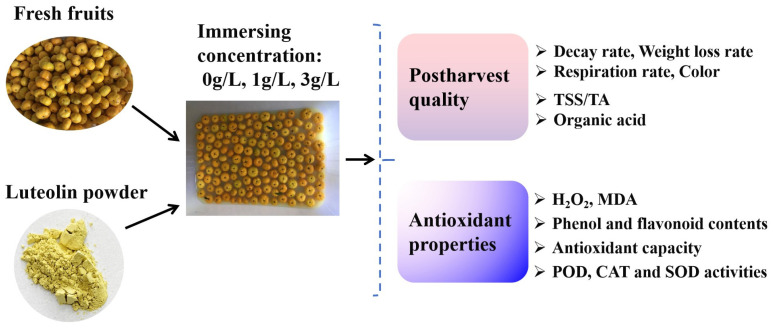
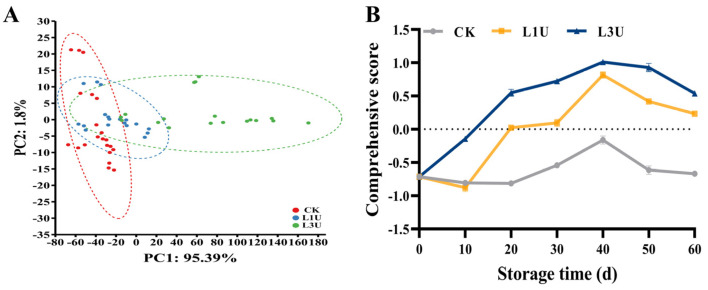
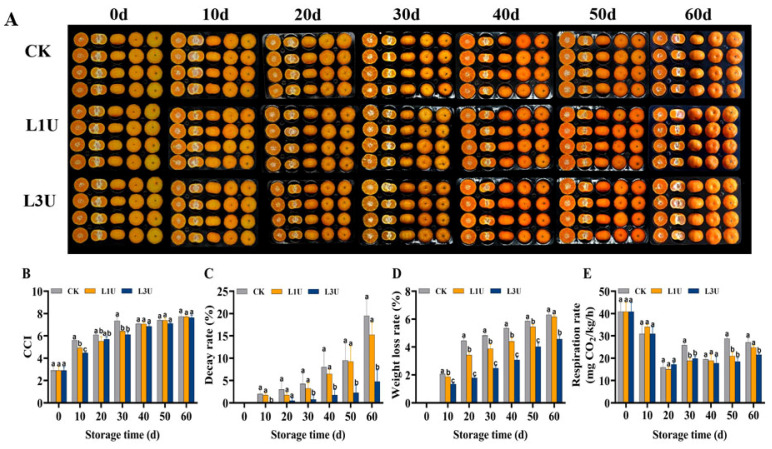
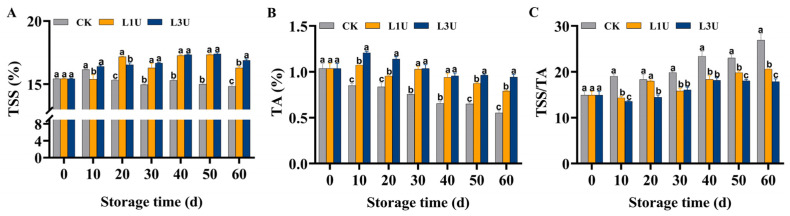
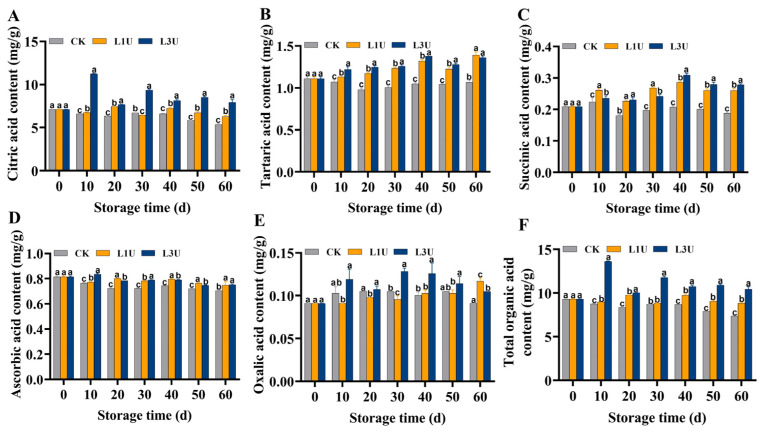
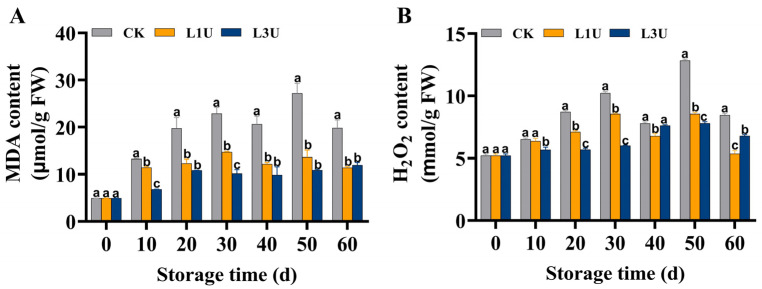
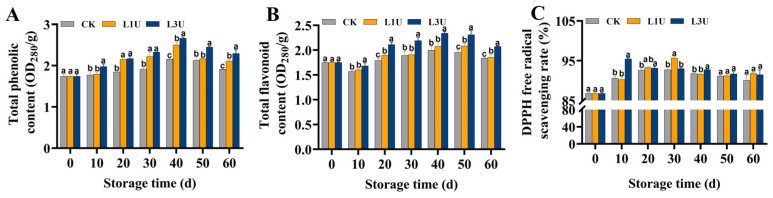
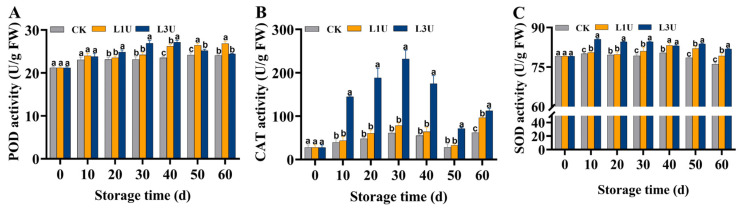
Postharvest quality deterioration is a major factor affecting the economic value and marketing of Nanfeng tangerines. The objective of this study was to explore the effects of luteolin treatment on the postharvest quality and antioxidant capacity of Nanfeng tangerines. We applied 1 g/L and 3 g/L luteolin to fruit after harvest and evaluated the decay rate, postharvest quality, and antioxidant capacity during a 60-day storage period at room temperature. The results indicated that, compared to untreated fruit, Nanfeng tangerines treated with 3 g/L luteolin exhibited enhanced appearance and flavor quality, as well as delayed disease incidence, during room-temperature storage. Additionally, flavor quality analysis revealed that luteolin treatment maintained high levels of titratable acid (TA) by delaying the degradation of organic acids such as citric, tartaric, succinic, ascorbic, and oxalic acids. Furthermore, luteolin treatment inhibited malondialdehyde (MDA) and HO accumulation by enhancing the content of total phenols and flavonoids content, augmenting antioxidant enzyme activities (peroxidase (POD), catalase (CAT), and superoxide dismutase (SOD)), and elevating the overall antioxidant capacity measured through the 2,2-diphenyl-1-picrylhydrazyl (DPPH) free radical scavenging rate. Collectively, these results demonstrate that luteolin has potential as a preservative for promoting postharvest quality and antioxidant capacity. Additionally, our findings elucidate the mechanisms by which plant-derived flavonoids contribute to the preservation of freshness.
采后品质劣变是影响南丰蜜桔经济价值和市场销售的主要因素。本研究的目的是探讨木犀草素处理对南丰蜜桔采后品质和抗氧化能力的影响。我们在采收后对果实施用1 g/L和3 g/L的木犀草素,并在室温下贮藏60天期间评估腐烂率、采后品质和抗氧化能力。结果表明,与未处理的果实相比,用3 g/L木犀草素处理的南丰蜜桔在室温贮藏期间外观和风味品质得到改善,病害发生率延迟。此外,风味品质分析表明,木犀草素处理通过延缓柠檬酸、酒石酸、琥珀酸、抗坏血酸和草酸等有机酸的降解,保持了较高的可滴定酸(TA)水平。此外,木犀草素处理通过提高总酚和类黄酮含量、增强抗氧化酶活性(过氧化物酶(POD)、过氧化氢酶(CAT)和超氧化物歧化酶(SOD))以及通过2,2-二苯基-1-苦基肼(DPPH)自由基清除率测定的整体抗氧化能力,抑制了丙二醛(MDA)和HO的积累。总体而言,这些结果表明木犀草素具有作为促进采后品质和抗氧化能力的防腐剂的潜力。此外,我们的研究结果阐明了植物源黄酮类化合物有助于保持新鲜度的机制。