Silva Wilma Fabiana Ferreira da, Bezerra Ingrid Wilza Leal, Vale Diogo, Oliveira Antonio Gouveia, Seabra Larissa Mont'Alverne Jucá
Post-Graduation Program in Nutrition, Federal University of Rio Grande do Norte, Natal 59078-900, RN, Brazil.
Department of Nutrition, Federal University of Rio Grande do Norte, Natal 59078-900, RN, Brazil.
Nutrients. 2024 Dec 31;17(1):134. doi: 10.3390/nu17010134.
School meals play a critical role in supporting students' biopsychosocial growth, development, learning, academic performance, and the establishment of healthy eating habits. In public institutions, food procurement is conducted through formal public procurement processes. However, emphasizing cost-effectiveness in bidding criteria, such as prioritizing the lowest product price, may inadvertently encourage the acquisition of foods high in critical nutrients. In Brazil, specific guidelines for public school food procurement have been introduced to improve the nutritional quality of foods included in school menus.
To evaluate the impact of legislative measures and regulations implemented during the COVID-19 pandemic on the nutritional composition of school meals provided by federal high schools in Rio Grande do Norte, located in northeastern Brazil. It also compared the composition and origin of foods procured before and after the pandemic.
This is a longitudinal observational panel study conducted across 20 federal schools. Procurement documents from 2019 (pre-pandemic) and 2021 (post-pandemic) were analyzed to assess changes in the nutritional profile of procured foods.
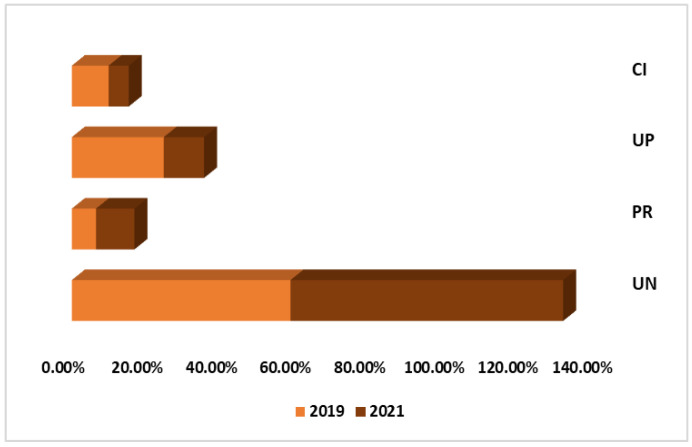
Post-pandemic, the procurement of natural and minimally processed and processed foods increased, representing 73.39% and 10.34%, respectively, of the total approved foods. There was also a 39% reduction in ultra-processed foods compared to 2019, in addition to a reduction in culinary ingredients. Additionally, the proportion of foods containing excessive levels of critical nutrients declined. A significant shift was observed in the origin of procured foods, with a notable increase in the purchase of locally sourced items.
The findings indicate a positive shift in the nutritional quality of foods procured after the COVID-19 pandemic, with a decrease in ultra-processed food purchases and an increase in the procurement of natural and minimally processed options. Nonetheless, the continued presence of ultra-processed foods and items with excessive critical nutrients highlights the need for further improvements in public procurement practices to fully align with nutritional guidelines.
学校膳食在支持学生的生物心理社会成长、发展、学习、学业表现以及建立健康饮食习惯方面发挥着关键作用。在公立机构中,食品采购通过正式的公共采购程序进行。然而,在招标标准中强调成本效益,例如优先选择最低产品价格,可能会无意中促使采购富含关键营养素的食品。在巴西,已出台公立学校食品采购的具体指导方针,以提高学校菜单中食品的营养质量。
评估在新冠疫情期间实施的立法措施和规定对巴西东北部北里奥格兰德州联邦高中提供的学校膳食营养成分的影响。同时比较疫情前后采购食品的成分和来源。
这是一项对20所联邦学校进行的纵向观察性面板研究。分析了2019年(疫情前)和2021年(疫情后)的采购文件,以评估采购食品营养状况的变化。
疫情后,天然、最低限度加工和加工食品的采购量增加,分别占总批准食品的73.39%和10.34%。与2019年相比,超加工食品减少了39%,烹饪原料也有所减少。此外,含有过量关键营养素的食品比例下降。采购食品的来源发生了显著变化,本地采购的物品购买量显著增加。
研究结果表明,新冠疫情后采购食品的营养质量出现了积极变化;超加工食品采购量减少,天然和最低限度加工食品的采购量增加。尽管如此,超加工食品和含有过量关键营养素的物品仍然存在,这凸显了进一步改进公共采购做法以完全符合营养指南的必要性。