Peng Hao, Chao Zheng, Wang Zefeng, Hao Xiaodong, Xi Zirui, Ma Sheng, Guo Xiangdong, Zhang Junbiao, Zhou Qiang, Qu Guanyu, Gao Yuan, Luo Jing, Wang Zhihua, Wang Jing, Li Le
Department of Urology, Tongji Hospital, Tongji Medical College, Huazhong University of Science and Technology, Wuhan, 430300, China.
The Second Clinical School, Tongji Hospital, Tongji Medical College, Huazhong University of Science and Technology, Wuhan, 430300, China.
Exp Hematol Oncol. 2025 Jan 11;14(1):4. doi: 10.1186/s40164-024-00591-7.
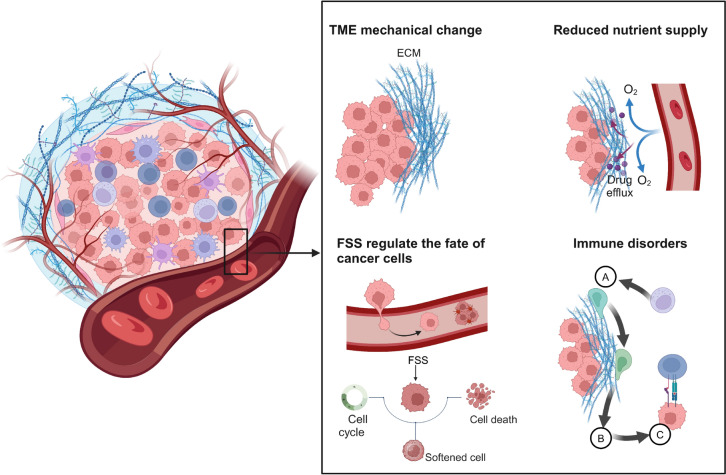
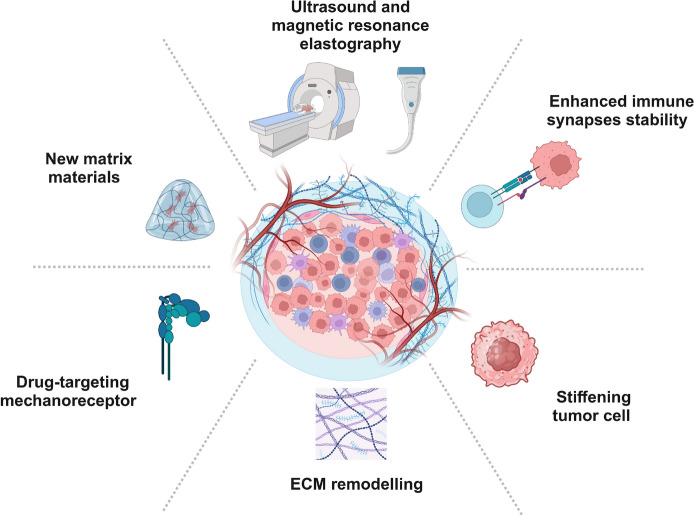
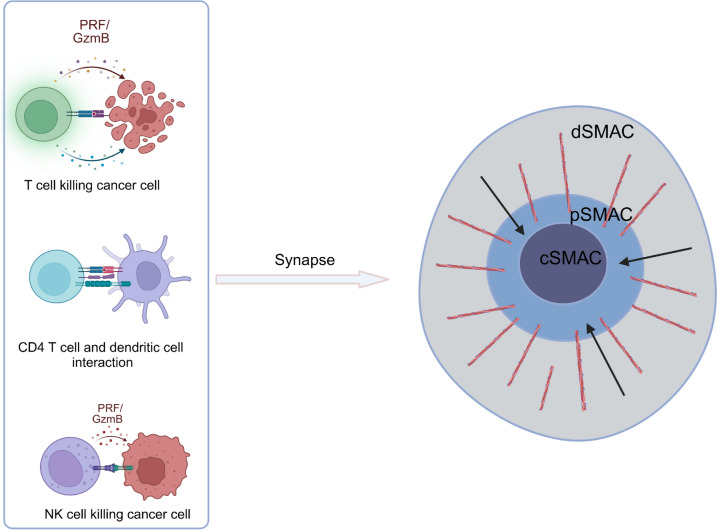
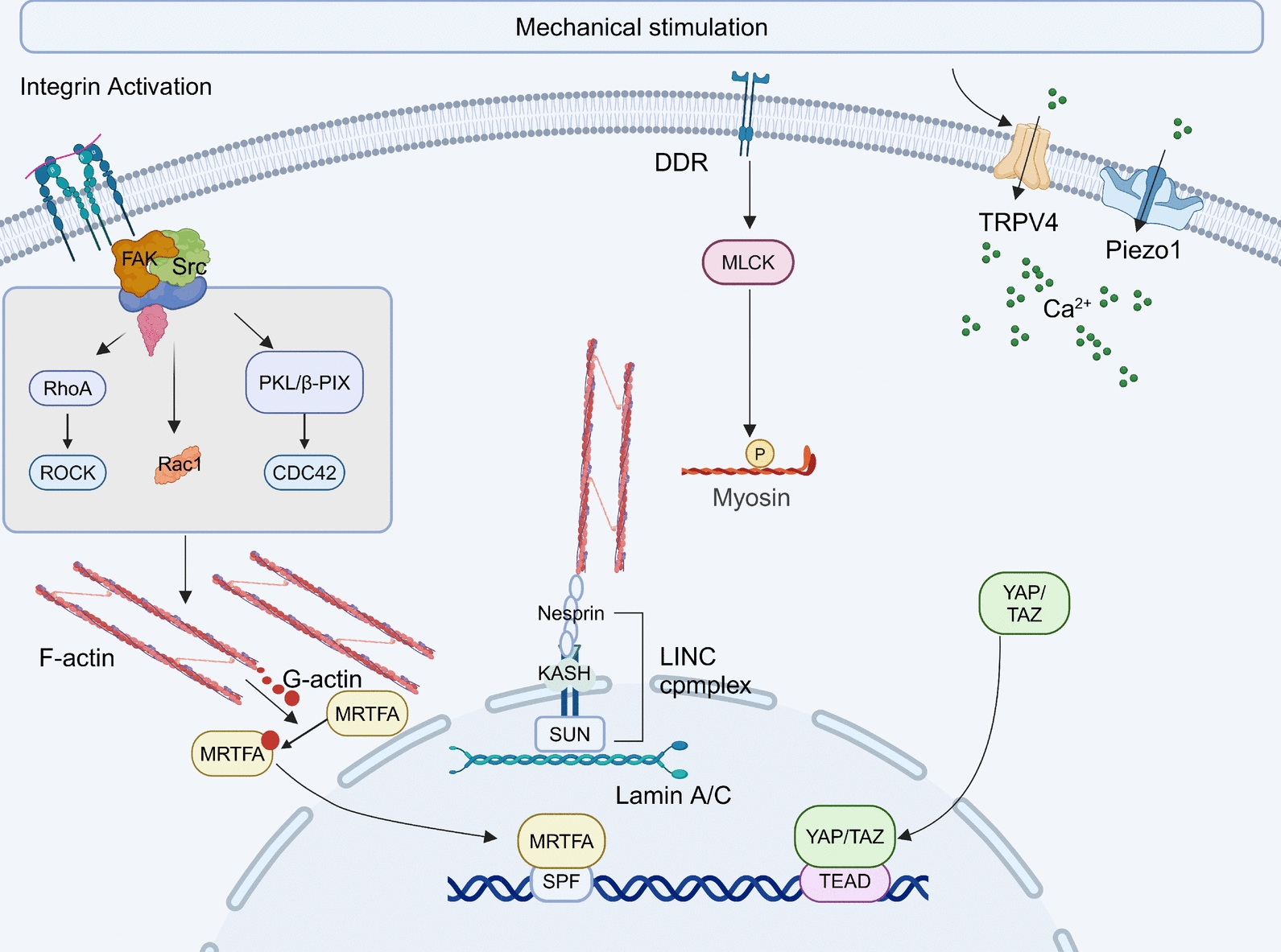
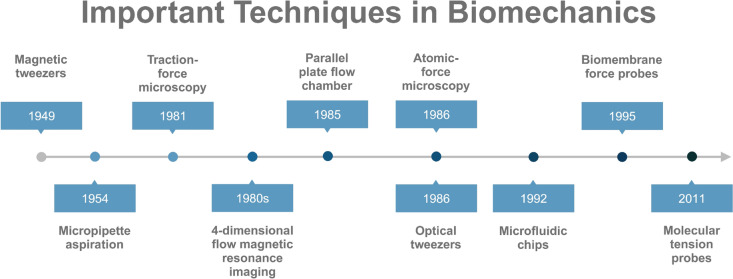
Immune checkpoint therapies have spearheaded drug innovation over the last decade, propelling cancer treatments toward a new era of precision therapies. Nonetheless, the challenges of low response rates and prevalent drug resistance underscore the imperative for a deeper understanding of the tumor microenvironment (TME) and the pursuit of novel targets. Recent findings have revealed the profound impacts of biomechanical forces within the tumor microenvironment on immune surveillance and tumor progression in both murine models and clinical settings. Furthermore, the pharmacological or genetic manipulation of mechanical checkpoints, such as PIEZO1, DDR1, YAP/TAZ, and TRPV4, has shown remarkable potential in immune activation and eradication of tumors. In this review, we delved into the underlying biomechanical mechanisms and the resulting intricate biological meaning in the TME, focusing mainly on the extracellular matrix, the stiffness of cancer cells, and immune synapses. We also summarized the methodologies employed for biomechanical research and the potential clinical translation derived from current evidence. This comprehensive review of biomechanics will enhance the understanding of the functional role of biomechanical forces and provide basic knowledge for the discovery of novel therapeutic targets.
在过去十年中,免疫检查点疗法引领了药物创新,推动癌症治疗迈向精准治疗的新时代。尽管如此,低响应率和普遍存在的耐药性挑战凸显了深入了解肿瘤微环境(TME)以及寻找新靶点的紧迫性。最近的研究结果表明,在小鼠模型和临床环境中,肿瘤微环境中的生物力学力对免疫监视和肿瘤进展具有深远影响。此外,对机械检查点(如PIEZO1、DDR1、YAP/TAZ和TRPV4)进行药理学或基因操作,在免疫激活和肿瘤根除方面显示出巨大潜力。在这篇综述中,我们深入探讨了TME中潜在的生物力学机制及其复杂的生物学意义,主要关注细胞外基质、癌细胞硬度和免疫突触。我们还总结了生物力学研究采用的方法以及基于当前证据的潜在临床转化。这篇关于生物力学的全面综述将增进对生物力学力功能作用的理解,并为发现新的治疗靶点提供基础知识。