Satoh Toru, Sasaki Megumi, Murakami Kana, Abe Yudai
Department of Neurological Surgery, Ryofukai Satoh Neurosurgical Hospital, Fukuyama, Hiroshima, JPN.
Cureus. 2024 Dec 12;16(12):e75585. doi: 10.7759/cureus.75585. eCollection 2024 Dec.
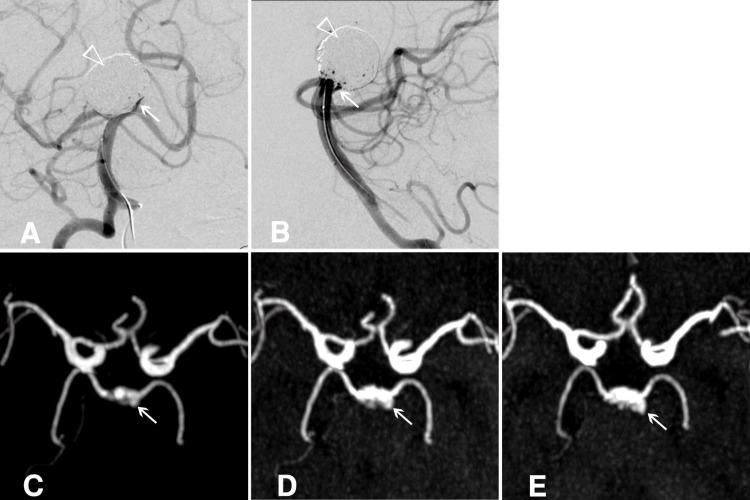
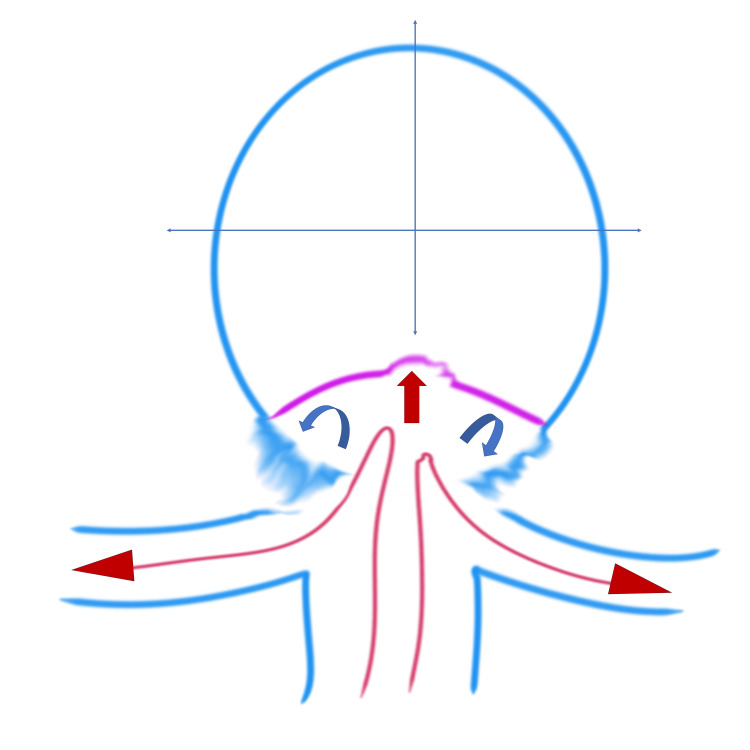
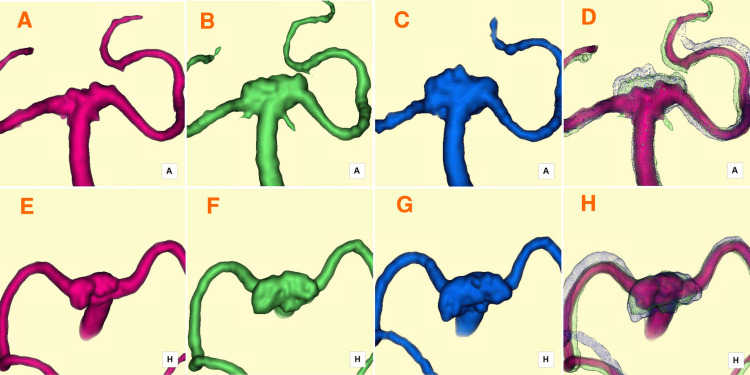
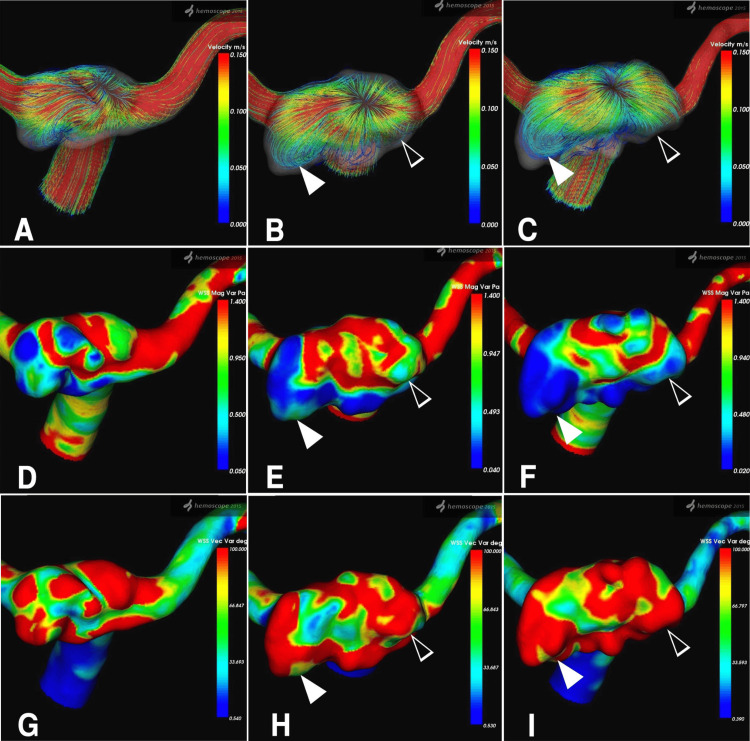
Coil embolization of cerebral aneurysms often encounters challenges in achieving complete filling of the aneurysm sac due to complex shapes and hemodynamic factors, frequently resulting in the formation of a residual cavity (RC) at the aneurysm neck. The hemodynamic mechanisms underlying RC formation and growth, however, remain poorly understood. Computational fluid dynamics (CFD) analysis, combined with silent MRA free from contrast agents and metal artifacts, offers a promising approach to elucidate these mechanisms, potentially enhancing the clinical management of cerebral aneurysms post-coiling. Herein, we report a case of a basilar-tip aneurysm treated with coil embolization, where sequential silent MRA and CFD analysis were employed to investigate hemodynamic factors driving rapid RC growth. Initial RC formation was attributed to coil compaction driven by flow impingement at the aneurysm neck onto the neo-endothelial surface, contributing to vertical growth. In contrast, secondary flows detached from the main inflow jet were observed in distal regions of the RC, leading to flow stagnation, wall vulnerability, and subsequent horizontal expansion of the aneurysmal wall. This case highlights the role of secondary detached flows in RC enlargement, emphasizing their potential to weaken the aneurysm wall and drive sac expansion. CFD analysis using silent MRA is a valuable tool for understanding RC hemodynamics and post-coiling management for cerebral aneurysms.
由于动脉瘤形状复杂以及血流动力学因素,脑动脉瘤的弹簧圈栓塞术在实现动脉瘤囊完全填充方面常常面临挑战,这经常导致在动脉瘤颈部形成残余腔(RC)。然而,RC形成和生长背后的血流动力学机制仍知之甚少。计算流体动力学(CFD)分析,结合无造影剂和金属伪影的静音磁共振血管造影(MRA),为阐明这些机制提供了一种有前景的方法,可能会改善脑动脉瘤弹簧圈栓塞术后的临床管理。在此,我们报告一例基底动脉尖动脉瘤采用弹簧圈栓塞治疗的病例,其中采用了连续的静音MRA和CFD分析来研究驱动RC快速生长的血流动力学因素。最初的RC形成归因于动脉瘤颈部血流冲击驱动的弹簧圈压实作用于新生内皮表面,导致垂直生长。相比之下,在RC的远端区域观察到从主要流入射流分离的二次血流,导致血流停滞、血管壁易损性以及随后动脉瘤壁的水平扩张。该病例突出了二次分离血流在RC扩大中的作用,强调了它们削弱动脉瘤壁和驱动瘤囊扩张的可能性。使用静音MRA的CFD分析是理解RC血流动力学和脑动脉瘤弹簧圈栓塞术后管理的有价值工具。