Anabtawi Nadeen, Nicolet Deedra, Alotaibi Najla, Buelow Daelynn R, Orwick Shelley, Gregory Thomas, Raj Ruchika, Coleman Kennedy, Kolitz Jonathan E, Powell Bayard L, Blum William G, Baer Maria R, Byrd John C, Stock Wendy, Uy Geoffrey L, Mrózek Krzysztof, Eisfeld Ann-Kathrin, Cheng Xiaolin, Baker Sharyn D, Blachly James S
Division of Pharmaceutics and Pharmacology, College of Pharmacy, The Ohio State University, Columbus, OH, USA.
The Clara D. Bloomfield Center for Leukemia Outcomes Research, The Ohio State University Comprehensive Cancer Center, Columbus, OH, USA.
Leukemia. 2025 Mar;39(3):623-631. doi: 10.1038/s41375-024-02498-y. Epub 2025 Jan 13.
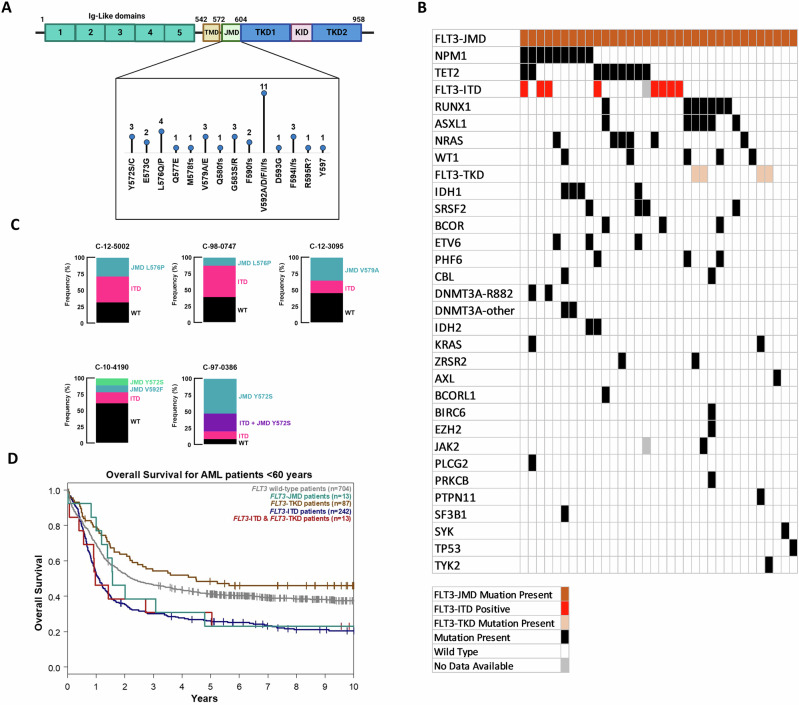
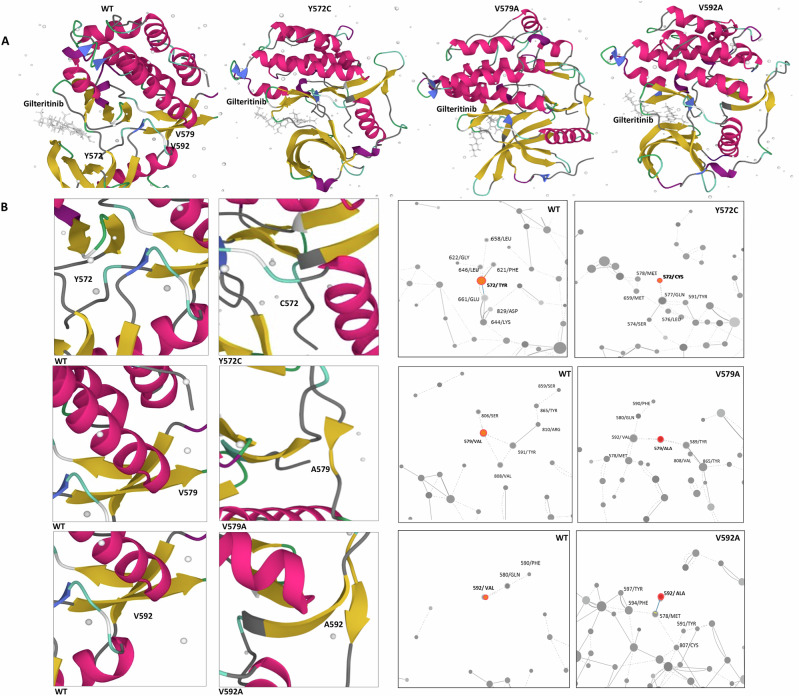
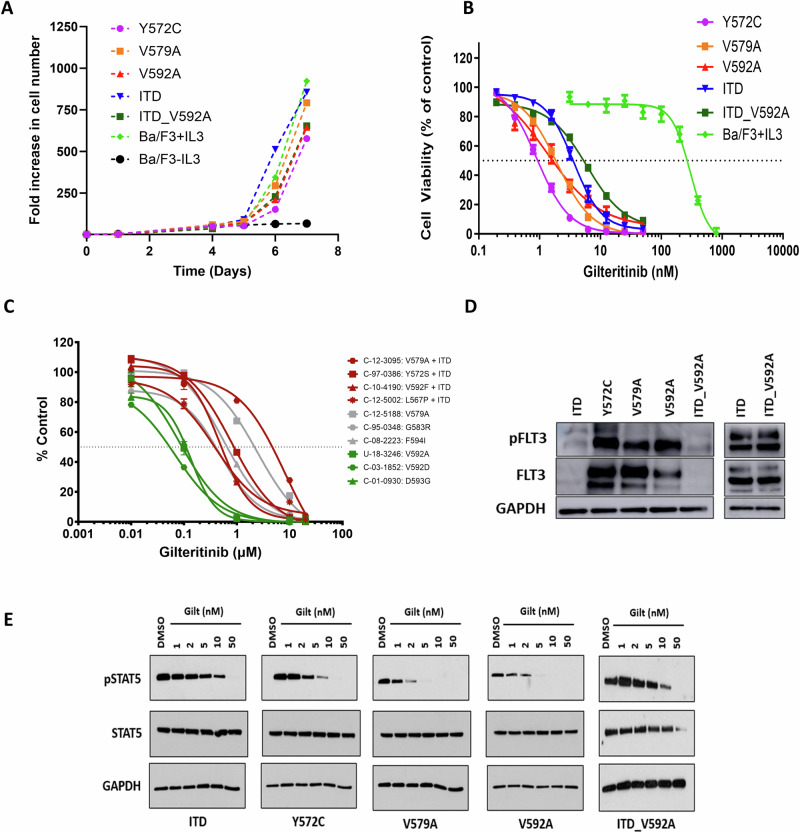
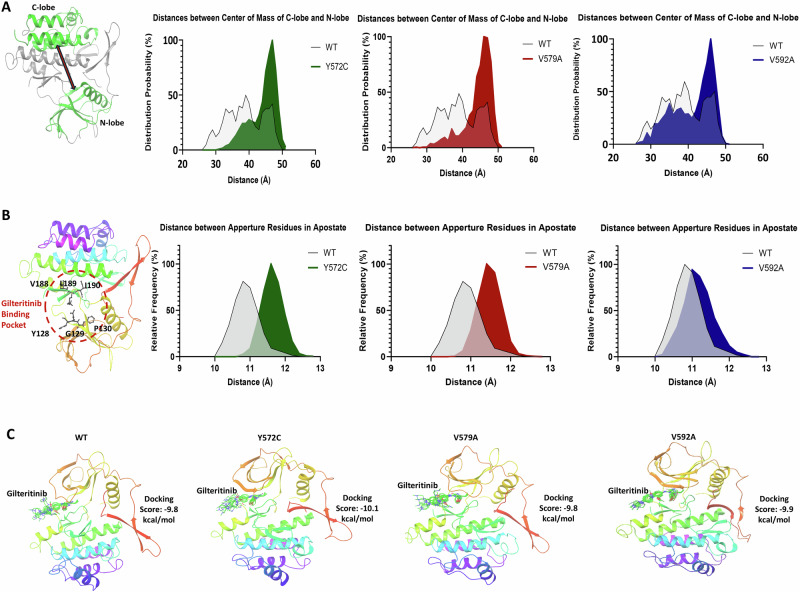
The FLT3 gene frequently undergoes mutations in acute myeloid leukemia (AML), with internal tandem duplications (ITD) and tyrosine kinase domain (TKD) point mutations (PMs) being most common. Recently, PMs and deletions in the FLT3 juxtamembrane domain (JMD) have been identified, but their biological and clinical significance remains poorly understood. We analyzed 1660 patients with de novo AML and found FLT3-JMD mutations, mostly PMs, in 2% of the patients. Patients with FLT3-JMD mutations had a higher relapse rate and shorter disease-free survival than those with FLT3-TKD, whereas their relapse rate, disease-free and overall survival were not significantly different from those of FLT3-ITD-positive patients. In vitro experiments showed that FLT3-JMD PMs transformed hematopoietic cells and responded well to type I and II FLT3 inhibitors. Molecular dynamics simulations were used to explore the conformational changes of JMD PMs relative to wild-type FLT3. These mutations exhibited constrained domain motions with wider gate openings, potentially enhancing drug binding. Altered residue interactions and structural changes shed light on their unique functional mechanisms, with increased allosteric pathways suggesting reduced interactions with other residues. We conclude that patients with FLT3-JMD PMs represent uncommon but important subset with distinct molecular and biological features, and may benefit from FLT3 inhibitors.
FLT3基因在急性髓系白血病(AML)中经常发生突变,其中内部串联重复(ITD)和酪氨酸激酶结构域(TKD)点突变(PMs)最为常见。最近,已鉴定出FLT3近膜结构域(JMD)中的点突变和缺失,但其生物学和临床意义仍知之甚少。我们分析了1660例初发AML患者,发现2%的患者存在FLT3-JMD突变,主要为点突变。与FLT3-TKD患者相比,FLT3-JMD突变患者的复发率更高,无病生存期更短,而其复发率、无病生存期和总生存期与FLT3-ITD阳性患者相比无显著差异。体外实验表明,FLT3-JMD点突变可转化造血细胞,并对I型和II型FLT3抑制剂反应良好。分子动力学模拟用于探索JMD点突变相对于野生型FLT3的构象变化。这些突变表现出受限的结构域运动和更宽的门开口,可能增强药物结合。改变的残基相互作用和结构变化揭示了它们独特的功能机制,变构途径增加表明与其他残基的相互作用减少。我们得出结论,FLT3-JMD点突变患者代表了一个罕见但重要的亚组,具有独特的分子和生物学特征,可能从FLT3抑制剂中获益。