Bahadori Amir Reza, Javadnia Parisa, Bordbar Sanaz, Zafari Rasa, Taherkhani Tina, Davari Afshan, Tafakhori Abbas, Shafiee Sajad, Ranji Sara
Iranian Center of Neurological Research, Neuroscience Institute, Tehran University of Medical Sciences, Tehran, Iran.
Shiraz University of Medical Sciences, Shiraz, Iran.
Eat Weight Disord. 2025 Jan 15;30(1):4. doi: 10.1007/s40519-025-01716-5.
Transcranial magnetic stimulation (TMS) has emerged as a promising treatment for various neuropsychiatric conditions, including depression, obsessive-compulsive disorder, and Parkinson's disease. Recent research has focused on evaluating its effectiveness in treating patients with anorexia nervosa (AN). This systematic review and meta-analysis examined the impact of TMS on patients with AN and evaluated any potential adverse effects.
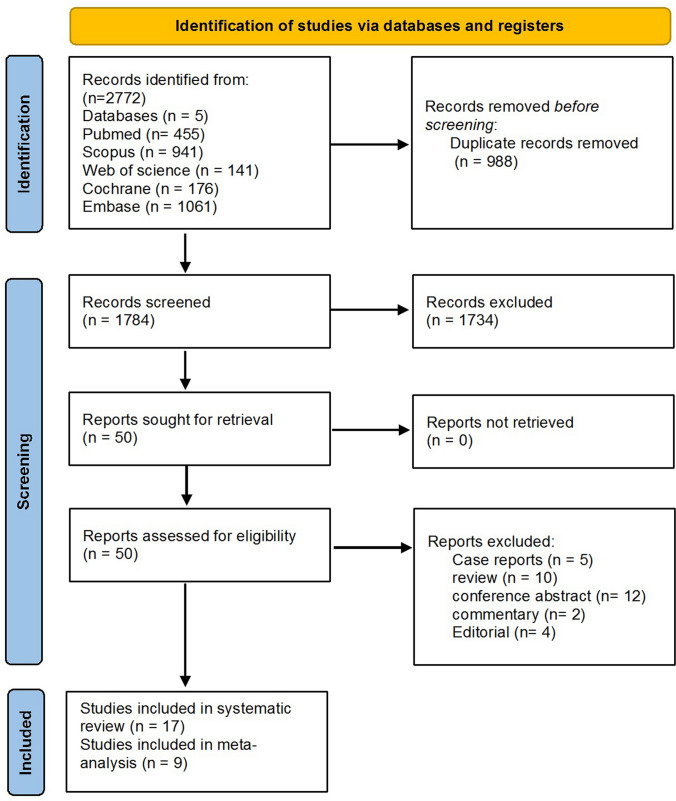
We conducted search according to PRISMA guidelines and comprehensively analyzed data from multiple databases, including Pubmed, Scopus, Embase, Web of Science, and the Cochrane Library, up to September 13th. Statistical analysis utilized the Comprehensive Meta-analysis software version 3.0.
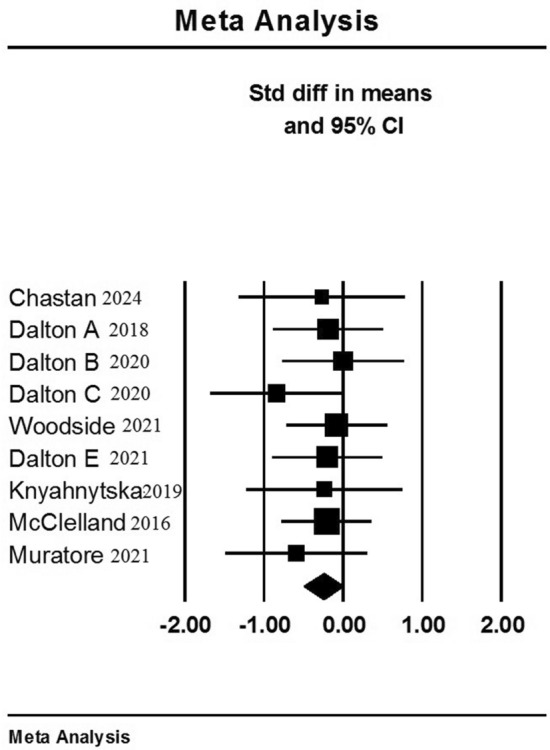
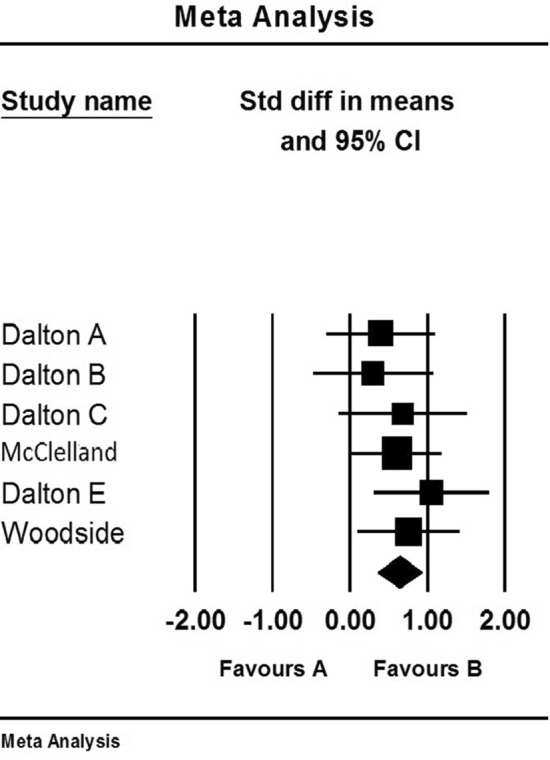
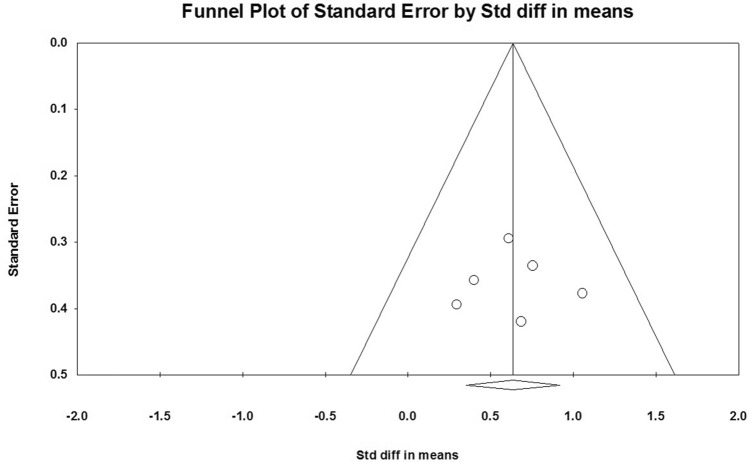
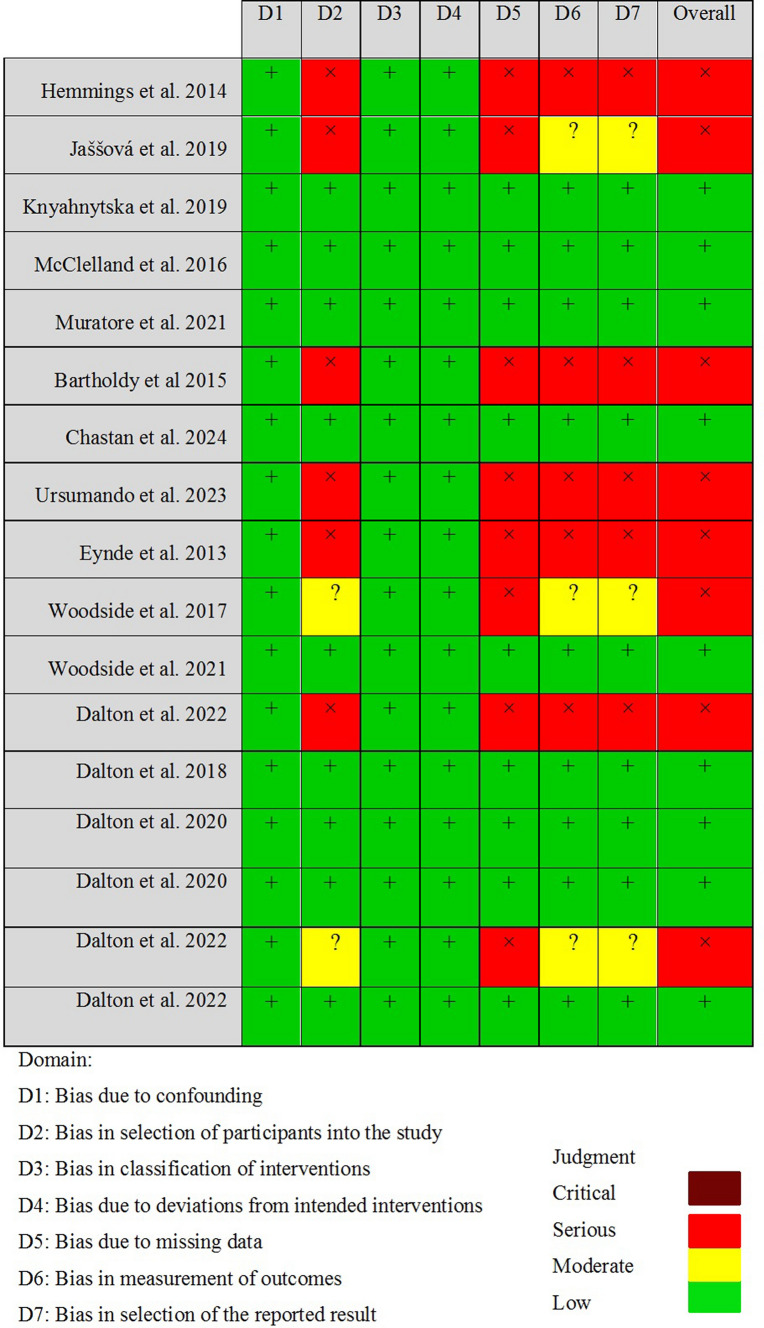
The systematic review encompassed 17 studies, with nine undergoing meta-analyses. The primary target for TMS was the dorsolateral prefrontal cortex, with two studies targeting the dorsomedial prefrontal cortex, one targeting the insula and one targeting the inferior parietal lobe. The findings revealed a significant increase in body mass index (BMI) following TMS (SMD: -0.025, 95% CI: -0.0505 to -0.005, P-value = 0.045). Additionally, the Eating Disorder Examination Questionnaire (EDE-Q) score was quantitatively reported in six studies, which permitted its inclusion in the meta-analysis. The analysis exhibited a significant decrease in EDE-Q score after TMS (SMD: 0.634, 95% CI: 0.349-0.919, P-value < 0.001). Subgroup analysis based on TMS session duration indicated that the effect size of TMS on EDE-Q score is more pronounced when the session duration exceeds 20 min.
TMS represents an effective therapy for patients with AN, leading to improvements in both BMI and core symptoms of AN, with minor and transient side effects.
Level I, systematic reviews and meta-analyses.
经颅磁刺激(TMS)已成为治疗各种神经精神疾病(包括抑郁症、强迫症和帕金森病)的一种有前景的治疗方法。最近的研究集中在评估其治疗神经性厌食症(AN)患者的有效性。本系统评价和荟萃分析研究了TMS对AN患者的影响,并评估了任何潜在的不良反应。
我们按照PRISMA指南进行检索,并全面分析了多个数据库(包括Pubmed、Scopus、Embase、Web of Science和Cochrane图书馆)截至9月13日的数据。统计分析使用了综合荟萃分析软件版本3.0。
该系统评价纳入了17项研究,其中9项进行了荟萃分析。TMS的主要靶点是背外侧前额叶皮层,2项研究针对背内侧前额叶皮层,1项针对脑岛,1项针对顶下小叶。研究结果显示,TMS治疗后体重指数(BMI)显著增加(标准化均数差:-0.025,95%可信区间:-0.0505至-0.005,P值=0.045)。此外,六项研究定量报告了饮食失调检查问卷(EDE-Q)评分,这使得其能够纳入荟萃分析。分析显示,TMS治疗后EDE-Q评分显著降低(标准化均数差:0.634,95%可信区间:0.349-0.919,P值<0.001)。基于TMS疗程持续时间的亚组分析表明,当疗程持续时间超过20分钟时,TMS对EDE-Q评分的效应量更为显著。
TMS是治疗AN患者的一种有效疗法,可改善BMI和AN的核心症状,且副作用轻微且短暂。
I级,系统评价和荟萃分析。