Li Yingying, Ye Ruiwei, Dai Haorui, Lin Jiayi, Cheng Yue, Zhou Yonghong, Lu Yiming
School of Medicine, Shanghai Baoshan Luodian Hospital, Shanghai University, Shanghai, 201908, China.
Department of Pharmacy, School of Medicine, Shanghai University, Shanghai, 200444, China.
J Transl Med. 2025 Jan 15;23(1):71. doi: 10.1186/s12967-025-06122-0.
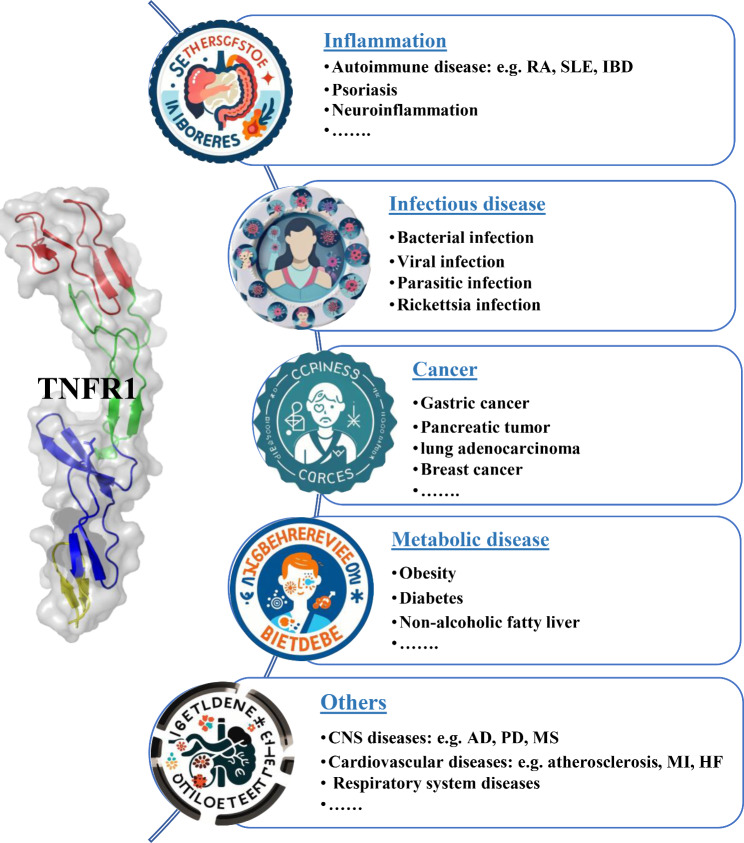
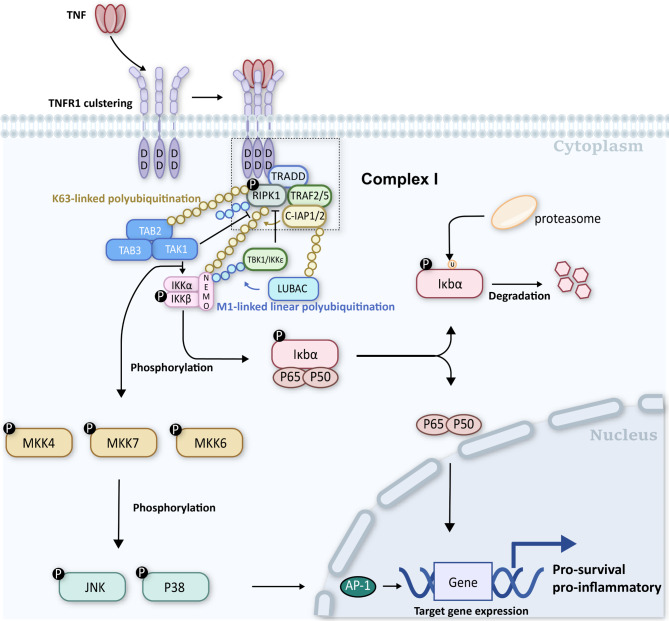
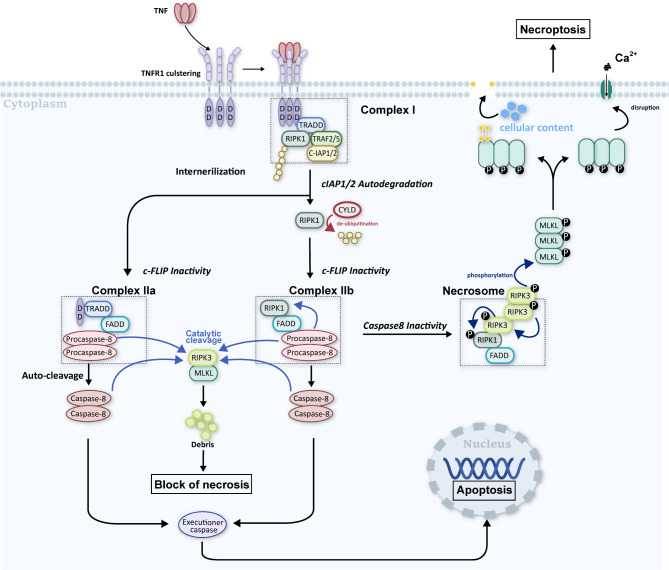
This review seeks to elucidate the therapeutic potential of tumor necrosis factor receptor 1 (TNFR1) and enhance our comprehension of its role in disease mechanisms. As a critical cell-surface receptor, TNFR1 regulates key signaling pathways, such as nuclear factor kappa-B (NF-κB) and mitogen-activated protein kinase (MAPK), which are associated with pro-inflammatory responses and cell death. The intricate regulatory mechanisms of TNFR1 signaling and its involvement in various diseases, including inflammatory disorders, infectious diseases, cancer, and metabolic syndromes, have attracted increasing scholarly attention. Given the potential risks associated with targeting tumor necrosis factor-alpha (TNF-α), selective inhibition of the TNFR1 signaling pathway has been proposed as a promising strategy to reduce side effects and enhance therapeutic efficacy. This review emphasizes the emerging field of targeted therapies aimed at selectively modulating TNFR1 activity, identifying promising therapeutic strategies that exploit TNFR1 as a drug target through an evaluation of current clinical trials and preclinical studies. In conclusion, this study contributes novel insights into the biological functions of TNFR1 and presents potential therapeutic strategies for clinical application, thereby having substantial scientific and clinical significance.
本综述旨在阐明肿瘤坏死因子受体1(TNFR1)的治疗潜力,并增进我们对其在疾病机制中作用的理解。作为一种关键的细胞表面受体,TNFR1调节关键的信号通路,如与促炎反应和细胞死亡相关的核因子κB(NF-κB)和丝裂原活化蛋白激酶(MAPK)。TNFR1信号传导的复杂调节机制及其在各种疾病中的参与,包括炎症性疾病、传染病、癌症和代谢综合征,已引起越来越多的学术关注。鉴于靶向肿瘤坏死因子-α(TNF-α)存在潜在风险,选择性抑制TNFR1信号通路已被提议作为一种有前景的策略,以减少副作用并提高治疗效果。本综述强调了旨在选择性调节TNFR1活性的靶向治疗新兴领域,通过评估当前的临床试验和临床前研究,确定将TNFR1作为药物靶点的有前景的治疗策略。总之,本研究为TNFR1的生物学功能提供了新的见解,并提出了潜在的临床应用治疗策略,具有重要的科学和临床意义。