Shar Abdul Ghaffar, Zhang Leyi, Lu Anzhi, Ahmad Munib, Saqib Muhammad, Hussain Sadam, Zulfiqar Usman, Wang Pingping, Zhang Lixin, Rahimi Mehdi
College of Life Sciences, Northwest A&F University, Yangling 712100, Shaanxi, China.
Barani Agricultural Research Station, Fateh Jang, Attock 43350, Punjab, Pakistan.
Scientifica (Cairo). 2025 Jan 6;2025:6302968. doi: 10.1155/sci5/6302968. eCollection 2025.
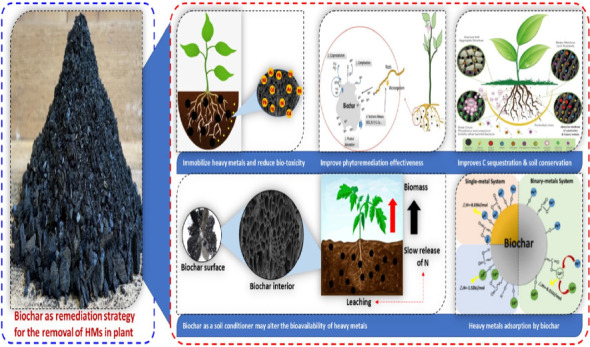
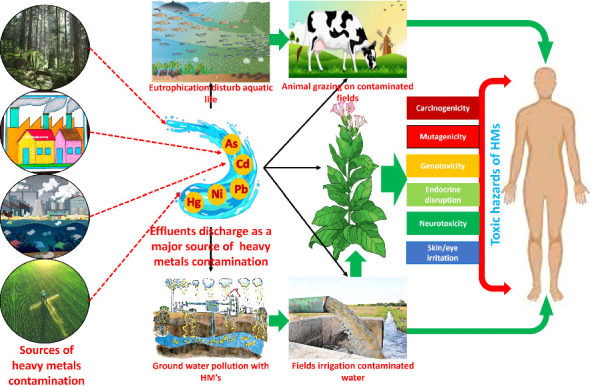
Tobacco, being a globally cultivated crop, holds significant social and economic importance. Tobacco plants are susceptible to the adverse effects of heavy metals (HMs), particularly cadmium (Cd), which hinders root development, disrupts water balance, and impedes nutrient absorption. Higher concentrations of HMs, especially Cd, naturally accumulate in tobacco leaves due to complex interactions within the plant-soil continuum. The uptake of Cd by plants from the soil is influenced by several factors, including soil type, pH, irrigation water quality, and the chemical composition of the metal involved. Different techniques, such as bioremediation, phytoremediation, and mycoremediation, have been employed to tackle the issue of HMs. The use of biochar offers a practical solution to mitigate this problem. With its large surface area and porous nature, biochar can effectively alleviate HMs contamination. Under biochar application, metal adsorption primarily occurs through physical adsorption, where metal ions are trapped within the pores of the biochar. Additionally, electrostatic attraction, in which negatively charged biochar surfaces attract positively charged metal ions, is another major mechanism of metal remediation facilitated by biochar. In this review, we documented, compiled, and interpreted novel and recent information on HMs stress on tobacco plants and explored biochar's role in alleviating HMs toxicity. By providing a comprehensive review of the persistent threat posed by Cd to tobacco crops and exploring biochar's potential as a remediation measure, this work aims to enhance our understanding of HMs stress in tobacco and contribute to the development of sustainable agricultural practices.
烟草作为一种全球种植的作物,具有重大的社会和经济意义。烟草植株易受重金属(HMs)的不利影响,尤其是镉(Cd),镉会阻碍根系发育、扰乱水分平衡并妨碍养分吸收。由于植物 - 土壤连续体中的复杂相互作用,较高浓度的重金属,特别是镉,会自然地在烟草叶片中积累。植物从土壤中吸收镉受到多种因素影响,包括土壤类型、pH值、灌溉水质以及所涉及金属的化学成分。人们采用了多种技术,如生物修复、植物修复和真菌修复来解决重金属问题。生物炭的使用为缓解这一问题提供了切实可行的解决方案。生物炭具有较大的表面积和多孔结构,能够有效减轻重金属污染。在施用生物炭的情况下,金属吸附主要通过物理吸附发生,即金属离子被困在生物炭的孔隙中。此外,带负电荷的生物炭表面吸引带正电荷的金属离子的静电吸引作用,是生物炭促进金属修复的另一个主要机制。在本综述中,我们记录、汇编并解读了关于重金属对烟草植株胁迫的新颖和最新信息,并探讨了生物炭在减轻重金属毒性方面的作用。通过全面综述镉对烟草作物构成的持续威胁,并探索生物炭作为修复措施的潜力,这项工作旨在增进我们对烟草中重金属胁迫的理解,并为可持续农业实践的发展做出贡献。