Avadhanula Vasanthi, Creighton Chad J, Ferlic-Stark Laura, Nagaraj Divya, Zhang Yiqun, Sucgang Richard, Nicholson Erin G, Rajan Anubama, Menon Vipin Kumar, Doddapaneni Harshavardhan, Muzny Donna Marie, Metcalf Ginger A, Cregeen Sara Joan Javornik, Hoffman Kristi Louise, Gibbs Richard A, Petrosino Joseph F, Piedra Pedro A
Department of Molecular Virology and Microbiology, Baylor College of Medicine, Houston, TX, United States of America.
Dan L. Duncan Comprehensive Cancer Center Division of Biostatistics, Baylor College of Medicine, Houston, TX, United States of America.
PLoS One. 2025 Jan 16;20(1):e0317033. doi: 10.1371/journal.pone.0317033. eCollection 2025.
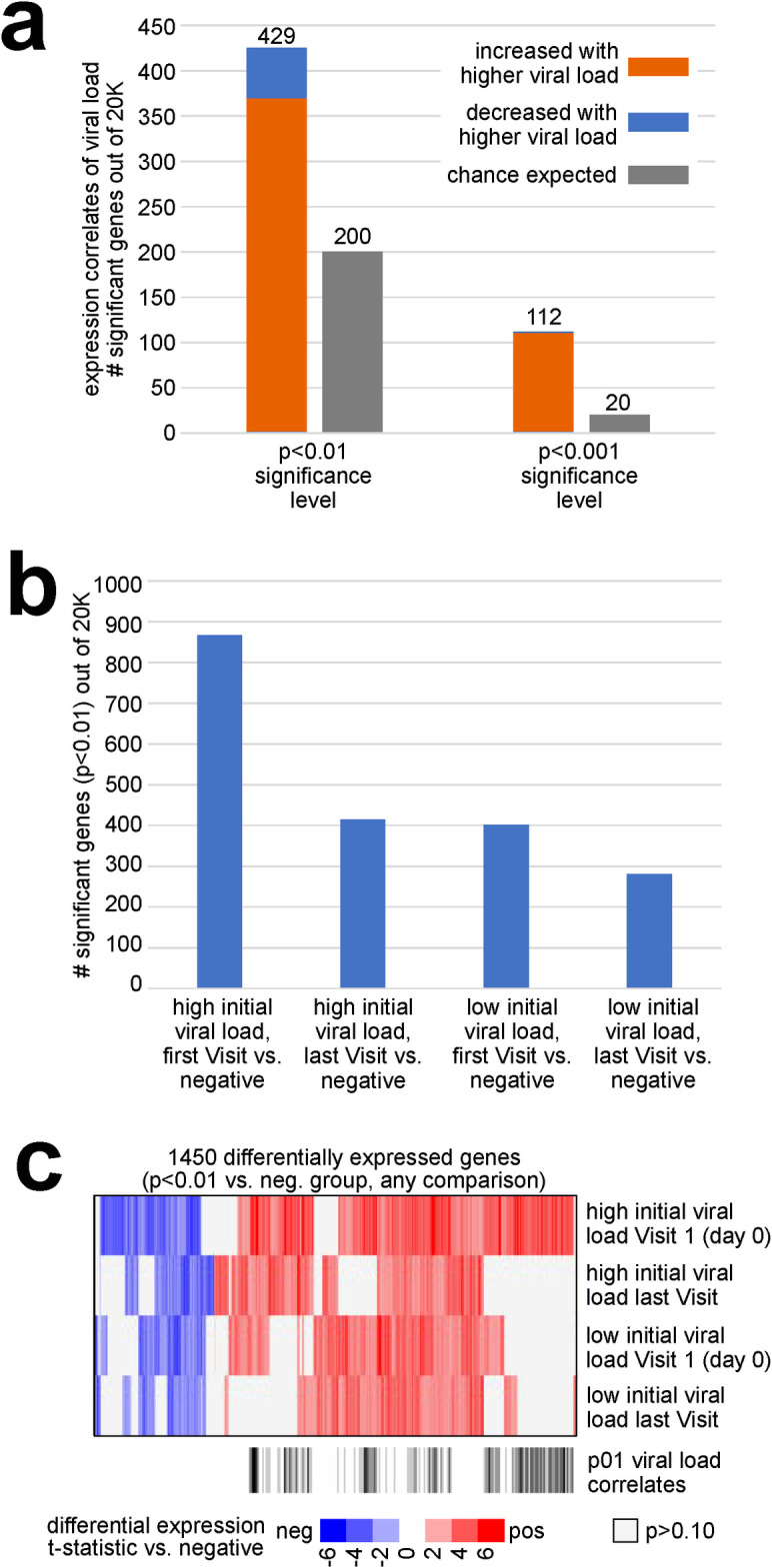
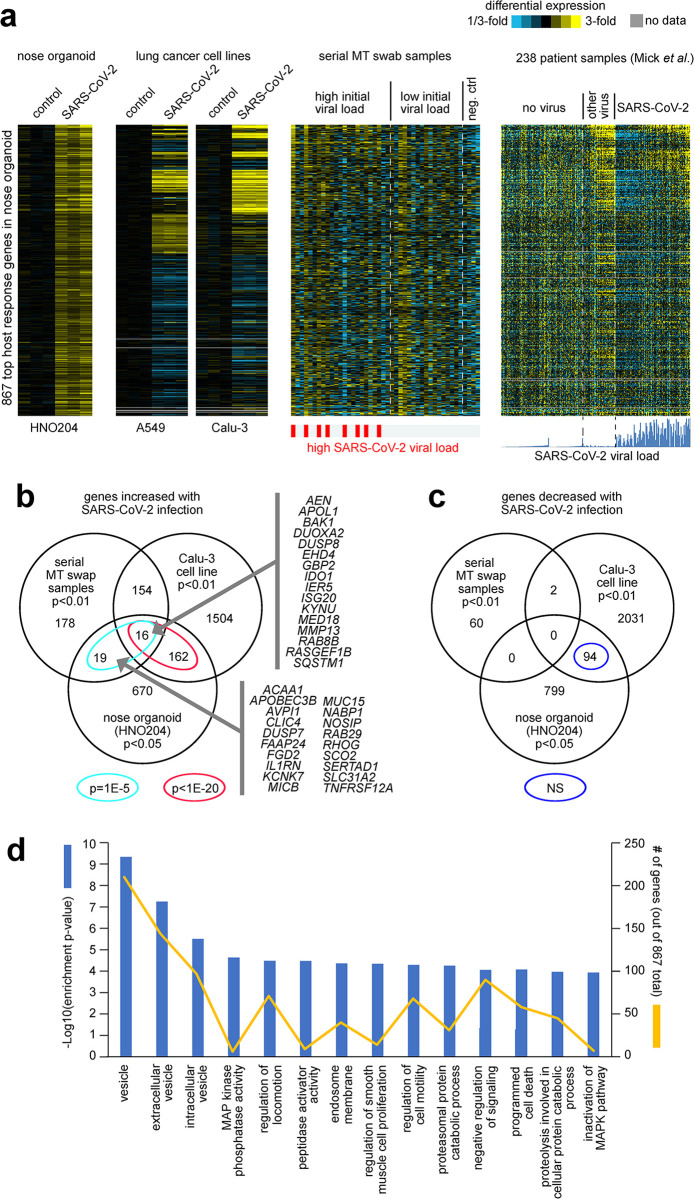
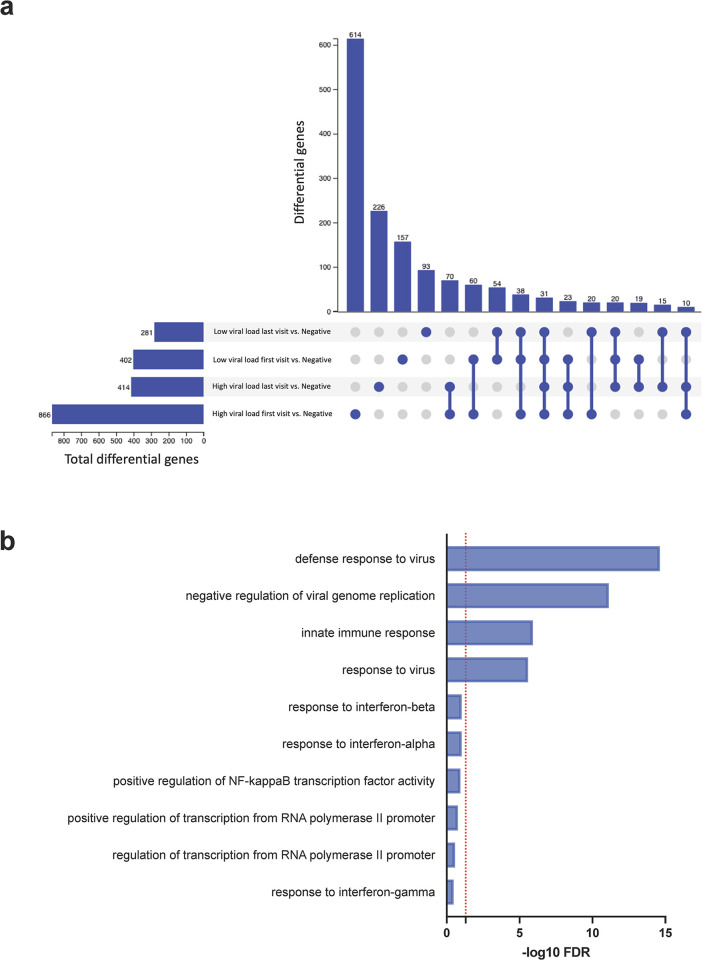
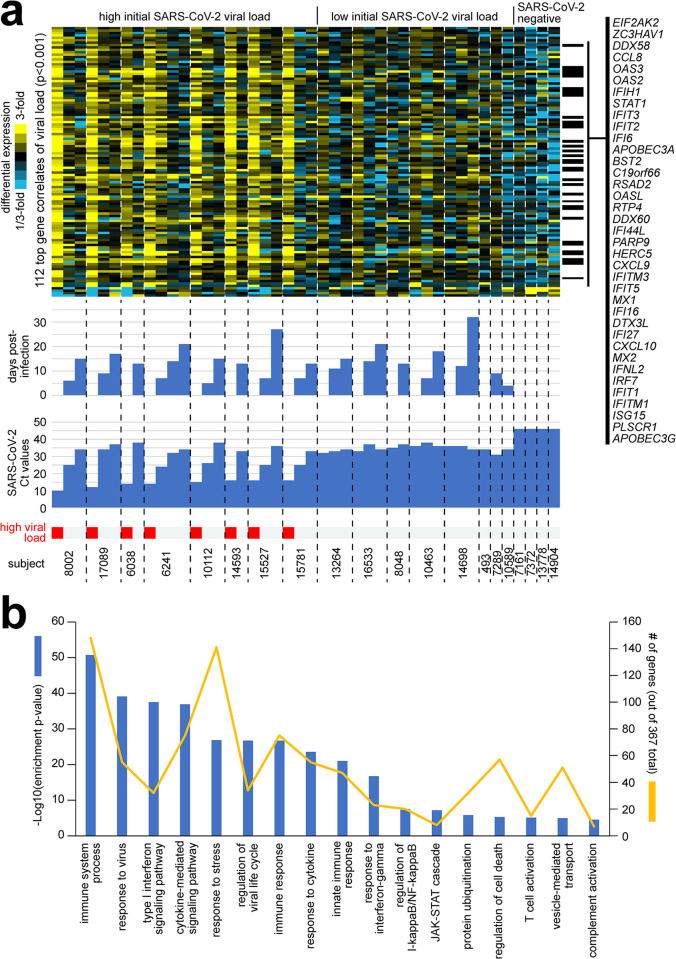
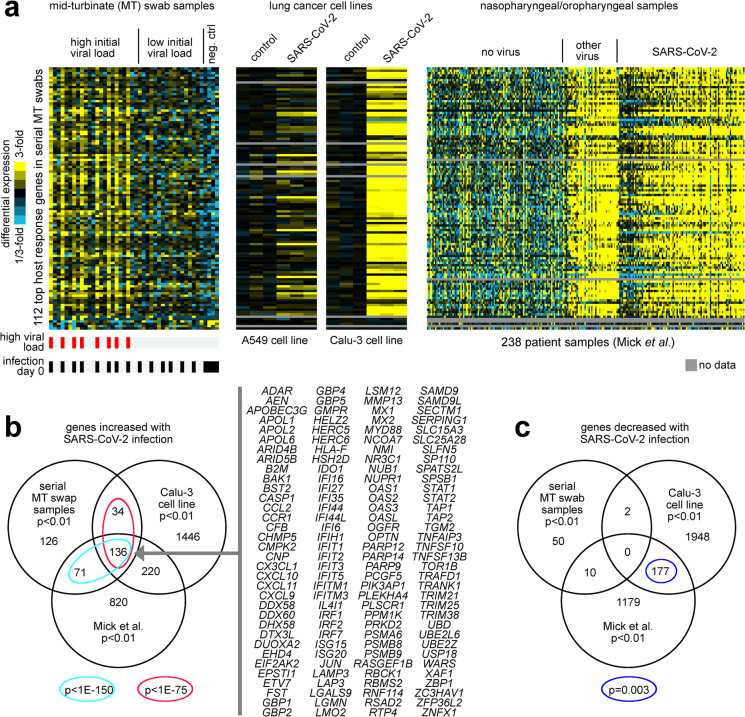
Current understanding of viral dynamics of SARS-CoV-2 and host responses driving the pathogenic mechanisms in COVID-19 is rapidly evolving. Here, we conducted a longitudinal study to investigate gene expression patterns during acute SARS-CoV-2 illness. Cases included SARS-CoV-2 infected individuals with extremely high viral loads early in their illness, individuals having low SARS-CoV-2 viral loads early in their infection, and individuals testing negative for SARS-CoV-2. We could identify widespread transcriptional host responses to SARS-CoV-2 infection that were initially most strongly manifested in patients with extremely high initial viral loads, then attenuating within the patient over time as viral loads decreased. Genes correlated with SARS-CoV-2 viral load over time were similarly differentially expressed across independent datasets of SARS-CoV-2 infected lung and upper airway cells, from both in vitro systems and patient samples. We also generated expression data on the human nose organoid model during SARS-CoV-2 infection. The human nose organoid-generated host transcriptional response captured many aspects of responses observed in the above patient samples, while suggesting the existence of distinct host responses to SARS-CoV-2 depending on the cellular context, involving both epithelial and cellular immune responses. Our findings provide a catalog of SARS-CoV-2 host response genes changing over time and magnitude of these host responses were significantly correlated to viral load.
目前对严重急性呼吸综合征冠状病毒2(SARS-CoV-2)病毒动力学以及驱动冠状病毒病(COVID-19)致病机制的宿主反应的理解正在迅速演变。在此,我们进行了一项纵向研究,以调查急性SARS-CoV-2感染期间的基因表达模式。病例包括在疾病早期病毒载量极高的SARS-CoV-2感染个体、感染早期SARS-CoV-2病毒载量低的个体以及SARS-CoV-2检测呈阴性的个体。我们能够识别出对SARS-CoV-2感染广泛的宿主转录反应,这些反应最初在初始病毒载量极高的患者中表现最为强烈,然后随着病毒载量的下降在患者体内随时间减弱。在来自体外系统和患者样本的SARS-CoV-2感染的肺和上呼吸道细胞的独立数据集中,与SARS-CoV-2病毒载量随时间相关的基因同样存在差异表达。我们还生成了SARS-CoV-2感染期间人鼻类器官模型的表达数据。人鼻类器官产生的宿主转录反应捕捉到了上述患者样本中观察到的反应的许多方面,同时表明根据细胞环境对SARS-CoV-2存在不同的宿主反应,涉及上皮和细胞免疫反应。我们的研究结果提供了一份随时间变化的SARS-CoV-2宿主反应基因目录,并且这些宿主反应的程度与病毒载量显著相关。