School of Chinese Medicine, Li Ka Shing Faculty of Medicine, The University of Hong Kong, Hong Kong, Hong Kong SAR, China.
Guanghua School of Stomatology, Hospital of Stomatology, Sun Yat-Sen University, Guangzhou, China.
Front Immunol. 2021 Nov 22;12:733171. doi: 10.3389/fimmu.2021.733171. eCollection 2021.
COVID-19, caused by SARS-CoV-2 virus, is a global pandemic with high mortality and morbidity. Limited diagnostic methods hampered the infection control. Since the direct detection of virus mainly by RT-PCR may cause false-negative outcome, host response-dependent testing may serve as a complementary approach for improving COVID-19 diagnosis.
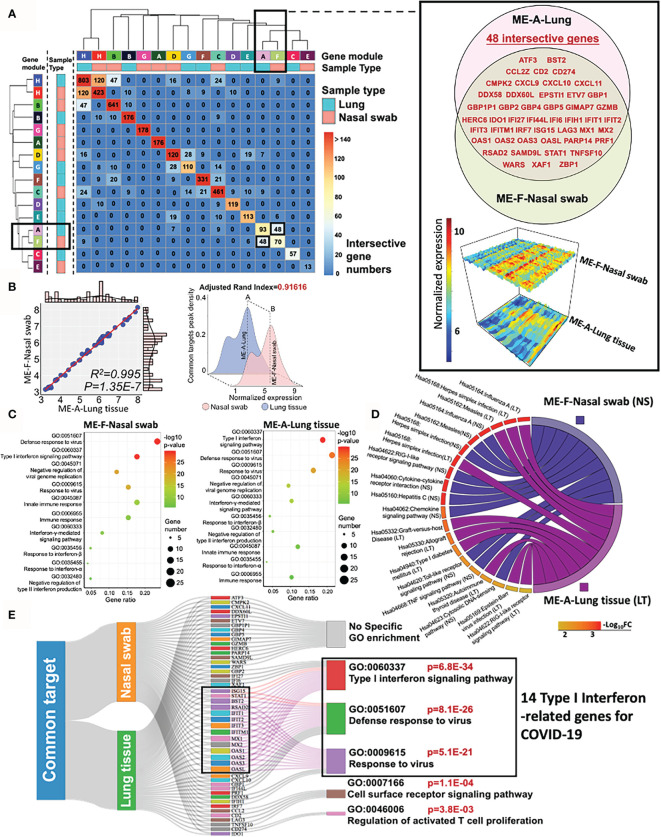
Our study discovered a highly-preserved transcriptional profile of Type I interferon (IFN-I)-dependent genes for COVID-19 complementary diagnosis.
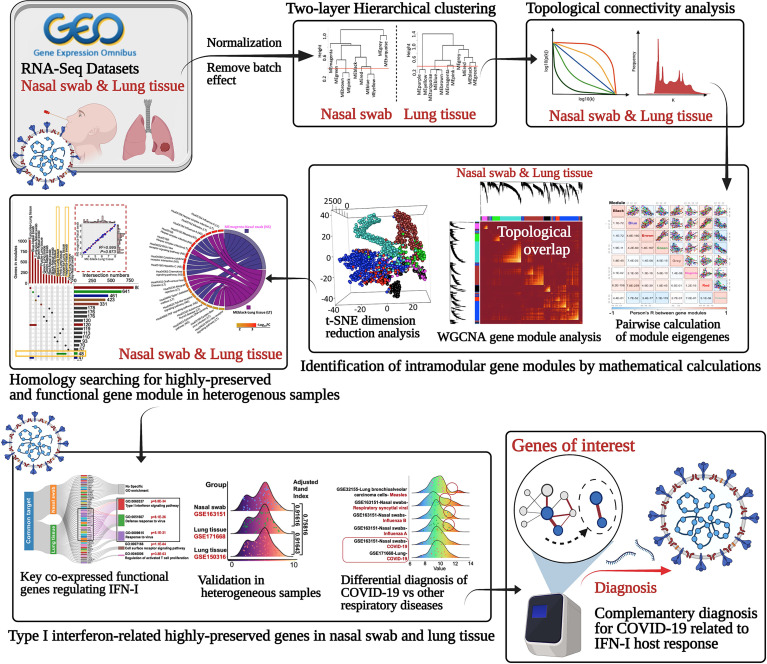
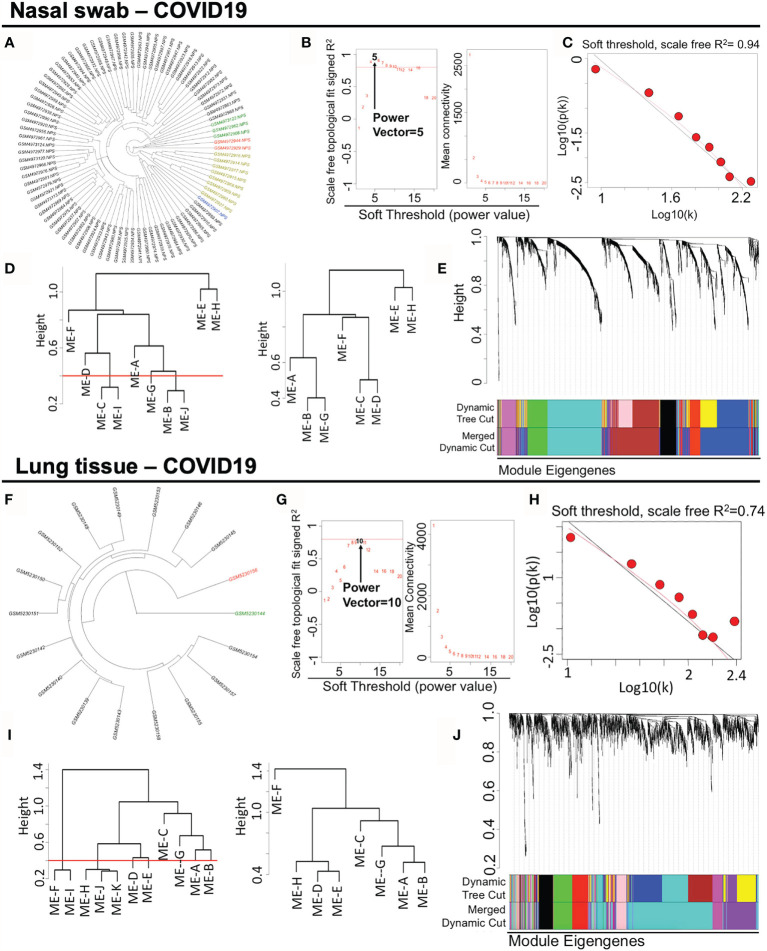
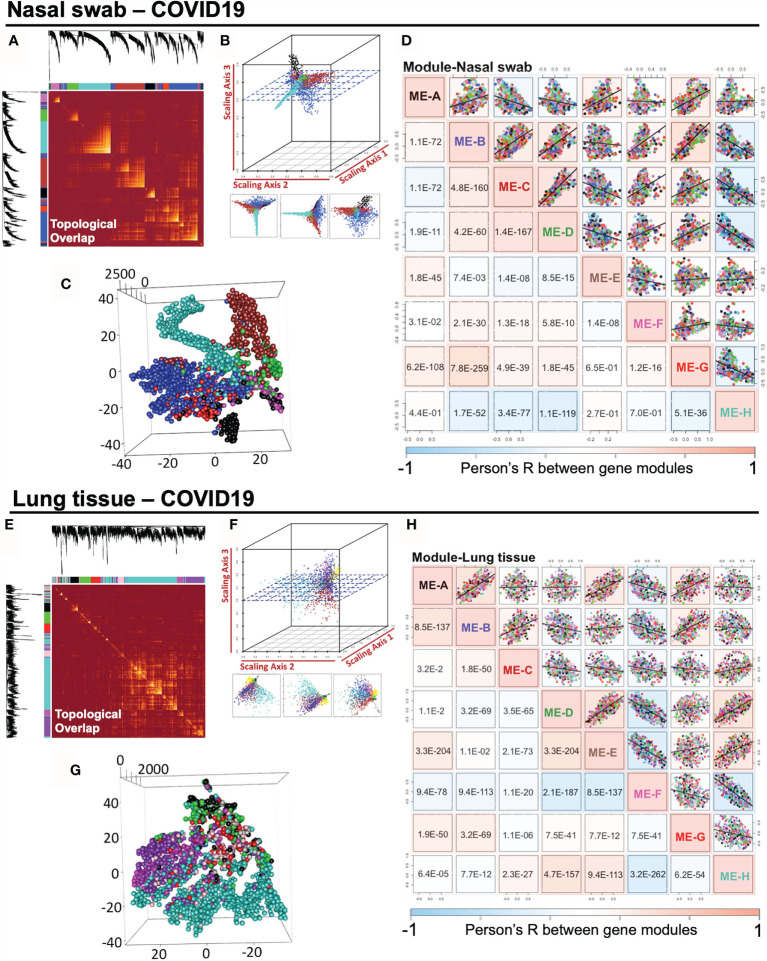
Computational language R-dependent machine learning was adopted for mining highly-conserved transcriptional profile (RNA-sequencing) across heterogeneous samples infected by SARS-CoV-2 and other respiratory infections. The transcriptomics/high-throughput sequencing data were retrieved from NCBI-GEO datasets (GSE32155, GSE147507, GSE150316, GSE162835, GSE163151, GSE171668, GSE182569). Mathematical approaches for homological analysis were as follows: adjusted rand index-related similarity analysis, geometric and multi-dimensional data interpretation, UpsetR, t-distributed Stochastic Neighbor Embedding (t-SNE), and Weighted Gene Co-expression Network Analysis (WGCNA). Besides, Interferome Database was used for predicting the transcriptional factors possessing IFN-I promoter-binding sites to the key IFN-I genes for COVID-19 diagnosis.
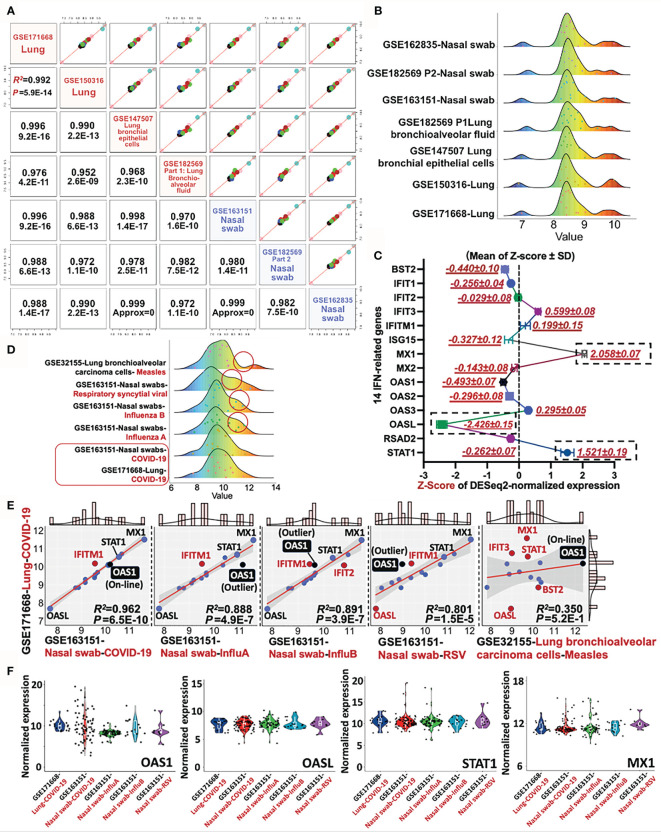
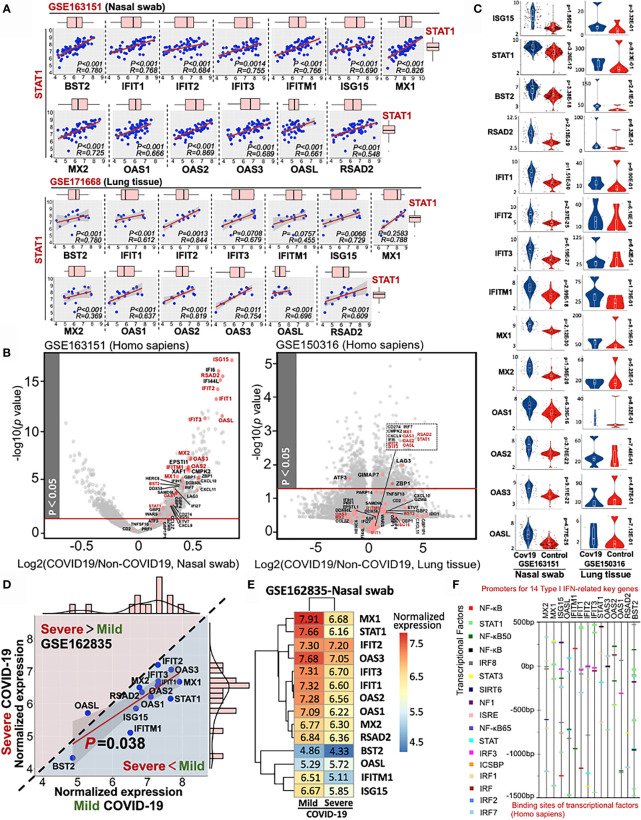
In this study, we identified a highly-preserved gene module between SARS-CoV-2 infected nasal swab and postmortem lung tissue regulating IFN-I signaling for COVID-19 complementary diagnosis, in which the following 14 IFN-I-stimulated genes are highly-conserved, including BST2, IFIT1, IFIT2, IFIT3, IFITM1, ISG15, MX1, MX2, OAS1, OAS2, OAS3, OASL, RSAD2, and STAT1. The stratified severity of COVID-19 may also be identified by the transcriptional level of these 14 IFN-I genes.
Using transcriptional and computational analysis on RNA-seq data retrieved from NCBI-GEO, we identified a highly-preserved 14-gene transcriptional profile regulating IFN-I signaling in nasal swab and postmortem lung tissue infected by SARS-CoV-2. Such a conserved biosignature involved in IFN-I-related host response may be leveraged for COVID-19 diagnosis.
由 SARS-CoV-2 病毒引起的 COVID-19 是一种死亡率和发病率都很高的全球大流行病。有限的诊断方法阻碍了感染控制。由于病毒的直接检测主要通过 RT-PCR 可能导致假阴性结果,因此基于宿主反应的检测可能是提高 COVID-19 诊断的一种补充方法。
我们的研究发现了一种针对 COVID-19 互补诊断的高度保守的 I 型干扰素(IFN-I)依赖性基因转录谱。
采用基于计算语言 R 的机器学习方法,挖掘 SARS-CoV-2 和其他呼吸道感染感染的异质样本中高度保守的转录谱(RNA-seq)。从 NCBI-GEO 数据集(GSE32155、GSE147507、GSE150316、GSE162835、GSE163151、GSE171668、GSE182569)中检索转录组学/高通量测序数据。同源分析的数学方法如下:调整后的 rand 指数相关相似性分析、几何和多维数据分析、UpsetR、t 分布随机邻居嵌入(t-SNE)和加权基因共表达网络分析(WGCNA)。此外,还使用 Interferome 数据库预测具有 IFN-I 启动子结合位点的转录因子,以确定用于 COVID-19 诊断的关键 IFN-I 基因。
在这项研究中,我们确定了一个在 SARS-CoV-2 感染的鼻拭子和死后肺组织之间高度保守的基因模块,该模块调节 IFN-I 信号通路,用于 COVID-19 的互补诊断,其中以下 14 个 IFN-I 刺激基因高度保守,包括 BST2、IFIT1、IFIT2、IFIT3、IFITM1、ISG15、MX1、MX2、OAS1、OAS2、OAS3、OASL、RSAD2 和 STAT1。这些 IFN-I 基因的转录水平也可以识别 COVID-19 的严重程度分层。
使用从 NCBI-GEO 检索的 RNA-seq 数据进行转录和计算分析,我们确定了一个在 SARS-CoV-2 感染的鼻拭子和死后肺组织中高度保守的 14 基因转录谱,该转录谱调节 IFN-I 信号通路。这种涉及 IFN-I 相关宿主反应的保守生物标志物可用于 COVID-19 诊断。