Markou-Pappas Nikolaos, Ragazzoni Luca, Truppa Claudia, Salio Flavio, Barone-Adesi Francesco, Lamine Hamdi
CRIMEDIM - Center for Research and Training in Disaster Medicine, Humanitarian Aid and Global Health, Università del Piemonte Orientale, 28100, Novara, Italy.
Department of Translational Medicine, Università del Piemonte Orientale, 28100, Novara, Italy.
Confl Health. 2025 Jan 17;19(1):3. doi: 10.1186/s13031-025-00643-7.
The evolving nature of irregular warfare and the increasingly frequent violations of human rights law and international humanitarian law pose unique challenges for humanitarian actors delivering trauma care in conflict settings.
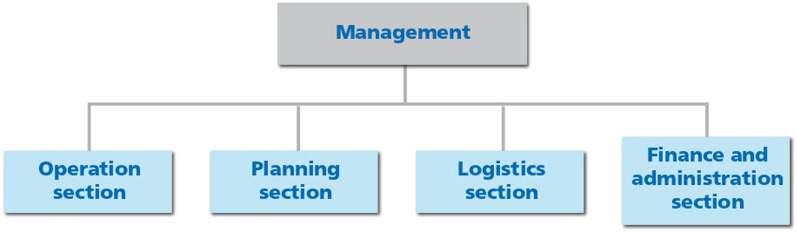
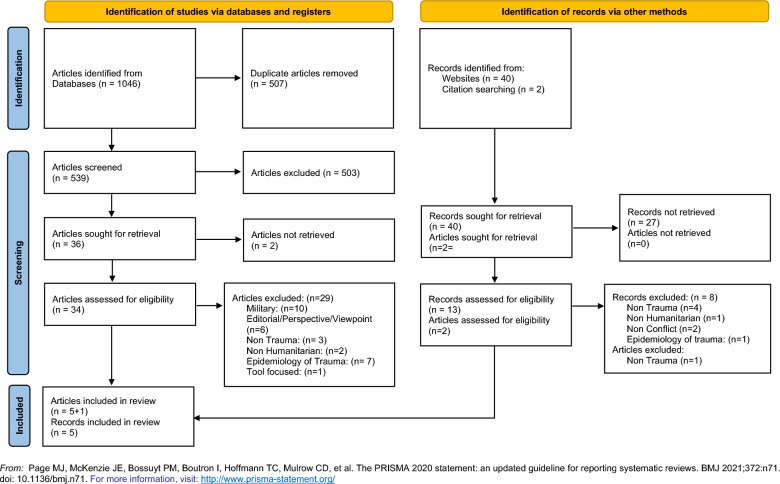
A scoping review was conducted on PubMed, Scopus, and Web of Science and a web search (on Google, Google scholar and Bing) to analyze and review past humanitarian interventions offering trauma care in conflict settings. Relevant records were identified from scientific and grey literature. The thematic areas identified by the framework for a Public Health Emergency Operations Centre were used to facilitate the synthesis and analysis.
Eleven records examining all phases of conflict identifying gaps throughout the continuum of care in the trauma systems were included. Challenges, solutions and requirements in transportation capacity, data collection methodologies, field coordination mechanisms, and rehabilitative care services were highlighted. Addressing the shortages in skilled healthcare workers, implementing quality improvement measures, and developing standardized training curricula were some of the requirements reported.
Our findings suggest that a multidimensional approach emphasizing strong coordination, with inclusive partnerships, is fundamental for effective trauma care systems in conflict zones. Key recommendations include robust medical transport, comprehensive healthcare training, preemptive mass casualty planning, standardized educational materials, continuous context reassessment, data protection, and improved transparency. These strategies could enhance trauma care interventions, ensuring they are effective, equitable, accountable, and sustainable.
非正规战争的不断演变以及违反人权法和国际人道法的行为日益频繁,给在冲突环境中提供创伤护理的人道主义行为体带来了独特挑战。
在PubMed、Scopus和科学网进行了范围综述,并通过网络搜索(在谷歌、谷歌学术和必应上)来分析和回顾过去在冲突环境中提供创伤护理的人道主义干预措施。从科学文献和灰色文献中识别出相关记录。利用公共卫生应急行动中心框架确定的主题领域来促进综合分析。
纳入了11份审查冲突各阶段的记录,这些记录识别了创伤系统中整个护理连续过程中的差距。突出了运输能力、数据收集方法、现场协调机制和康复护理服务方面的挑战、解决方案和要求。报告的一些要求包括解决熟练医护人员短缺问题、实施质量改进措施以及制定标准化培训课程。
我们的研究结果表明,强调强有力协调以及包容性伙伴关系的多维度方法对于冲突地区有效的创伤护理系统至关重要。主要建议包括强大的医疗运输、全面的医疗培训、大规模伤亡的预先规划、标准化教育材料、持续的情况重新评估、数据保护以及提高透明度。这些策略可以加强创伤护理干预措施,确保它们有效、公平、可问责且可持续。