Wang Yifan, Zhu Jingwen, Wang Shaoqiang, Zhou Jihong
The Seventh Clinical College of Guangzhou University of Chinese Medicine, Shenzhen, China.
The Fourth Clinical College of Guangzhou University of Chinese Medicine, Shenzhen, China.
Front Oncol. 2025 Jan 3;14:1511530. doi: 10.3389/fonc.2024.1511530. eCollection 2024.
Lung cancer has become the malignant tumor with the highest morbidity and mortality in the world. This study aims to analyze the burden of lung cancer and risk factors associated with lung cancer in the BRICS from 1990-2021 and to project the burden of lung cancer in the BRICS from 2021-2035.
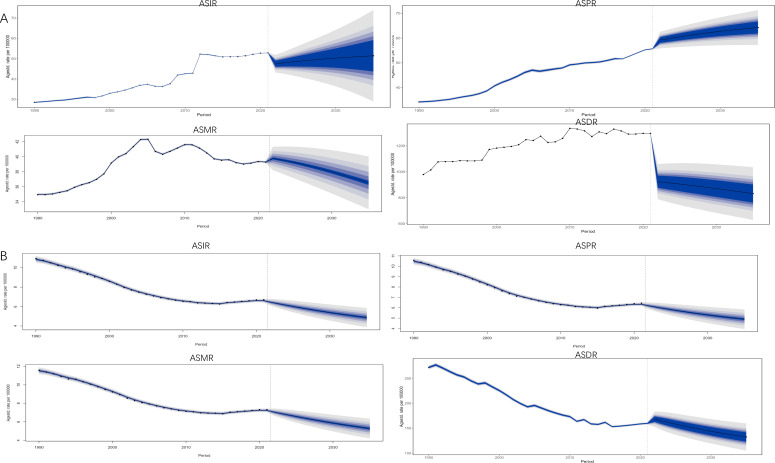
The Global Burden of Disease (GBD) 2021 database was searched to collect the incidence, prevalence, mortality, disability-adjusted life years (DALYs), and risk factors of lung cancer in the BRICS. Trends in lung cancer burden from 1990-2021 were analyzed using Joinpoint 4.9.1.0, and Bayesian age-period-cohort (BAPC) analyses were performed using R4.4.1 to project the disease burden of lung cancer from 2021-2035.
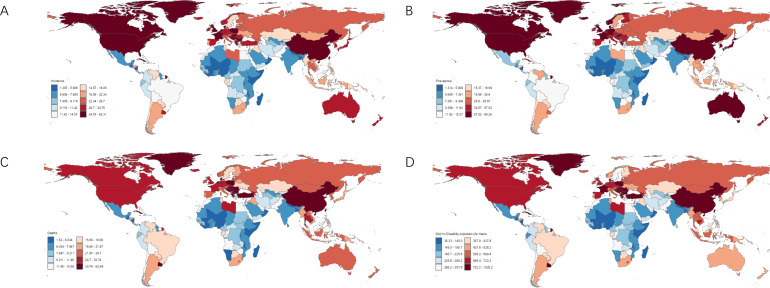
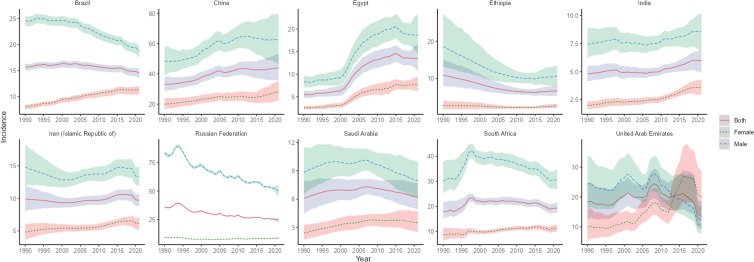
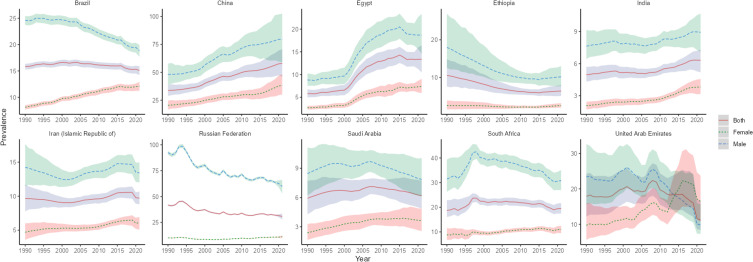
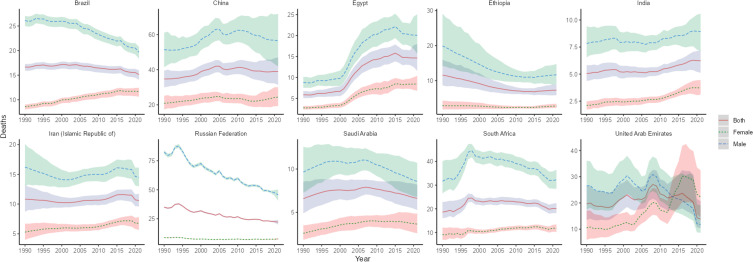
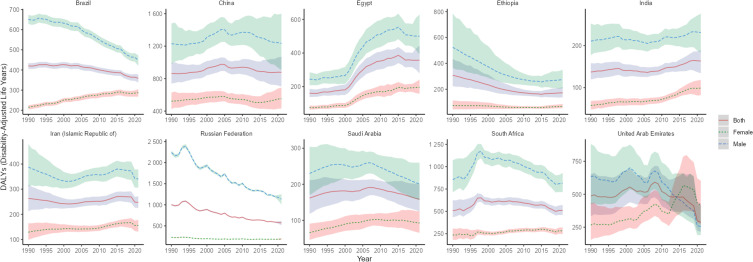
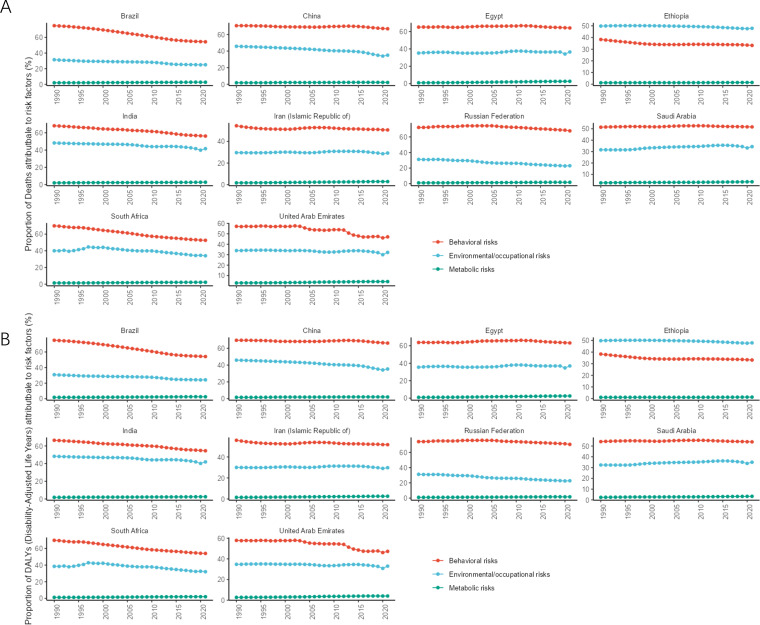
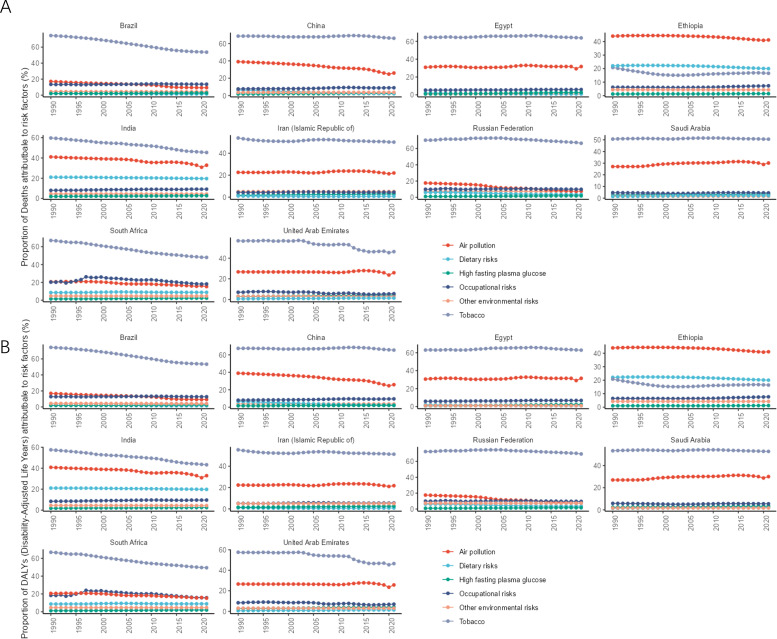
AAPC(average annual percentage change) and EAPC(estimated average percentage change) of ASIR(age-standardized incidence), ASPR(age-standardized prevalence), ASMR(age-standardized mortality), and ASDR(age-standardized disability-adjusted life year) for lung cancer in Brazil, Russia, and Ethiopia 1990-2021 were less than 0. Egypt's AAPC and EAPC for ASIR, ASPR, ASMR, and ASDR were all greater than 0 for 1990-2021, and China's ASIR, ASPR, ASMR, and ASDR were all at the top of the BRICS in 2021. According to BAPC projection Brazil, Iran, Russia, and South Africa will have a decreasing trend in ASIR, ASPR, ASMR, and ASDR from 2021-2035. Egypt will have an increasing trend in ASIR, ASPR, ASMR, and ASDR from 2021-2035. With the exception of Ethiopia, the top tier level 1 and level 2 risk factors in the rest of the BRICS were behavioral factors and smoking factors, respectively.
The BRICS still have a heavy burden of lung cancer, and there are significant differences in the burden of lung cancer among the BRICS. At the same time, many BRICS lung cancer prevention and control measures are worth learning from other developing countries.
肺癌已成为全球发病率和死亡率最高的恶性肿瘤。本研究旨在分析1990年至2021年金砖国家肺癌负担及相关危险因素,并预测2021年至2035年金砖国家肺癌负担。
检索全球疾病负担(GBD)2021数据库,收集金砖国家肺癌的发病率、患病率、死亡率、伤残调整生命年(DALYs)及危险因素。使用Joinpoint 4.9.1.0分析1990年至2021年肺癌负担趋势,并使用R4.4.1进行贝叶斯年龄-时期-队列(BAPC)分析以预测2021年至2035年肺癌疾病负担。
1990年至2021年,巴西、俄罗斯和埃塞俄比亚肺癌的年龄标准化发病率(ASIR)、年龄标准化患病率(ASPR)、年龄标准化死亡率(ASMR)和年龄标准化伤残调整生命年(ASDR)的年均百分比变化(AAPC)和估计平均百分比变化(EAPC)均小于0。1990年至2021年,埃及ASIR、ASPR、ASMR和ASDR的AAPC和EAPC均大于0,且2021年中国的ASIR、ASPR、ASMR和ASDR均居金砖国家之首。根据BAPC预测,2021年至2035年,巴西、伊朗、俄罗斯和南非的ASIR、ASPR、ASMR和ASDR将呈下降趋势。2021年至2035年,埃及的ASIR、ASPR、ASMR和ASDR将呈上升趋势。除埃塞俄比亚外,金砖国家其他国家的一级和二级主要危险因素分别为行为因素和吸烟因素。
金砖国家肺癌负担仍然沉重,金砖国家之间肺癌负担存在显著差异。同时,金砖国家许多肺癌防控措施值得其他发展中国家借鉴。