Mazza Oscar, Nielsen Joachim, Mathiesen Jonas, Højme Daniel, Lundby Carsten, Hostrup Morten, Thomassen Martin, Plomgaard Peter, Gejl Kasper Degn, Ørtenblad Niels
Department of Sports Science and Clinical Biomechanics, University of Southern Denmark, Odense, Denmark.
Inland Norway University of Applied Sciences, Lillehammer, Norway.
Scand J Med Sci Sports. 2025 Jan;35(1):e70017. doi: 10.1111/sms.70017.
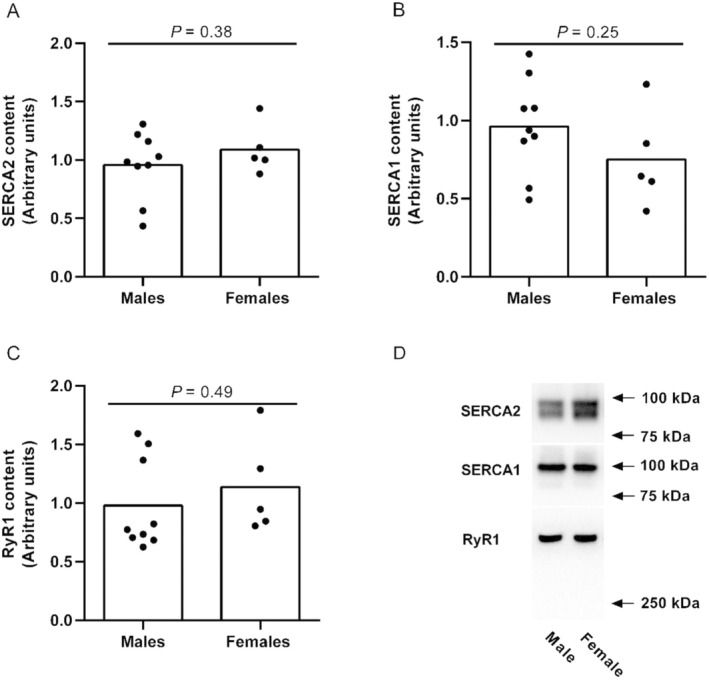
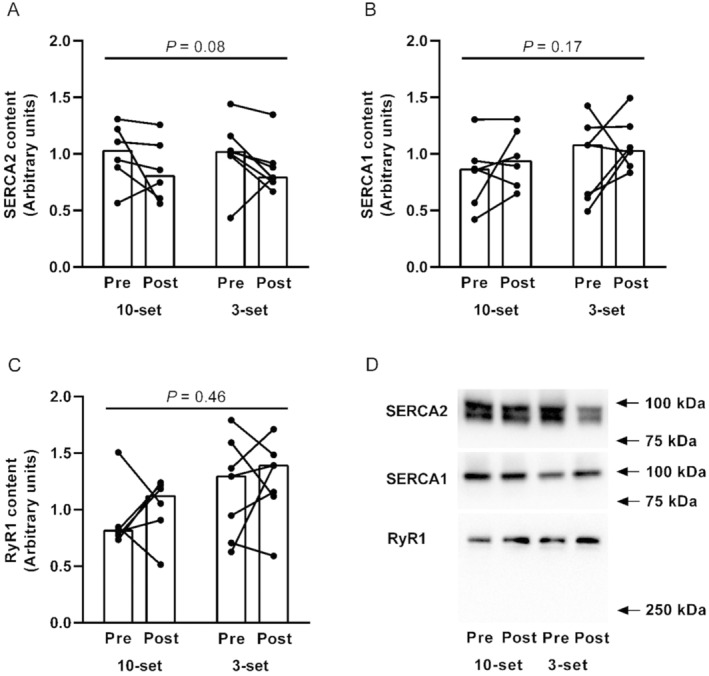
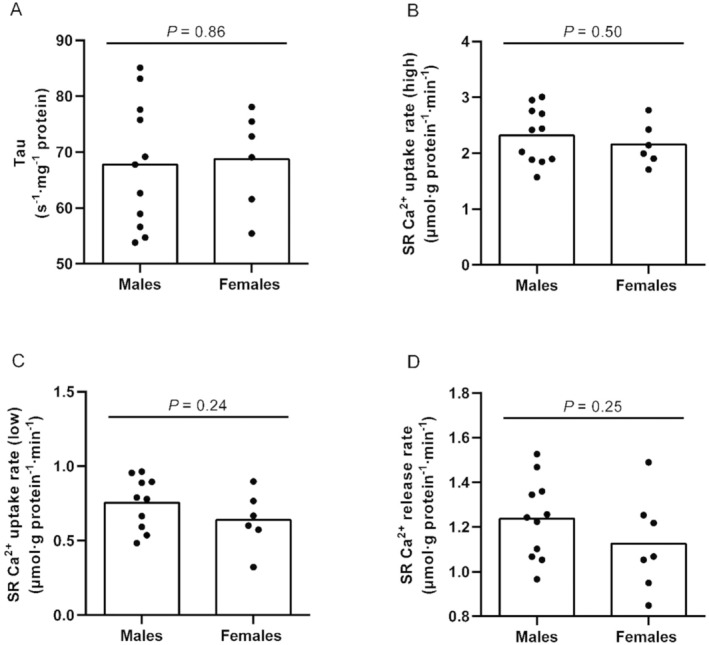
While acute exercise affects sarcoplasmic reticulum (SR) function, the impact of resistance training remains unclear. The purpose of the present study was to investigate SR Ca handling plasticity in response to moderate- and high-volume strength training in elite rowers. Twenty elite male (n = 12) and female (n = 8) rowers performed three weekly strength training sessions for 8 weeks and were randomly allocated to either perform 3 sets (3-SET) or progressive increase from 5 to 10 sets (10-SET) of 10 repetitions during the training period. Skeletal muscle biopsies were collected before and after the intervention period and analyzed for SR vesicle Ca handling, SR related proteins, and myosin heavy chain (MHC) composition. Muscle strength was determined by isometric midthigh pull (IMTP). Training increased both the overall SR Ca release (19%) and uptake rates (34%), with no differences between groups. SR protein analysis revealed a high variability but suggests an increase of RYR1 and SERCA1, while SERCA2 decreased, corroborating changes in SR function, with no differences between groups. Regardless of training volume, a 9% higher relative MHCIIa proportion and a 7% decrease in the MHCI isoform was observed. There was an overall 8% increase of IMTP. Males exhibited higher SR Ca uptake and release rates compared to females, likely explained by a higher proportion of MHCII. These findings suggest that 8 weeks of moderate- or high-volume strength training enhances SR vesicle Ca uptake and release rates in elite male and female rowers, accompanied by a shift toward a larger proportion of MHCIIa fiber type.
虽然急性运动影响肌浆网(SR)功能,但抗阻训练的影响仍不明确。本研究的目的是调查精英赛艇运动员在进行中等和高运动量力量训练时SR钙处理的可塑性。20名精英男性(n = 12)和女性(n = 8)赛艇运动员进行了为期8周、每周三次的力量训练,并在训练期间被随机分配为进行3组(3-SET)或从5组逐渐增加到10组(10-SET)、每组10次重复的训练。在干预期前后采集骨骼肌活检样本,并分析SR囊泡钙处理、SR相关蛋白和肌球蛋白重链(MHC)组成。通过等长中大腿拉力(IMTP)测定肌肉力量。训练增加了整体SR钙释放(19%)和摄取率(34%),两组之间无差异。SR蛋白分析显示出高度变异性,但表明RYR1和SERCA1增加,而SERCA2减少,证实了SR功能的变化,两组之间无差异。无论训练量如何,观察到相对MHCIIa比例提高9%,MHCI亚型减少7%。IMTP总体增加了8%。与女性相比,男性表现出更高的SR钙摄取和释放率,这可能是由于MHCII比例更高所致。这些发现表明,8周的中等或高运动量力量训练可提高精英男性和女性赛艇运动员的SR囊泡钙摄取和释放率,同时伴随着向更大比例的MHCIIa纤维类型转变。