Eitel Kelsey B, Fechner Patricia Y
Department of Pediatrics, University of Washington School of Medicine, Seattle Children's Hospital, Seattle, WA 98105, USA.
J Clin Endocrinol Metab. 2025 Jan 21;110(Supplement_1):S67-S73. doi: 10.1210/clinem/dgae710.
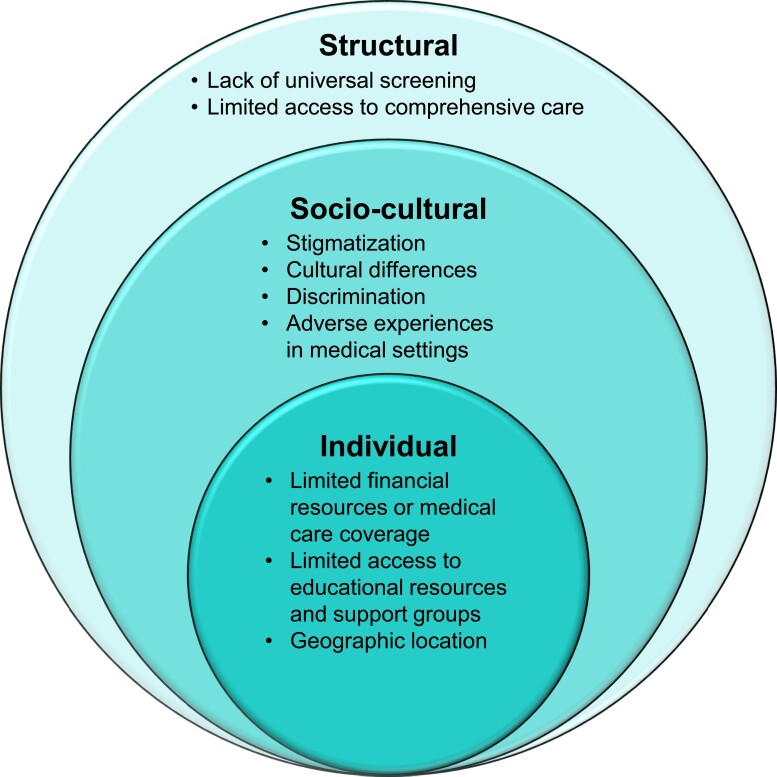
Classic congenital adrenal hyperplasia (CAH) due to 21-hydroxylase deficiency is a rare genetic condition that requires lifelong management from birth. Individuals with CAH and their families often face structural barriers to obtaining comprehensive care and treatment, including limited access to appropriate newborn screening, comprehensive care centers, and medications. Social and cultural barriers to care may include stigmatization, discrimination, and adverse medical experiences. At the individual and family level, comprehensive care may be affected by education, finances, health-care coverage, geographic location, and lack of social supports. These barriers are often further magnified for individuals living in underresourced countries. Inadequate access to comprehensive care and medications increases the risk of life-threatening adrenal crisis and disease-related comorbidities. This review article examines the current structural, sociocultural, and individual barriers that individuals with CAH and their families may face when managing their condition throughout their lifetime.
由于21-羟化酶缺乏引起的经典型先天性肾上腺皮质增生症(CAH)是一种罕见的遗传疾病,从出生起就需要终身管理。患有CAH的个体及其家庭在获得全面护理和治疗方面往往面临结构性障碍,包括难以获得适当的新生儿筛查、综合护理中心和药物。护理的社会和文化障碍可能包括污名化、歧视和不良医疗经历。在个人和家庭层面,全面护理可能受到教育、财务、医疗保健覆盖范围、地理位置和缺乏社会支持的影响。对于生活在资源匮乏国家的个体来说,这些障碍往往会进一步加剧。获得全面护理和药物的不足会增加危及生命的肾上腺危象和疾病相关合并症的风险。这篇综述文章探讨了患有CAH的个体及其家庭在终身管理病情时可能面临的当前结构性、社会文化和个人障碍。