Li Fang, Wang Ting, Wang Ling, Zhao Siyang, Zhang Yuanyuan, Ren Yuetong, Li Hui, Jiang Hong
Department of Hepatobiliary Surgery, Liaoning Cancer Hospital & Institute, Cancer Hospital of China Medical University, Shenyang, China.
Gynecology Ward 2 and Urology Ward 3, Liaoning Cancer Hospital & Institute, Cancer Hospital of China Medical University, Shenyang, China.
Sci Prog. 2025 Jan-Mar;108(1):368504251314081. doi: 10.1177/00368504251314081.
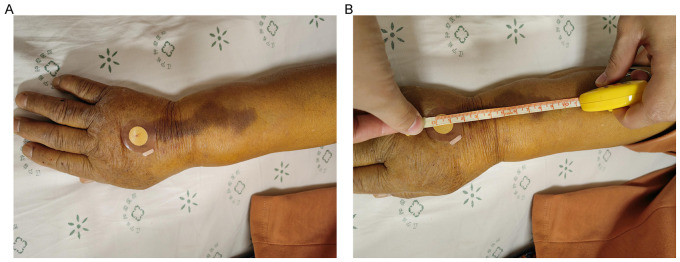
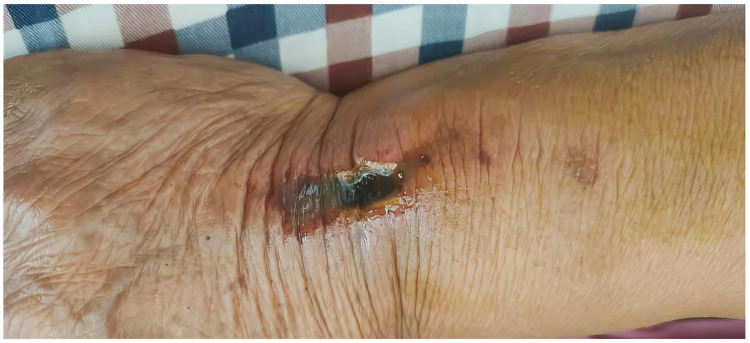
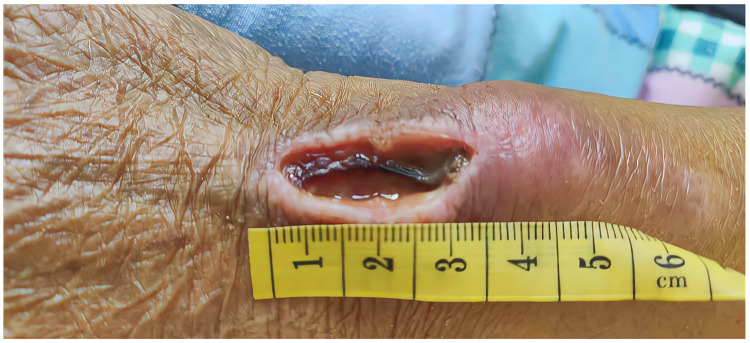
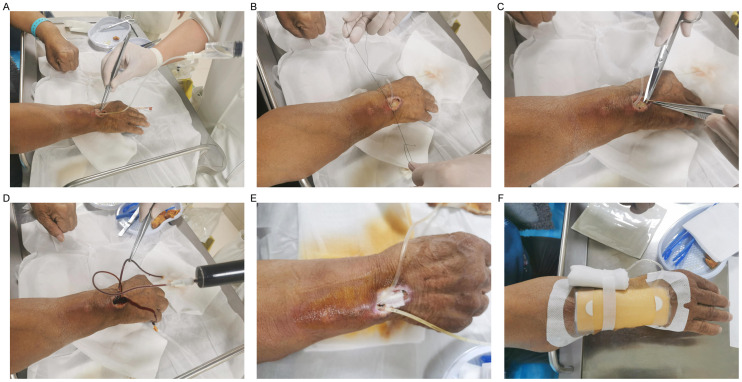
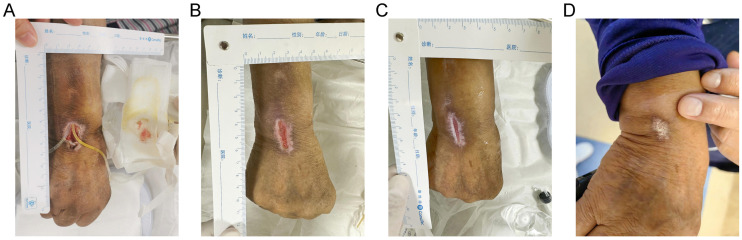
Electrolyte imbalance management is crucial in diverse clinical scenarios, with intravenous potassium repletion often required. High-concentration infusions can pose severe complications if extravasation occurs, leading to phlebitis, local tissue damage, or in severe cases, cutaneous necrosis. This risk is elevated in geriatric patients due to factors like reduced tissue elasticity and sensitivity. We report a case of phlebitis and skin necrosis in an elderly woman after peripheral KCl infusion (6% [800 mmol/L]). A woman in her early 70 s presented with obstructive jaundice and critically low potassium levels. A peripheral intravenous administration of 6% KCl was initiated to rectify hypokalemia. Due to superficial venous site selection and the patient's reduced sensitivity, phlebitis developed unnoticed, leading to cutaneous necrosis. Management involved medication discontinuation, cannula removal, application of a magnesium sulfate dressing, limb elevation, and a hydrogel dressing. Despite initial necrosis, wound debridement, ongoing dressings, and moderate hand exercises led to a complete wound resolution. This case underscores the importance of careful selection and monitoring of infusion sites during administration of irritant solutions like concentrated KCl, particularly in geriatric patients. Patient-specific factors, pharmacological implications, and the necessity for adequate vascular assessment are emphasized. Further, the case highlights the necessity for prompt and multifaceted management strategies to handle complications, including patient and caregiver education, careful wound management, and proactive nursing care. The event underscores the need for established protocols regarding the administration of high-risk drugs to prevent severe sequelae.
电解质失衡的管理在各种临床情况下都至关重要,通常需要静脉补钾。如果发生外渗,高浓度输注可能会引发严重并发症,导致静脉炎、局部组织损伤,严重时会出现皮肤坏死。由于组织弹性和敏感性降低等因素,老年患者发生这种风险会升高。我们报告了一例老年女性在输注外周氯化钾(6%[800 mmol/L])后出现静脉炎和皮肤坏死的病例。一名70岁出头的女性因梗阻性黄疸和严重低钾血症就诊。开始外周静脉输注6%氯化钾以纠正低钾血症。由于选择了浅表静脉部位且患者敏感性降低,静脉炎在未被注意的情况下发生,进而导致皮肤坏死。处理措施包括停药、拔除套管、应用硫酸镁敷料、抬高肢体以及使用水凝胶敷料。尽管最初出现了坏死,但通过伤口清创、持续换药以及适度的手部锻炼,伤口完全愈合。该病例强调了在输注刺激性溶液如浓氯化钾时,特别是在老年患者中,仔细选择和监测输注部位的重要性。强调了患者个体因素、药理学影响以及进行充分血管评估的必要性。此外,该病例突出了采取及时且多方面的管理策略来处理并发症的必要性,包括对患者和护理人员的教育、仔细的伤口处理以及积极的护理。这一事件凸显了制定关于高风险药物给药的既定方案以预防严重后遗症的必要性。