Wang Shi-Jie, Wen Deng-Tai, Gao Ying-Hui, Wang Jing-Feng, Ma Xing-Feng
Physical Culture Institute Ludong University, City Yantai, Shandong Province, China.
PLoS One. 2025 Jan 22;20(1):e0311159. doi: 10.1371/journal.pone.0311159. eCollection 2025.
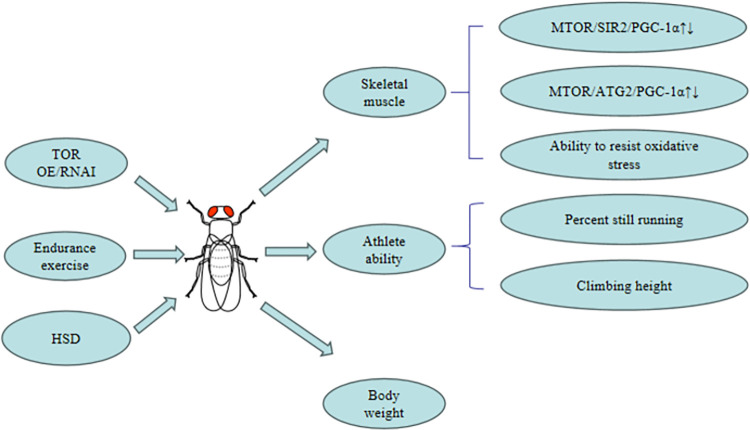
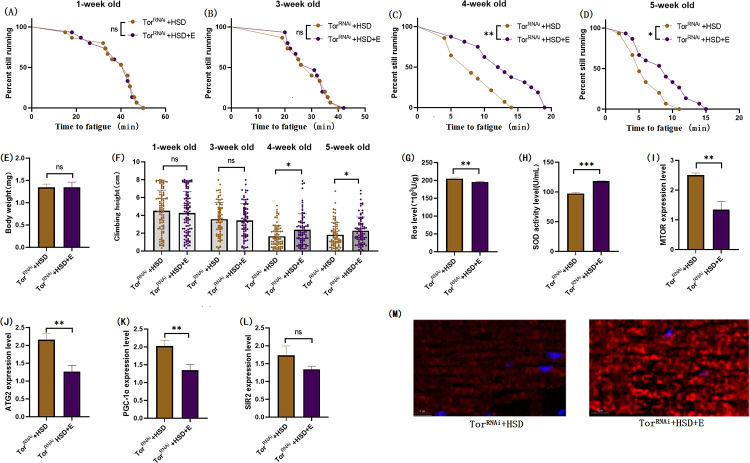
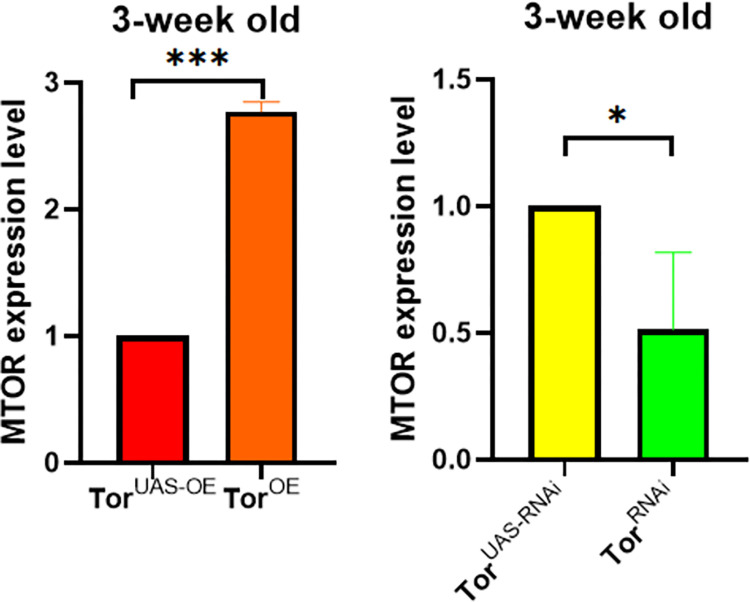
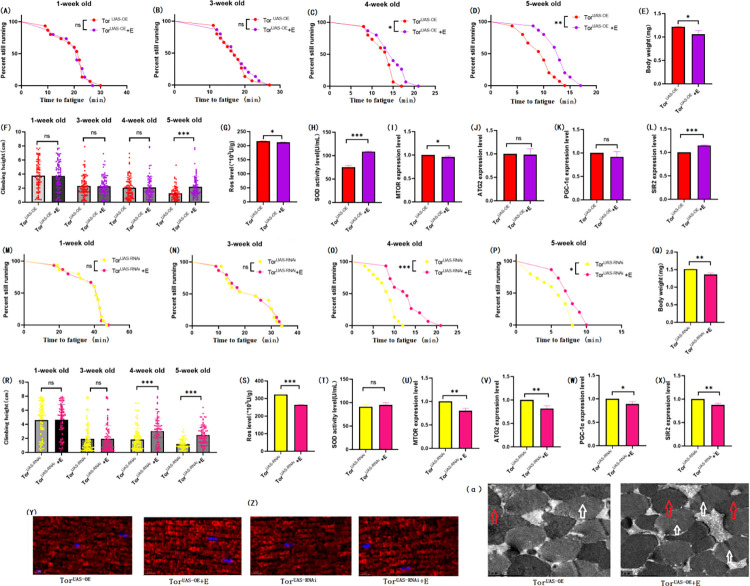
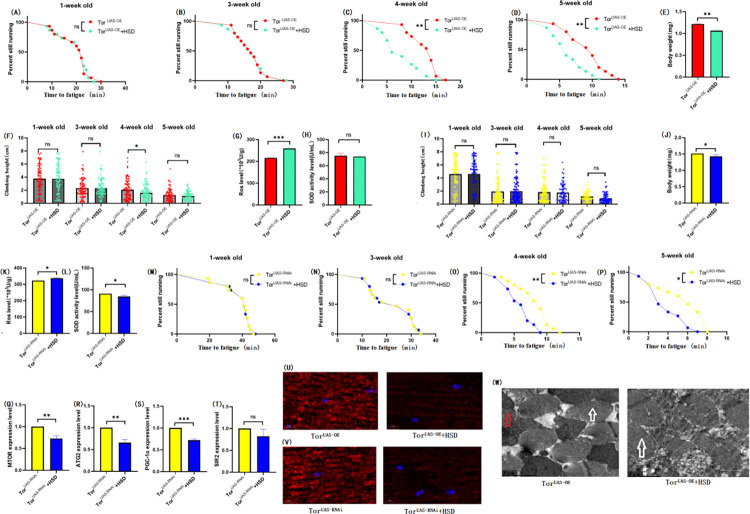
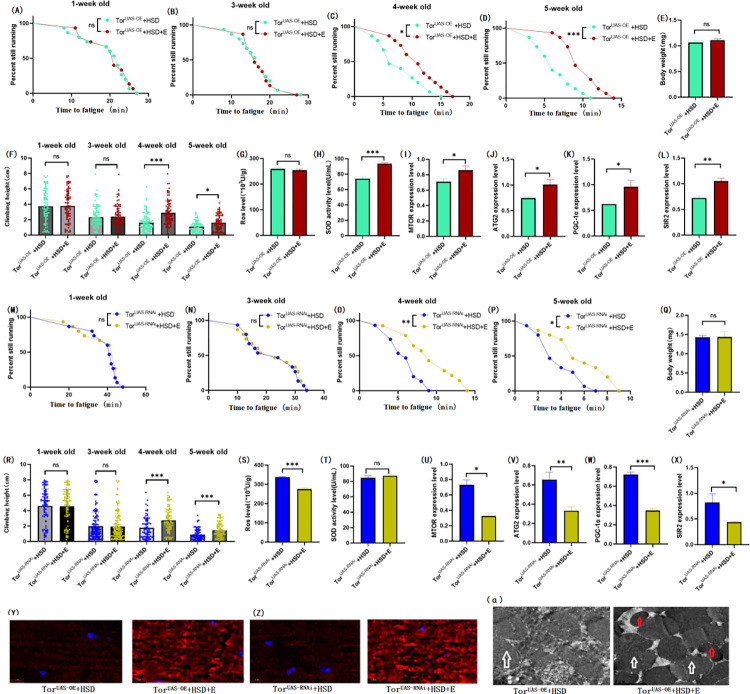
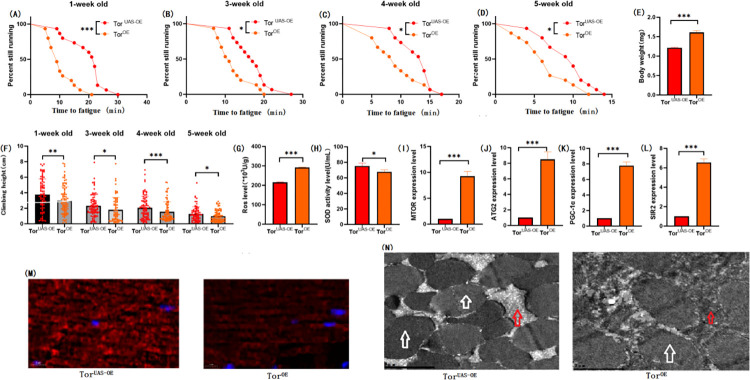
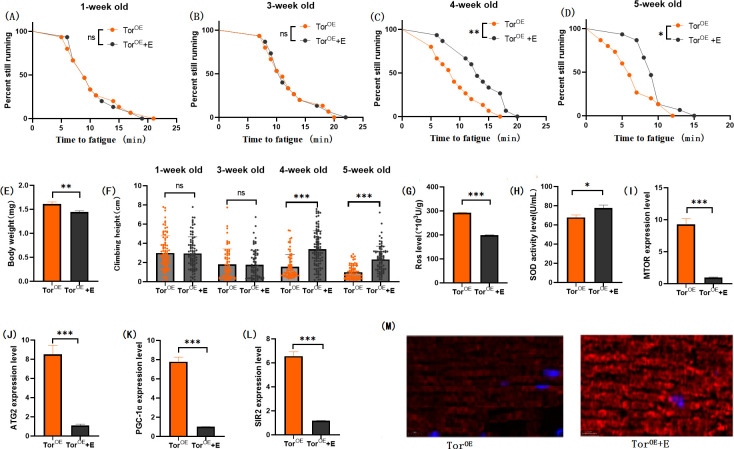
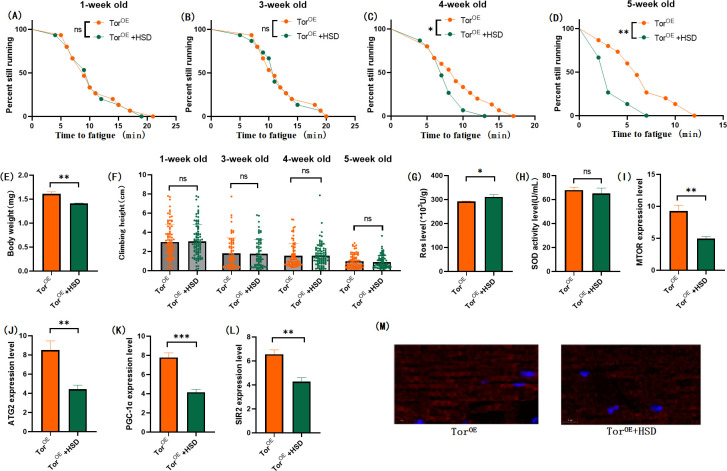
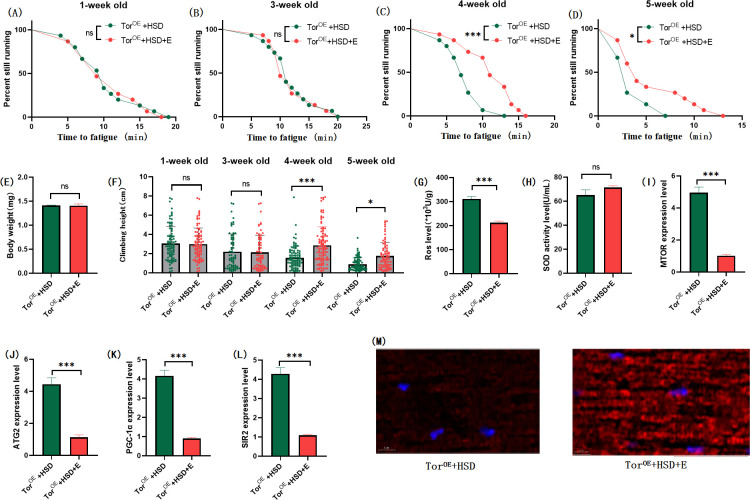
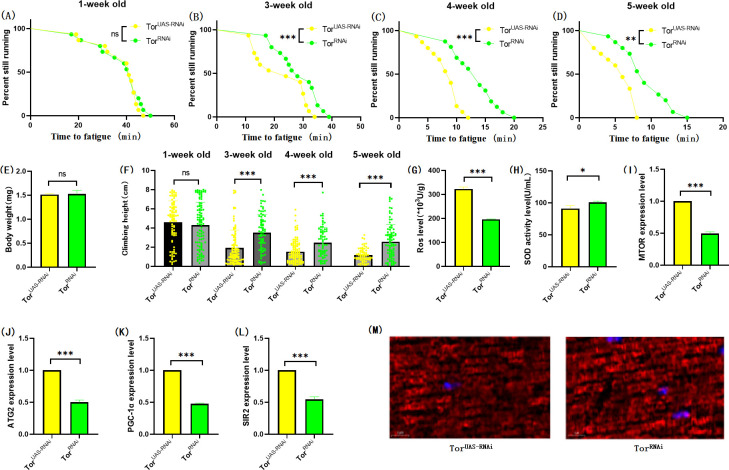
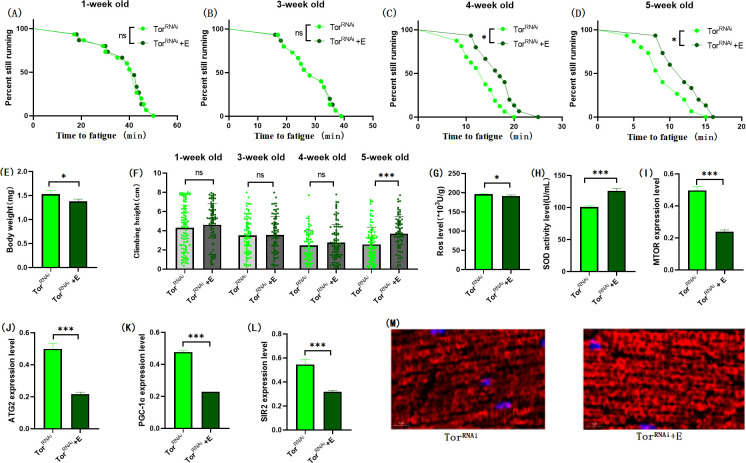
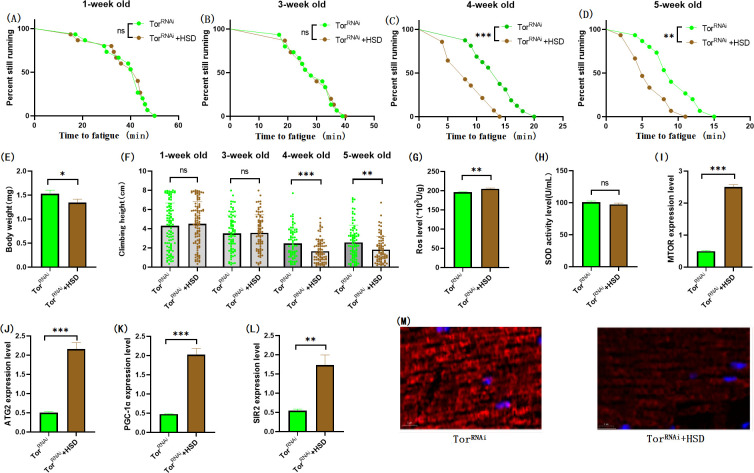
The target of rapamycin(TOR)gene is closely related to metabolism and cellular aging, but it is unclear whether the TOR pathways mediate endurance exercise against the accelerated aging of skeletal muscle induced by high salt intake. In this study, muscular TOR gene overexpression and RNAi were constructed by constructing MhcGAL4/TOR-overexpression and MhcGAL4/TORUAS-RNAi systems in Drosophila. The results showed that muscle TOR knockdown and endurance exercise significantly increased the climbing speed, climbing endurance, the expression of autophagy related gene 2(ATG2), silent information regulator 2(SIR2), and pparγ coactivator 1(PGC-1α) genes, and superoxide dismutases(SOD) activity, but it decreased the expression of the TOR gene and reactive oxygen species(ROS) level, and it protected the myofibrillar fibers and mitochondria of skeletal muscle in Drosophila on a high-salt diet. TOR overexpression yielded similar results to the high salt diet(HSD) alone, with the opposite effect of TOR knockout found in regard to endurance exercise and HSD-induced age-related skeletal muscle degradation. Therefore, the current findings confirm that the muscle TOR gene plays an important role in endurance exercise against HSD-induced age-related skeletal muscle degeneration, as it determines the activity of the mammalian target of rapamycin(MTOR)/SIR2/PGC-1α and MTOR/ATG2/PGC-1α pathways in skeletal muscle.
雷帕霉素靶蛋白(TOR)基因与代谢和细胞衰老密切相关,但尚不清楚TOR信号通路是否介导耐力运动对抗高盐摄入诱导的骨骼肌加速衰老。在本研究中,通过在果蝇中构建MhcGAL4/TOR过表达和MhcGAL4/TORUAS-RNAi系统,实现了肌肉TOR基因的过表达和RNA干扰。结果表明,肌肉TOR基因敲低和耐力运动显著提高了攀爬速度、攀爬耐力、自噬相关基因2(ATG2)、沉默信息调节因子2(SIR2)和过氧化物酶体增殖物激活受体γ共激活因子1(PGC-1α)基因的表达,以及超氧化物歧化酶(SOD)活性,但降低了TOR基因的表达和活性氧(ROS)水平,并保护了高盐饮食果蝇骨骼肌的肌原纤维和线粒体。TOR过表达产生的结果与单独的高盐饮食(HSD)相似,在耐力运动和HSD诱导的年龄相关性骨骼肌退化方面,与TOR基因敲除的效果相反。因此,目前的研究结果证实,肌肉TOR基因在耐力运动对抗HSD诱导的年龄相关性骨骼肌退化中起重要作用,因为它决定了骨骼肌中雷帕霉素哺乳动物靶蛋白(mTOR)/SIR2/PGC-1α和mTOR/ATG2/PGC-1α信号通路的活性。