Risch Timo, Kolling Dominik, Mostert Dietrich, Seedorf Tim, Heimann Dominik, Kohnhäuser Daniel, Deschner Felix, Fries Franziska, Solga Danny, Hilgers Jil-Sophie, Dastbaz Jan, Mancini Stefano, Hirsch Anna K H, Brönstrup Mark, Kirschning Andreas, Sieber Stephan A, Herrmann Jennifer, Müller Rolf
Helmholtz Institute for Pharmaceutical Research Saarland (HIPS), Helmholtz Centre for Infection Research (HZI) and Saarland University Department of Pharmacy, Campus Building E8.1, 66123, Saarbrücken, Germany.
German Centre for Infection Research (DZIF), Inhoffenstraße 7, 38124, Braunschweig, Germany.
NPJ Antimicrob Resist. 2024 Nov 5;2(1):33. doi: 10.1038/s44259-024-00050-7.
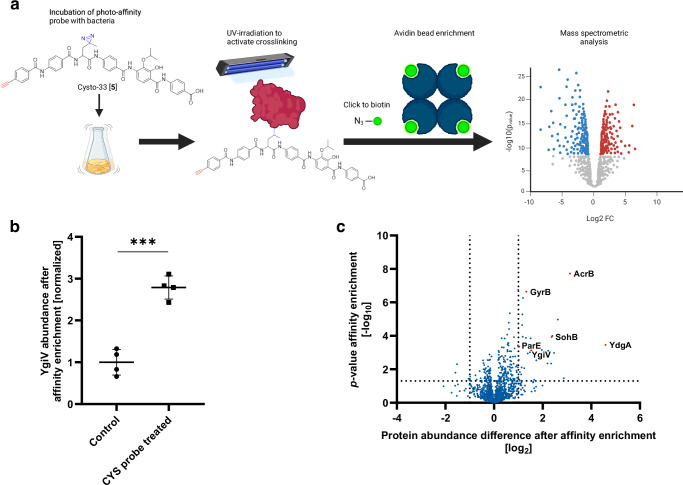
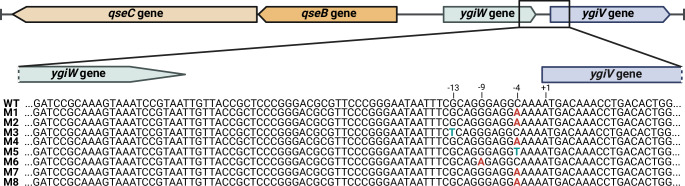
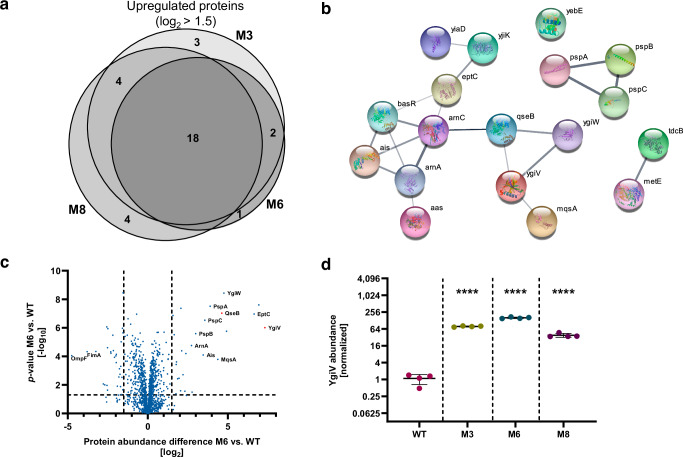
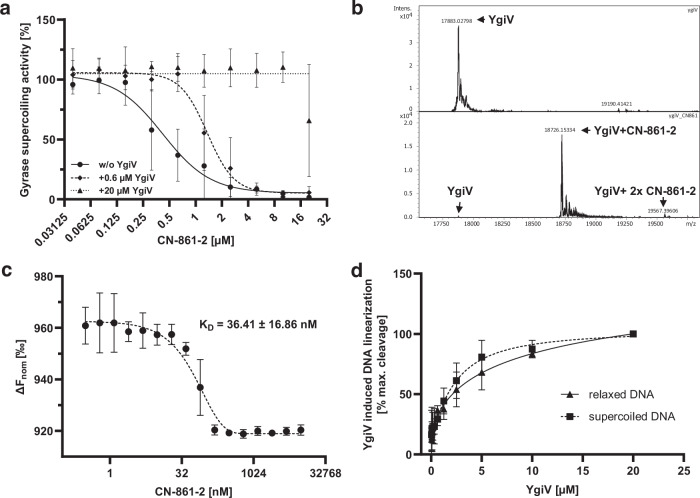
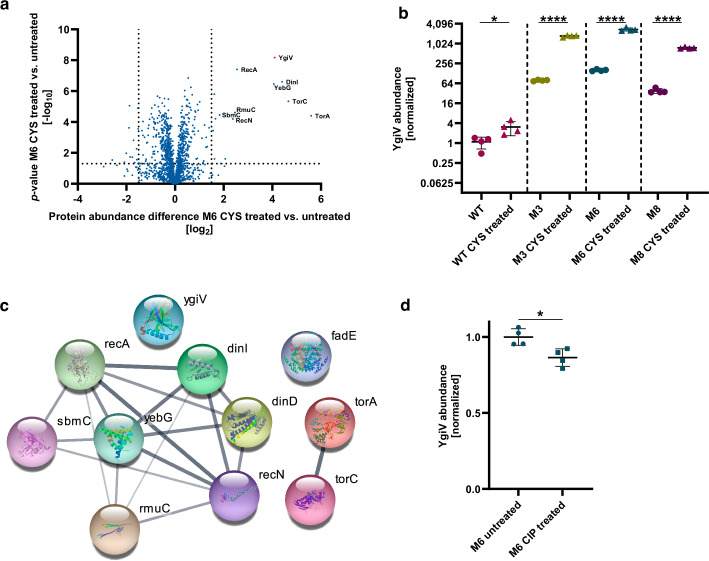
Antimicrobial resistance is one of the major health threats of the modern world. Thus, new structural classes of antimicrobial compounds are needed in order to overcome existing resistance. Cystobactamids represent one such new compound class that inhibit the well-established target bacterial type II topoisomerases while exhibiting superior antibacterial and resistance-breaking properties. Understanding potential mechanisms of emerging resistances is crucial in the development of novel antibiotics as they directly impact the future therapeutic application and market success. Therefore, the frequency and molecular basis of cystobactamid resistance in Escherichia coli was analyzed. High-level resistant E. coli mutants were selected and found to harbor single nucleotide polymorphisms in the promotor region of the ygiV gene, causing an upregulation of the respective protein. These stable mutations are contrary to what was observed as a resistance genotype in the structurally related albicidins, where ygiV gene amplifications were identified as causing resistance. Overexpression of YgiV in the mutants was additionally amplified upon cystobactamid exposition, showing further adaptation to this compound class under treatment. YgiV binds cystobactamids with high binding affinity, thereby preventing their interaction with the antimicrobial targets topoisomerase IV and DNA gyrase. In addition, we observed a substantial impact of YgiV on in vitro gyrase activity by leading to increased DNA cleavage and concurrent reduction in the efficacy of cystobactamids in inhibiting gyrase supercoiling activity. Furthermore, we identified co-upregulation of membrane-modifying proteins, such as EptC, and the transcriptional regulator QseB. This presumably contributes to the observed reduced motility and fimbrial protein expression in resistant mutants, resulting in a reduced expression of virulence factors and potentially pathogenicity, associated with ygiV promotor mutations.
抗菌药物耐药性是现代世界面临的主要健康威胁之一。因此,需要新的结构类型的抗菌化合物来克服现有的耐药性。囊杆菌酰胺类就是这样一类新的化合物,它能抑制已确定的靶标细菌II型拓扑异构酶,同时展现出卓越的抗菌和抗耐药特性。了解新出现的耐药机制对于新型抗生素的开发至关重要,因为它们直接影响未来的治疗应用和市场成功。因此,我们分析了大肠杆菌中囊杆菌酰胺耐药性的频率和分子基础。我们筛选出了高水平耐药的大肠杆菌突变体,发现它们在ygiV基因的启动子区域存在单核苷酸多态性,导致相应蛋白质的上调。这些稳定的突变与在结构相关的白霉素中观察到的耐药基因型相反,在白霉素中,ygiV基因扩增被确定为导致耐药性的原因。在接触囊杆菌酰胺后,突变体中YgiV的过表达进一步增强,表明在治疗过程中对这类化合物有进一步的适应性。YgiV以高结合亲和力结合囊杆菌酰胺,从而阻止它们与抗菌靶标拓扑异构酶IV和DNA回旋酶相互作用。此外,我们观察到YgiV对体外回旋酶活性有重大影响,导致DNA切割增加,同时囊杆菌酰胺抑制回旋酶超螺旋活性的效力降低。此外,我们还发现了膜修饰蛋白(如EptC)和转录调节因子QseB的共同上调。这可能导致了耐药突变体中观察到的运动性降低和菌毛蛋白表达减少,从而导致毒力因子表达降低以及潜在的致病性降低,这与ygiV启动子突变有关。