Nambasa Victoria Prudence, Gunter Hannah May, Adeyemo Modupe Bamidele, Bhawaneedin Neetesh Yanish, Blockman Marc, Sabblah George Tsey, Gyapong John Owusu, Guantai Eric Muriithi, Abebe Tamrat, Abebe Workeabeba, Lawson Henry Jeremy, Leburu Mercedes Chawada, Mohammed Abdullahi, Amponsa-Achiano Kwame, Matlala Mafora Florah, Elemuwa Uchenna Geraldine, Mogtari Hudu, Nyarko Alexander Kwadwo, Schönfeldt Marione, Kamupira Mercy, McCarthy Kerrigan, Tefera Yohannes Lakew, Alemu Asnakech, Yusuf Kabir Mawashi, Emelife Obi, Sidibe Ladji, Dandajena Kudakwashe, Onu Kenneth, Adeyeye Mojisola Christianah, Darko Delese Mimi, Gerba Heran, Semete Boitumelo, Siyoi Fred, Ambali Aggrey, Meyer Johanna Catharina
African Union Development Agency-NEPAD, Johannesburg, South Africa.
Division of Clinical Pharmacology, Department of Medicine, University of Cape Town, Cape Town, South Africa.
Drug Saf. 2025 Mar;48(3):233-249. doi: 10.1007/s40264-024-01493-7. Epub 2025 Jan 22.
The COVID-19 pandemic accelerated new vaccine development. Limited safety data necessitated robust global safety surveillance to accurately identify and promptly communicate potential safety issues. The African Union Smart Safety Surveillance (AU-3S) program established the Joint Signal Management (JSM) group to support identification of potential vaccine safety concerns in five pilot countries (Ethiopia, Ghana, Kenya, Nigeria, South Africa), accounting for approximately 35% of the African population.
Our objective was to provide an overview of the JSM group's role in supporting signal management activities for the AU-3S program during the COVID-19 pandemic.
Spontaneous, electronically reported COVID-19 vaccine adverse events following immunization (AEFI) from each country's safety data were integrated into the interim Data Integration and Signal Detection system. Statistical disproportionality methods were used to identify and review vaccine-event combinations (VECs) for potential safety concerns. The JSM group-which comprised pharmacovigilance and subject matter experts from National Medicine Regulatory Authorities, Expanded Programs on Immunization, and vaccine safety committees-conducted signal detection activities on cross-country safety data and provided recommendations.
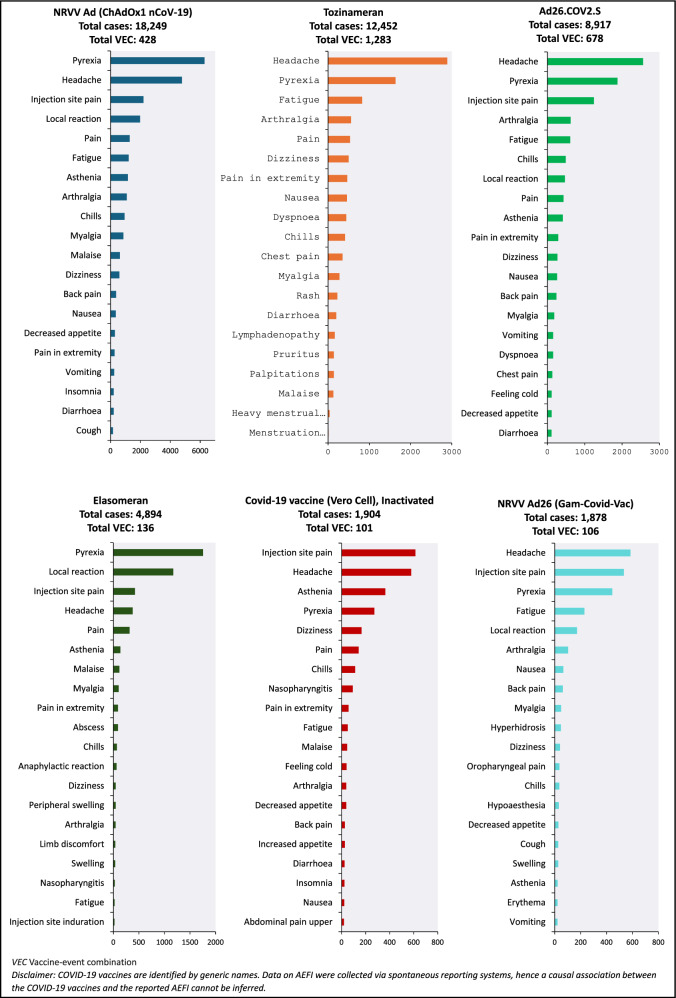
From April 2021 to December 2023, a total of 48,294 spontaneously reported AEFI were analyzed for six COVID-19 vaccines (NRVV Ad [ChAdOx1 nCoV-19]; Ad26.COV2.S; Elasomeran; Tozinameran; Covid-19 vaccine [Vero Cell], Inactivated; NRVV Ad26 [Gam-Covid-Vac]) administered in Ethiopia (34.6%), Nigeria (30.3%), South Africa (16.9%), Ghana (13.5%), and Kenya (4.7%). Overall, 2,742 VECs were validated. A causal association between the COVID-19 vaccines and the reported AEFI cannot be inferred, as data were reported spontaneously. JSM group recommendations included monitoring for further evidence, no immediate action required, engaging marketing authorization holder(s) for additional information, or sensitizing healthcare providers and/or the public about events. Although no new safety signals were identified, nine safety-related recommendations were issued, including patient and healthcare provider education.
The JSM group established a scalable and replicable model for future signal management of other priority health products in low- and middle-income countries, fostering ongoing collaboration and capacity building. Knowledge and experience gained from this pilot initiative will guide stakeholders in future safety surveillance initiatives within the African continent.
新冠疫情加速了新型疫苗的研发。由于安全数据有限,需要进行强有力的全球安全监测,以准确识别并及时通报潜在的安全问题。非洲联盟智能安全监测(AU-3S)计划设立了联合信号管理(JSM)小组,以支持在五个试点国家(埃塞俄比亚、加纳、肯尼亚、尼日利亚、南非)识别潜在的疫苗安全问题,这五个国家的人口约占非洲总人口的35%。
我们的目的是概述JSM小组在新冠疫情期间为支持AU-3S计划的信号管理活动所发挥的作用。
将每个国家安全数据中自发以电子方式报告的新冠疫苗免疫后不良事件(AEFI)整合到临时数据整合与信号检测系统中。采用统计不均衡性方法来识别和审查疫苗-事件组合(VEC),以确定潜在的安全问题。JSM小组由来自国家药品监管当局、扩大免疫规划和疫苗安全委员会的药物警戒和主题专家组成,对跨国安全数据开展信号检测活动并提供建议。
2021年4月至2023年12月,共分析了在埃塞俄比亚(34.6%)、尼日利亚(30.3%)、南非(16.9%)、加纳(13.5%)和肯尼亚(4.7%)接种的六种新冠疫苗(NRVV Ad [ChAdOx1 nCoV-19];Ad26.COV2.S;Elasomeran;Tozinameran;新冠疫苗[Vero细胞],灭活;NRVV Ad26 [Gam-Covid-Vac])自发报告的48,294例AEFI。总体而言,2742个VEC得到了验证。由于数据是自发报告的,因此无法推断新冠疫苗与报告的AEFI之间存在因果关系。JSM小组的建议包括监测进一步的证据、无需立即采取行动、联系上市许可持有人获取更多信息,或就相关事件对医疗保健提供者和/或公众进行宣传。虽然未发现新的安全信号,但发布了九条与安全相关的建议,包括对患者和医疗保健提供者的教育。
JSM小组为低收入和中等收入国家未来其他重点健康产品的信号管理建立了一个可扩展且可复制的模式,促进了持续的合作和能力建设。从这一试点举措中获得的知识和经验将指导非洲大陆未来安全监测举措的利益相关者。