Abdelaal Hazem F M, Berube Bryan J, Podell Brendan K, Harband Matthew H, Gary Hadley E, Perez-Jaimes Martin, Ackart David F, Reese Valerie A, Larsen Sasha E, Pecor Tiffany, Wilkins David Z, Parish Tanya, Maloney-Norcross Sara E, Mecham Jeffrey B, Hickey Anthony J, Baldwin Susan L, Coler Rhea N
Seattle Children's Research Institute, Center for Global Infectious Disease Research, Seattle, WA, 98145, USA.
HDT BioCorp, Seattle, WA, 98102, USA.
NPJ Antimicrob Resist. 2024 Dec 16;2(1):49. doi: 10.1038/s44259-024-00066-z.
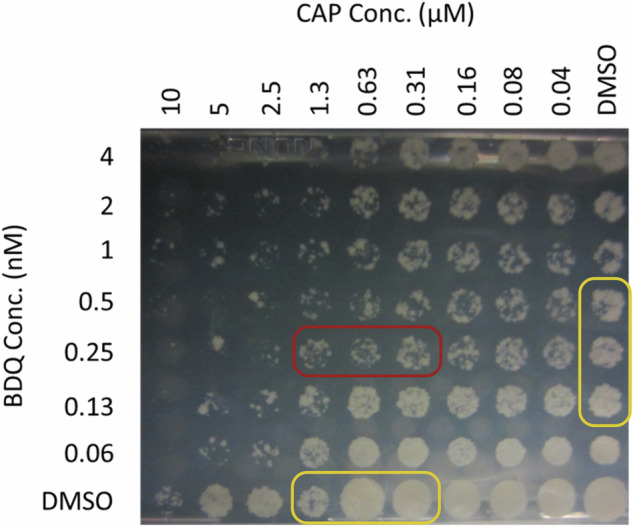
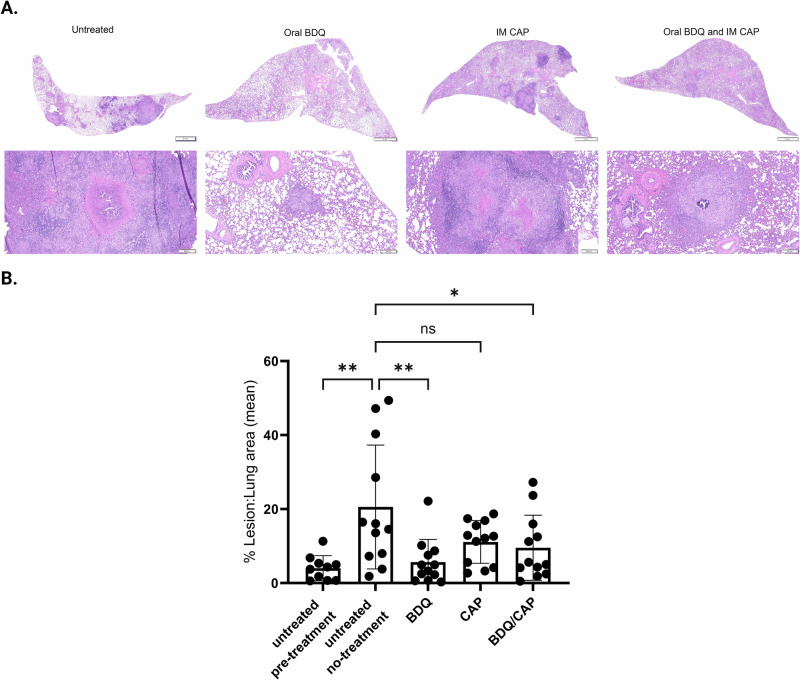
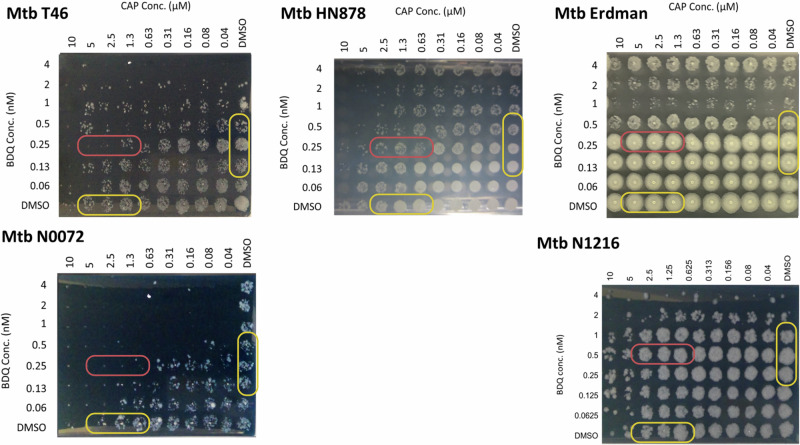
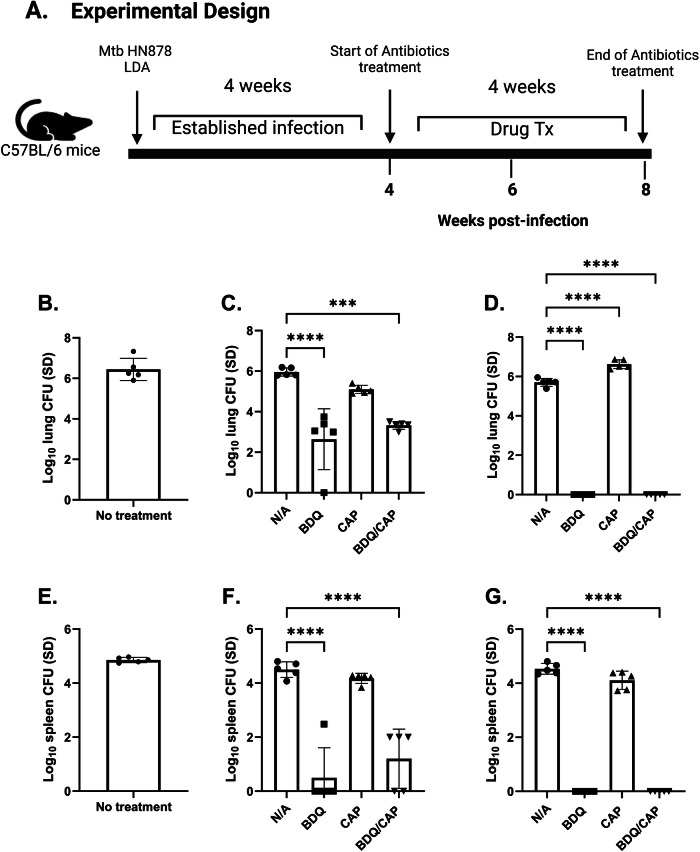
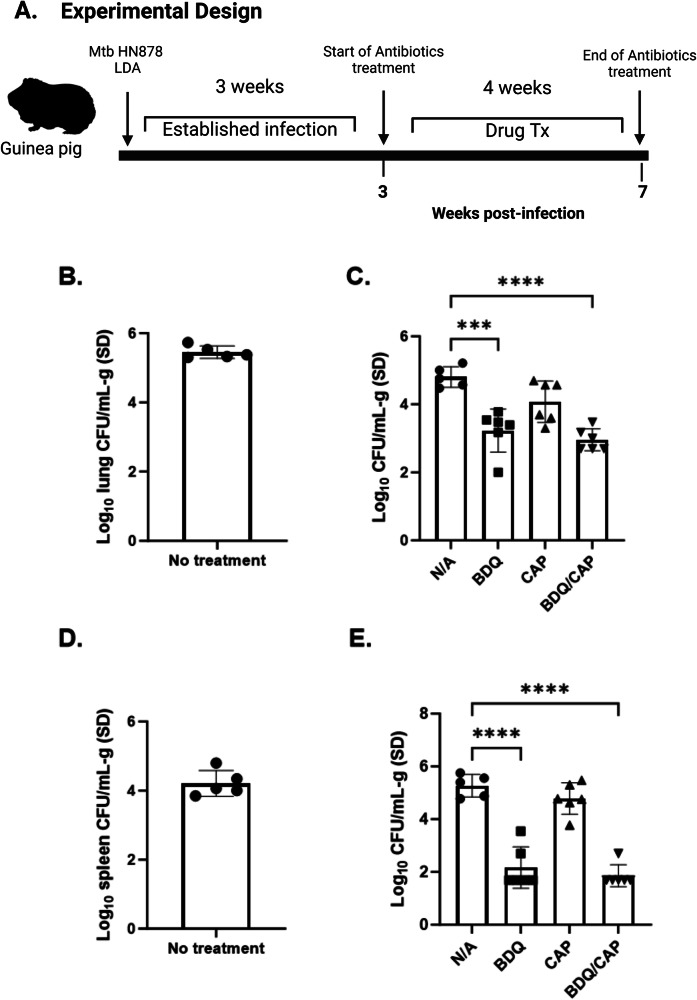
Tuberculosis (TB) killed approximately 1.3 million people in 2022 and remains a leading cause of death from the bacteria Mycobacterium tuberculosis (M.tb); this number of deaths was surpassed only by COVID-19, caused by the SARS-CoV-2 virus. The alarming emergence of multidrug-resistant (MDR) and extensively drug-resistant (XDR) M.tb strains presents an urgent need for effective new treatments. Our study aimed to determine the synergistic effects of antibiotic combinations against M.tb. Using a high-throughput in vitro checkerboard assay, we evaluated the interactions of Bedaquiline (BDQ) and other antibiotics including Capreomycin (CAP), Linezolid (LIN), and Sutezolid (SUT) against M.tb H37Rv. BDQ and CAP demonstrated in vitro enhanced effect, which prompted further investigation in vivo using the murine low dose aerosol (LDA) model. After aerosol challenge with M.tb, C57BL/6 mice were treated with BDQ, CAP, or their combination, starting 28 days post-infection. The antimicrobial treatment lasted four weeks, and the bacterial burden in lung and spleen tissues was assessed at the end of treatment. At 4 weeks post-treatment, a significant reduction in bacterial load was observed within the lungs and spleens of mice given BDQ alone or given as a BDQ/CAP combination compared to the untreated group. In contrast, CAP monotherapy led to an increase in bacterial load within the lung and no significant difference in bacterial burden in the spleen in comparison to the untreated mice. These results were confirmed in the guinea pig model of TB, where both BDQ and the BDQ/CAP combination treatment led to a decrease in bacterial burden in the lung and spleen, whereas CAP had no significant effect on bacterial burden at the 4-week post treatment timepoint. We next determined whether there may be differences in vitro with the BDQ/CAP combination against M.tb lineages 1, 2 and 4. We determined that in vitro enhanced effect was not observed in some representative strains of M.tb lineage 4, indicating variability in drug effectiveness across M.tb lineages. This research underscores the complexity of TB treatment and the critical need for innovative approaches to combat this global health threat.
2022年,结核病导致约130万人死亡,仍然是结核分枝杆菌(M.tb)致死的主要原因;这一死亡人数仅次于由严重急性呼吸综合征冠状病毒2(SARS-CoV-2)病毒引起的新冠肺炎。多重耐药(MDR)和广泛耐药(XDR)结核分枝杆菌菌株的惊人出现,迫切需要有效的新治疗方法。我们的研究旨在确定抗生素组合对结核分枝杆菌的协同作用。使用高通量体外棋盘法,我们评估了贝达喹啉(BDQ)与其他抗生素(包括卷曲霉素(CAP)、利奈唑胺(LIN)和舒他唑胺(SUT))对结核分枝杆菌H37Rv的相互作用。BDQ和CAP在体外显示出增强作用,这促使我们使用小鼠低剂量气溶胶(LDA)模型在体内进行进一步研究。在用结核分枝杆菌进行气溶胶攻击后,C57BL/6小鼠在感染后28天开始接受BDQ、CAP或它们的组合治疗。抗菌治疗持续四周,并在治疗结束时评估肺和脾组织中的细菌负荷。治疗后4周,与未治疗组相比,单独给予BDQ或BDQ/CAP组合的小鼠肺和脾中的细菌载量显著降低。相比之下,与未治疗的小鼠相比,CAP单药治疗导致肺内细菌载量增加,脾内细菌负荷无显著差异。这些结果在结核病豚鼠模型中得到证实,其中BDQ和BDQ/CAP联合治疗均导致肺和脾内细菌负荷降低,而CAP在治疗后4周时对细菌负荷无显著影响。接下来,我们确定BDQ/CAP组合对结核分枝杆菌1、2和4型在体外是否存在差异。我们确定在结核分枝杆菌4型的一些代表性菌株中未观察到体外增强作用,这表明不同结核分枝杆菌菌株的药物有效性存在差异。这项研究强调了结核病治疗的复杂性以及对抗这种全球健康威胁的创新方法的迫切需求。