Johnson Willie Mohammed, Vaughn Byron P, Lim Nicholas
Department of Medicine, University of Minnesota, Minneapolis, MN, United States.
Division of Gastroenterology, Hepatology and Nutrition, University of Minnesota, Minneapolis, MN, United States.
Front Transplant. 2025 Jan 8;3:1483943. doi: 10.3389/frtra.2024.1483943. eCollection 2024.
The clinical characteristics of inflammatory bowel disease (dnIBD) diagnosed after solid organ transplant (SOT) are not well-described, particularly since the advent of biologic therapy for treatment of IBD.
We conducted a single-center, retrospective review of SOT recipients between 2010 and 2022 at the University of Minnesota Medical Center who were diagnosed with IBD after transplant.
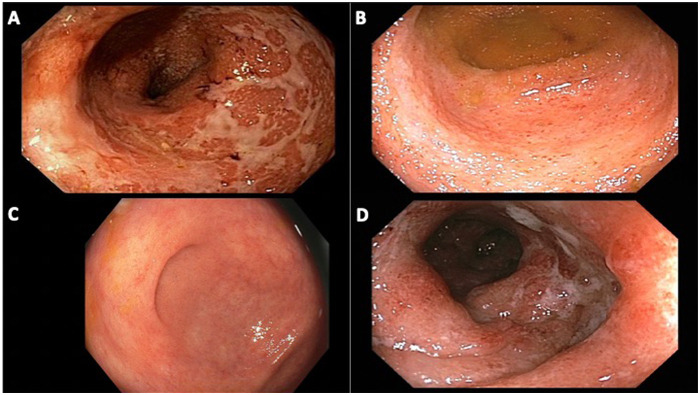
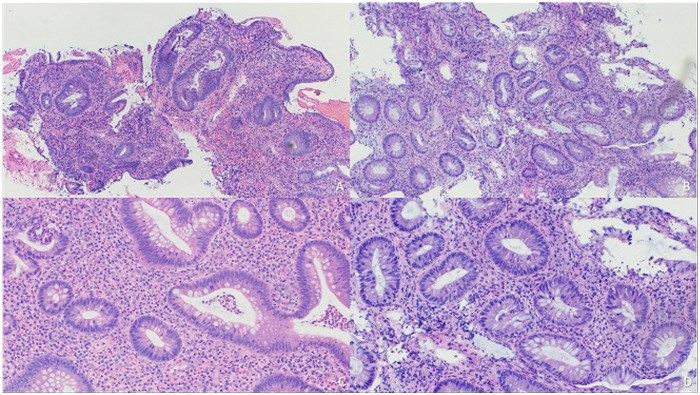
Of 89 patients at our center with IBD and a history of SOT, five (5.6%) patients were diagnosed with IBD post-transplant (three liver, one kidney, and one simultaneous liver and kidney): three patients were female and four were Caucasian. Mean age at transplant and IBD diagnosis were 46.7 and 49.4 years respectively. Indication for transplant were alcohol-related cirrhosis ( = 2), idiopathic fulminant hepatic failure ( = 1), metabolic dysfunction-associated steatotic liver disease ( = 1), and IgA nephropathy ( = 1). Four patients were diagnosed with ulcerative colitis (UC) and one with Crohn's disease (CD). Three patients (all with UC) required escalation to a biologic therapy. Four patients were in clinical remission from IBD at last follow-up, one patient required IBD surgery, while there was no rejection and no deaths following IBD diagnosis.
dnIBD post-SOT is uncommon, while newer IBD therapies may be safe and effective. Further study is required to better understand the natural history and IBD outcomes of this population relative to non-SOT patients.
实体器官移植(SOT)后诊断出的炎症性肠病(dnIBD)的临床特征尚未得到充分描述,特别是自用于治疗IBD的生物疗法出现以来。
我们对2010年至2022年期间在明尼苏达大学医学中心接受SOT且移植后被诊断为IBD的患者进行了单中心回顾性研究。
在我们中心的89例患有IBD且有SOT病史的患者中,5例(5.6%)在移植后被诊断为IBD(3例肝脏移植、1例肾脏移植、1例肝肾联合移植):3例为女性,4例为白种人。移植时和IBD诊断时的平均年龄分别为46.7岁和49.4岁。移植指征为酒精性肝硬化(n = 2)、特发性暴发性肝衰竭(n = 1)、代谢功能障碍相关脂肪性肝病(n = 1)和IgA肾病(n = 1)。4例患者被诊断为溃疡性结肠炎(UC),1例为克罗恩病(CD)。3例患者(均为UC)需要升级为生物疗法。4例患者在最后一次随访时处于IBD临床缓解状态,1例患者需要进行IBD手术,而在IBD诊断后没有排斥反应和死亡病例。
SOT后的dnIBD并不常见,而新型IBD疗法可能安全有效。需要进一步研究以更好地了解该人群相对于非SOT患者的自然病史和IBD结局。