
2024年埃塞俄比亚西北部德布雷塔博尔综合专科医院医护人员中猴痘知识、态度及相关因素评估:一项横断面研究
Assessment of Knowledge, Attitude, and Associated Factors of Mpox Among Healthcare Professionals at Debre Tabor Comprehensive Specialized Hospital, Northwest Ethiopia, 2024: A Cross-Sectional Study.
作者信息
Kiros Teklehaimanot, Erkihun Mulat, Wondmagegn Mitikie, Almaw Andargachew, Assefa Ayenew, Berhan Ayenew, Tegegne Dessie, Fentie Alemie, Tiruneh Tegenaw, Malkamu Birhanemaskal, Shimelis Mahider, Dejen Eninur, Getie Birhanu, Damtie Shewaneh, Solomon Yenealem, Sharew Bekele
机构信息
Department of Medical Laboratory Science, College of Health Sciences Debre Tabor University Debre Tabor Ethiopia.
出版信息
Health Sci Rep. 2025 Jan 22;8(1):e70371. doi: 10.1002/hsr2.70371. eCollection 2025 Jan.
BACKGROUND
Mpox is a zoonotic disease that has become a significant public health concern, especially in regions beyond its usual endemic areas in Africa. The rising global incidence and its classification as a Public Health Emergency of International Concern by the World Health Organization highlight the importance of healthcare professionals (HCPs) being knowledgeable and well-prepared to effectively manage the virus. This study aims to assess the knowledge, attitudes, and factors associated with HCPs regarding Mpox infections at Debre Tabor Comprehensive Specialized Hospital in Northwest Ethiopia.
METHODS
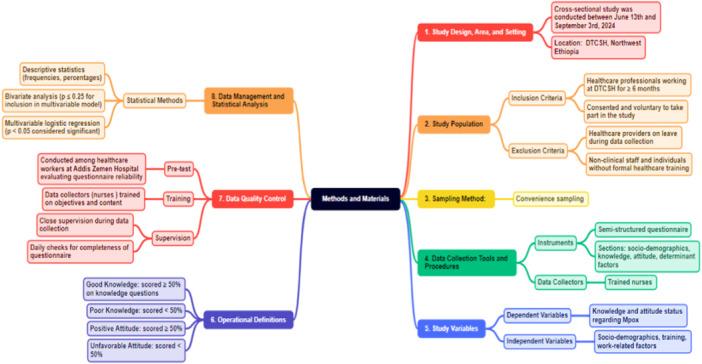
Between June 13th and September 3rd, 2024, a cross-sectional study was conducted, among 384 HCPs selected through convenience sampling. A pretested, and well-structured, questionnaire was used to assess the sociodemographic characteristics, knowledge, and attitudes of HCPs. The collected data were analyzed using descriptive statistics and logistic regression. A -value of ≤ 0.05 was considered a statistically significant association.
RESULTS
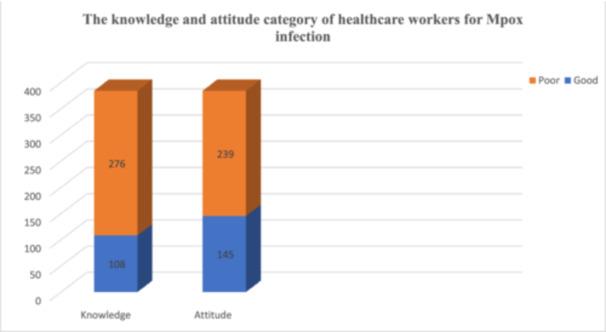
Out of the 384 participants, the majority were male (55.47%) and aged 31-39 years (33.85%). Nurses made up the largest professional group at 31.25%. Only 28.13% and 37.76% of HCPs demonstrated good knowledge and favorable attitudes toward the Mpox, respectively. Interestingly, HCPs with prior information sources about Mpox were likely to possess good knowledge (AOR = 1.45, = 0.002).
CONCLUSIONS
The findings emphasize important gaps in the knowledge and attitude of HCPs. It is imperative to implement targeted educational initiatives such as information dissemination, training, and continuous professional development to improve the capacity of HCPs to effectively respond to Mpox and other emerging infectious diseases.
背景
猴痘是一种人畜共患病,已成为重大的公共卫生问题,尤其是在非洲以外其通常的流行地区。全球发病率的上升以及世界卫生组织将其列为国际关注的突发公共卫生事件,凸显了医疗保健专业人员(HCPs)具备相关知识并做好充分准备以有效管理该病毒的重要性。本研究旨在评估埃塞俄比亚西北部德布雷塔博尔综合专科医院的医疗保健专业人员对猴痘感染的知识、态度及相关因素。
方法
2024年6月13日至9月3日,采用便利抽样法选取384名医疗保健专业人员进行了一项横断面研究。使用经过预测试且结构良好的问卷来评估医疗保健专业人员的社会人口学特征、知识和态度。收集的数据采用描述性统计和逻辑回归进行分析。P值≤0.05被认为具有统计学显著关联。
结果
在384名参与者中,大多数为男性(55.47%),年龄在31 - 39岁之间(33.85%)。护士占最大的专业群体,为31.25%。只有28.13%和37.76%的医疗保健专业人员分别对猴痘表现出良好的知识水平和积极的态度。有趣的是,有关于猴痘的先前信息来源的医疗保健专业人员更有可能具备良好的知识(优势比=1.45,P = 0.002)。
结论
研究结果强调了医疗保健专业人员在知识和态度方面的重要差距。必须实施有针对性的教育举措,如信息传播、培训和持续专业发展,以提高医疗保健专业人员有效应对猴痘和其他新发传染病的能力。
 Zotero 插件