Jin Chunhuan, Zhou Xinyu, Xu Minhui, Okanishi Hiroki, Ohgaki Ryuichi, Kanai Yoshikatsu
Department of Bio-System Pharmacology, Graduate School of Medicine, Osaka University, 2-2, Yamadaoka, Suita, Osaka, 565-0871, Japan.
Integrated Frontier Research for Medical Science Division, Institute for Open and Transdisciplinary Research Initiatives (OTRI), Osaka University, Suita, Osaka, 565-0871, Japan.
Sci Rep. 2025 Jan 23;15(1):2903. doi: 10.1038/s41598-025-87522-6.
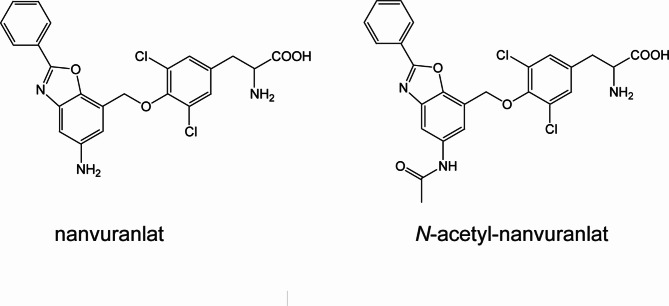
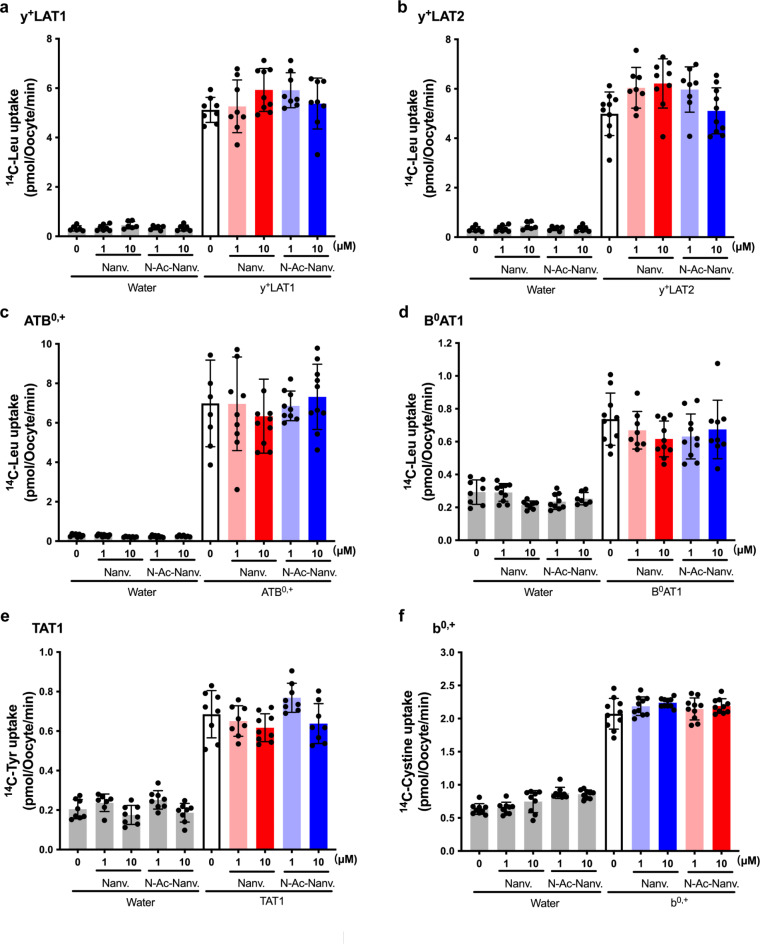
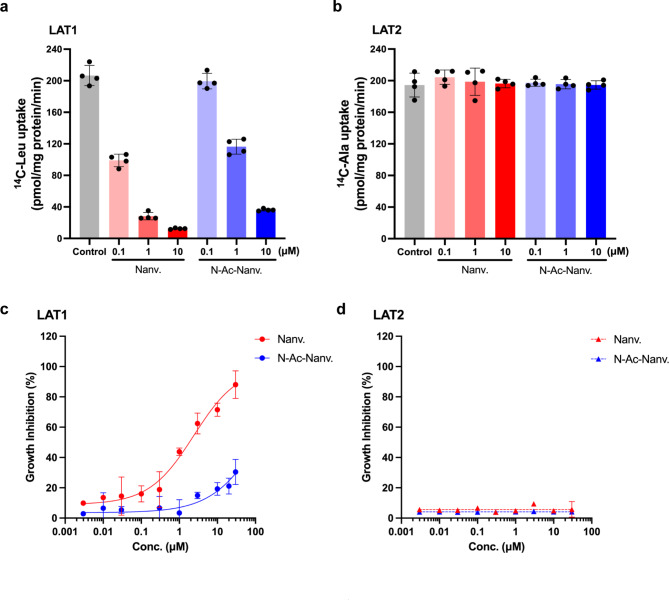
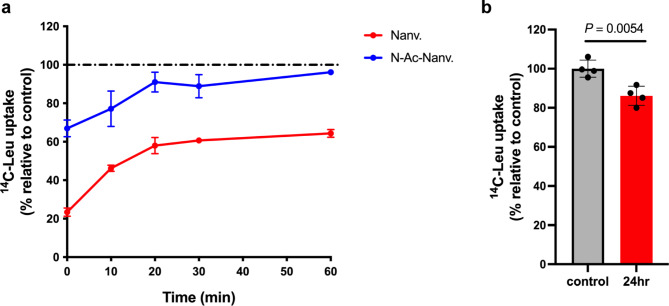
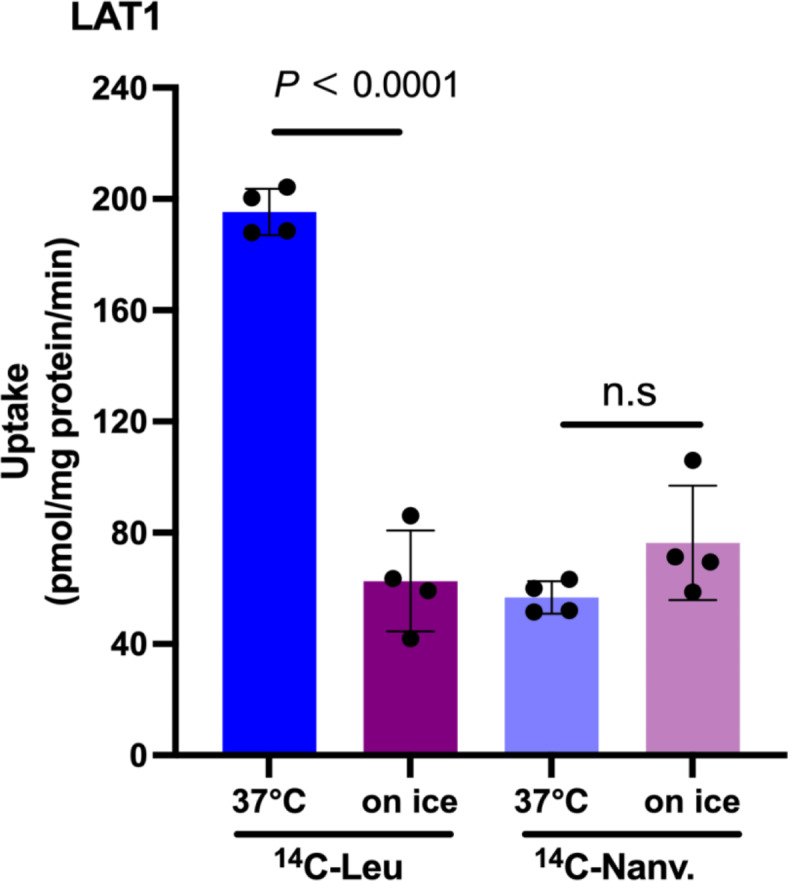
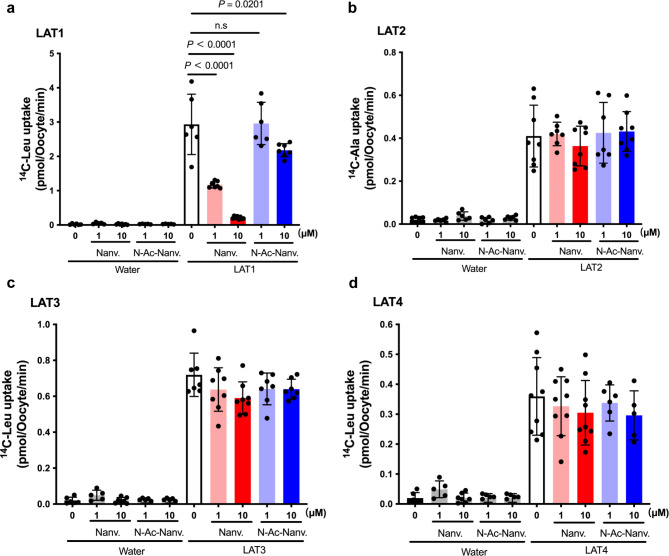
L-type amino acid transporter 1 (LAT1, SLC7A5), overexpressed in various cancers, mediates the uptake of essential amino acids crucial for tumor growth. It has emerged as a promising target for cancer therapy. Nanvuranlat (JPH203/KYT-0353), a LAT1 inhibitor, has shown antitumor activity in preclinical studies and efficacy in biliary tract cancer during clinical trials. This study provides a comprehensive pharmacological characterization of nanvuranlat and its N-acetyl metabolite, including structural insights into their LAT1 interactions. Both compounds demonstrated high selectivity for LAT1 over LAT2 and other amino acid transporters. Nanvuranlat acts as a competitive, non-transportable LAT1 inhibitor (K = 38.7 nM), while its N-acetyl metabolite retains selectivity but with reduced affinity (K = 1.68 µM). Nanvuranlat exhibited a sustained inhibitory effect on LAT1 even after its removal, indicating the potential for prolonged therapeutic effects. Both compounds showed comparable dissociation rates, suggesting that N-acetylation does not affect the interaction responsible for slow dissociation. The U-shaped conformation adopted by nanvuranlat when bound to LAT1 likely contributes to its high affinity, selectivity, sustained inhibitory effect, and non-transportable nature observed in this study. These insights into nanvuranlat's mechanism and metabolic impact provide essential information for understanding its clinical efficacy and advancing LAT1-targeted cancer therapies.
L型氨基酸转运体1(LAT1,SLC7A5)在多种癌症中过表达,介导对肿瘤生长至关重要的必需氨基酸的摄取。它已成为一种有前景的癌症治疗靶点。南伏拉奈(JPH203/KYT - 0353)是一种LAT1抑制剂,在临床前研究中显示出抗肿瘤活性,在临床试验中对胆管癌有效。本研究提供了南伏拉奈及其N - 乙酰代谢物的全面药理学特征,包括对它们与LAT1相互作用的结构见解。两种化合物对LAT1的选择性均高于LAT2和其他氨基酸转运体。南伏拉奈作为一种竞争性、不可转运的LAT1抑制剂(K = 38.7 nM),而其N - 乙酰代谢物保留了选择性,但亲和力降低(K = 1.68 µM)。即使在去除南伏拉奈后,它对LAT1仍表现出持续的抑制作用,表明具有延长治疗效果的潜力。两种化合物显示出相当的解离速率,表明N - 乙酰化不影响导致缓慢解离的相互作用。本研究中观察到,南伏拉奈与LAT1结合时采用的U形构象可能有助于其高亲和力、选择性、持续抑制作用和不可转运的性质。这些对南伏拉奈作用机制和代谢影响的见解为理解其临床疗效和推进LAT1靶向癌症治疗提供了重要信息。