Li Lanlan, Geng Yi, Chen Tao, Lin Kaixin, Xie Chengjie, Qi Jing, Wei Hongan, Wang Jianping, Wang Dabiao, Yuan Ze, Wan Zixiao, Li Tuoyang, Luo Yanxin, Niu Decao, Li Juan, Yu Huichuan
Fujian Key Lab for Intelligent Processing and Wireless Transmission of Media Information, College of Physics and Information Engineering, Fuzhou University, Fuzhou, 350108, China.
Department of General Surgery (Colorectal Surgery), The Sixth Affiliated Hospital, Sun Yat-sen University, Guangzhou, Guangdong, China.
J Transl Med. 2025 Jan 23;23(1):110. doi: 10.1186/s12967-024-06017-6.
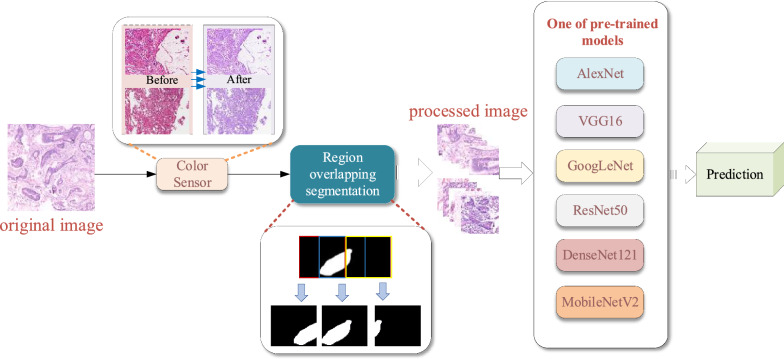
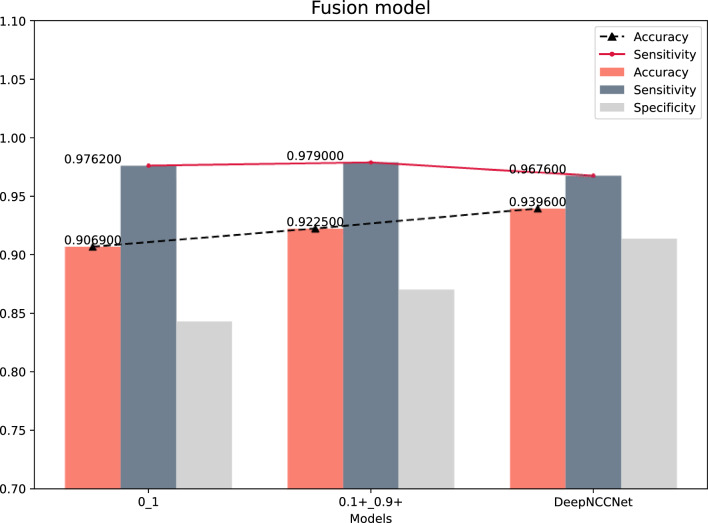
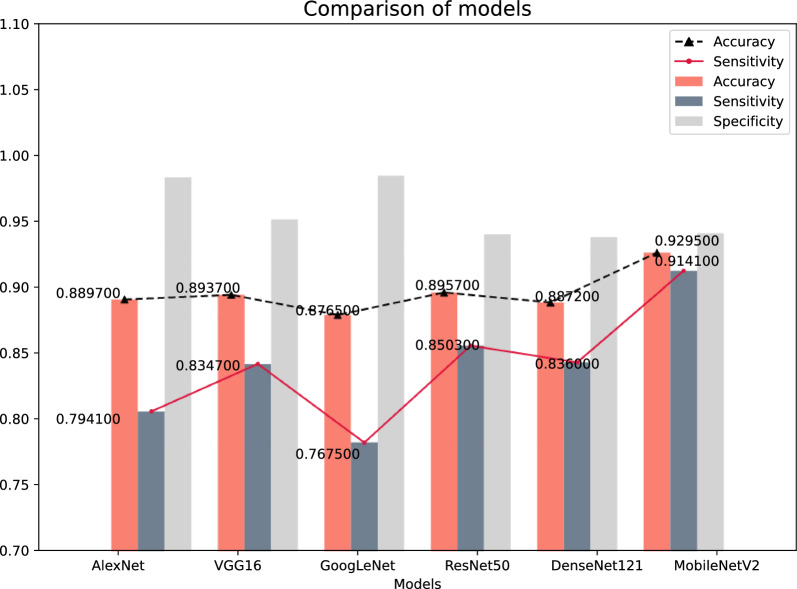
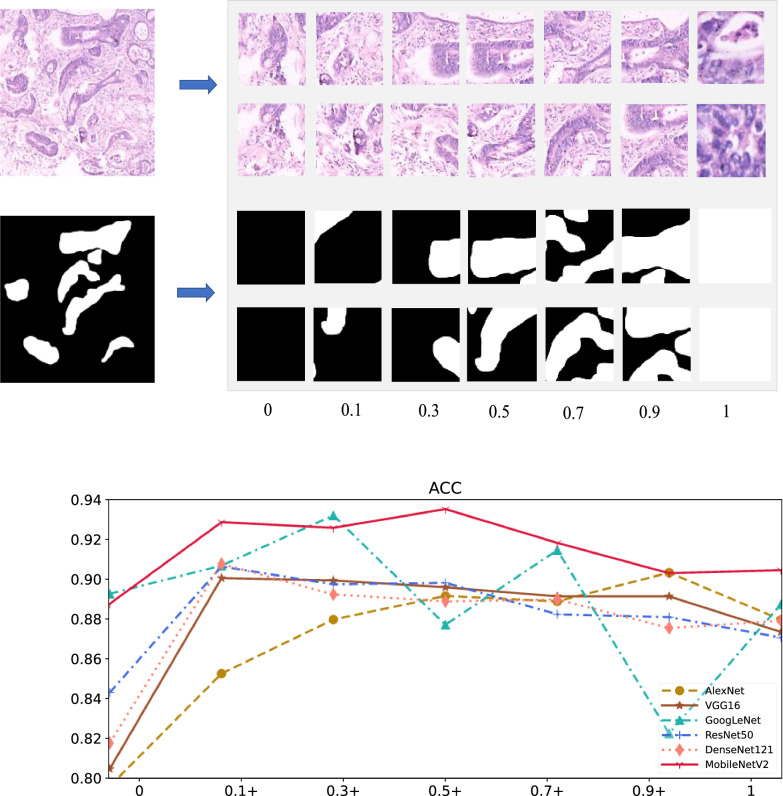
Accurate and fast histological diagnosis of cancers is crucial for successful treatment. The deep learning-based approaches have assisted pathologists in efficient cancer diagnosis. The remodeled microenvironment and field cancerization may enable the cancer-specific features in the image of non-cancer regions surrounding cancer, which may provide additional information not available in the cancer region to improve cancer diagnosis. Here, we proposed a deep learning framework with fine-tuning target proportion towards cancer surrounding tissues in histological images for gastric cancer diagnosis. Through employing six deep learning-based models targeting region-of-interest (ROI) with different proportions of no-cancer and cancer regions, we uncovered the diagnostic value of non-cancer ROI, and the model performance for cancer diagnosis depended on the proportion. Then, we constructed a model based on MobileNetV2 with the optimized weights targeting non-cancer and cancer ROI to diagnose gastric cancer (DeepNCCNet). In the external validation, the optimized DeepNCCNet demonstrated excellent generalization abilities with an accuracy of 93.96%. In conclusion, we discovered a non-cancer ROI weight-dependent model performance, indicating the diagnostic value of non-cancer regions with potential remodeled microenvironment and field cancerization, which provides a promising image resource for cancer diagnosis. The DeepNCCNet could be readily applied to clinical diagnosis for gastric cancer, which is useful for some clinical settings such as the absence or minimum amount of tumor tissues in the insufficient biopsy.
癌症的准确快速组织学诊断对于成功治疗至关重要。基于深度学习的方法已协助病理学家进行高效的癌症诊断。重塑的微环境和场癌化可能使癌症周围非癌区域图像中具有癌症特异性特征,这可能提供癌症区域中无法获得的额外信息以改善癌症诊断。在此,我们提出了一种深度学习框架,该框架针对组织学图像中癌症周围组织进行微调目标比例以用于胃癌诊断。通过采用六种基于深度学习的针对具有不同比例非癌和癌区域的感兴趣区域(ROI)的模型,我们发现了非癌ROI的诊断价值,并且癌症诊断的模型性能取决于该比例。然后,我们构建了一个基于MobileNetV2的模型,该模型具有针对非癌和癌ROI的优化权重以诊断胃癌(DeepNCCNet)。在外部验证中,优化后的DeepNCCNet表现出出色的泛化能力,准确率达到93.96%。总之,我们发现了一种非癌ROI权重依赖的模型性能,表明具有潜在重塑微环境和场癌化的非癌区域的诊断价值,这为癌症诊断提供了有前景的图像资源。DeepNCCNet可轻松应用于胃癌的临床诊断,这对于一些临床情况如活检不足时肿瘤组织缺失或量极少的情况很有用。