Jagadeesan Sasi Kumar, Galuta Ahmad, Sandarage Ryan Vimukthi, Tsai Eve Chung
Department of Neurosciences, Faculty of Medicine, University of Ottawa, Ottawa, ON K1H 8M5, Canada.
Neuroscience Program, Ottawa Hospital Research Institute, The Ottawa Hospital, Ottawa, ON K1Y 4E9, Canada.
Cells. 2025 Jan 7;14(2):64. doi: 10.3390/cells14020064.
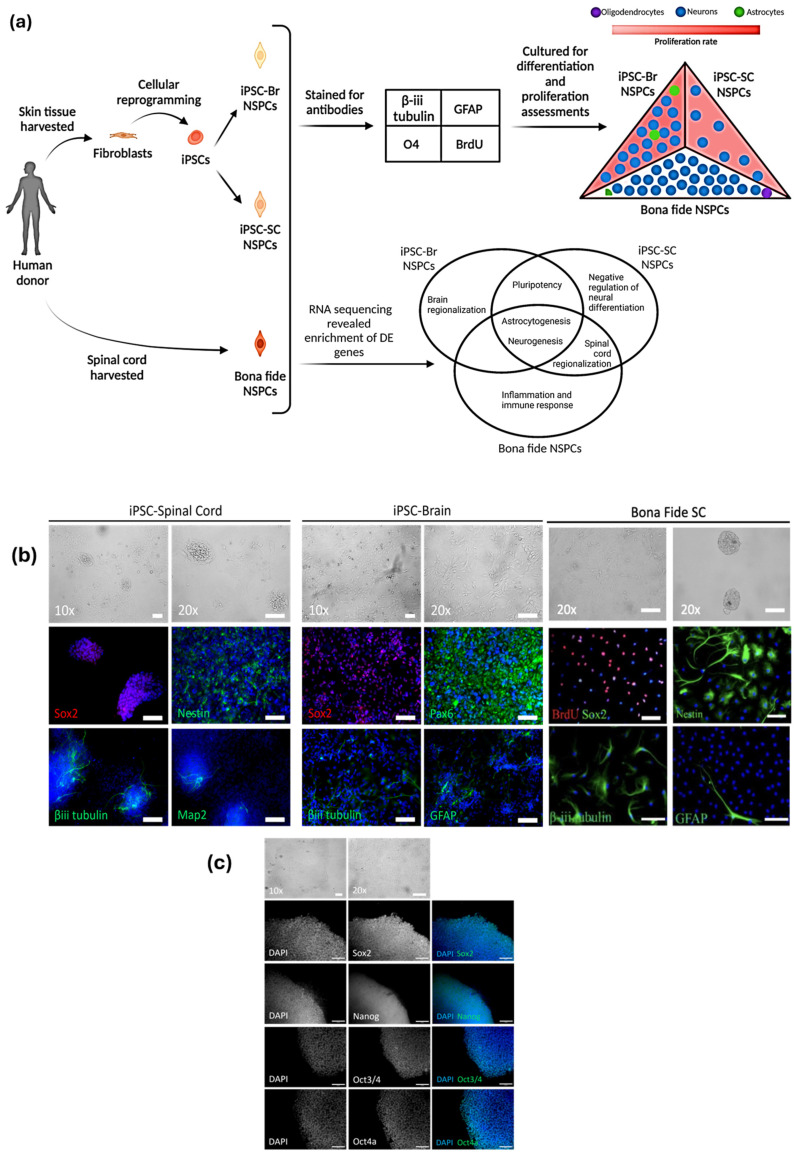
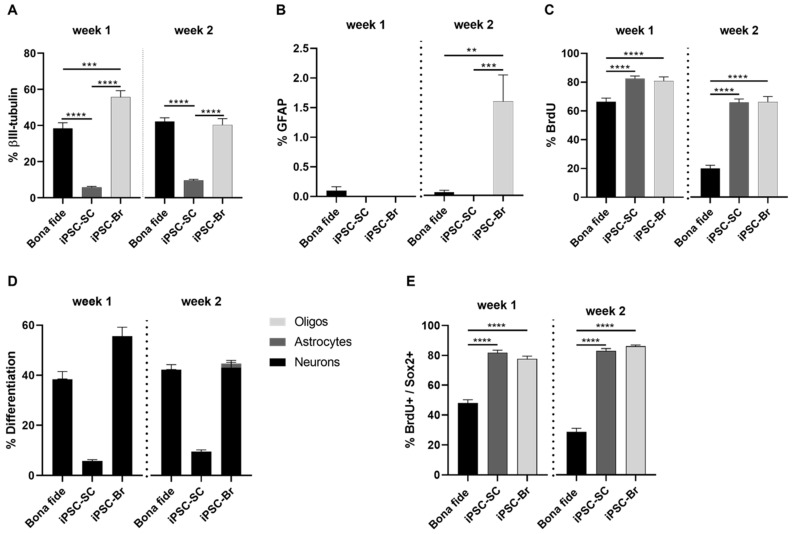
The adult human spinal cord harbors diverse populations of neural stem/progenitor cells (NSPCs) essential for neuroregeneration and central nervous system repair. While induced pluripotent stem cell (iPSC)-derived NSPCs offer significant therapeutic potential, understanding their molecular and functional alignment with bona fide spinal cord NSPCs is crucial for developing autologous cell therapies that enhance spinal cord regeneration and minimize immune rejection. In this study, we present the first direct transcriptomic and functional comparison of syngeneic adult human NSPC populations, including bona fide spinal cord NSPCs and iPSC-derived NSPCs regionalized to the spinal cord (iPSC-SC) and forebrain (iPSC-Br). RNA sequencing analysis revealed distinct transcriptomic profiles and functional disparities among NSPC types. iPSC-Br NSPCs exhibited a close resemblance to bona fide spinal cord NSPCs, characterized by enriched expression of neurogenesis, axon guidance, synaptic signaling, and voltage-gated calcium channel activity pathways. Conversely, iPSC-SC NSPCs displayed significant heterogeneity, suboptimal regional specification, and elevated expression of neural crest and immune response-associated genes. Functional assays corroborated the transcriptomic findings, demonstrating superior neurogenic potential in iPSC-Br NSPCs. Additionally, we assessed donor-specific influences on NSPC behavior by analyzing gene expression and differentiation outcomes across syngeneic populations from multiple individuals. Donor-specific factors significantly modulated transcriptomic profiles, with notable variability in the alignment of iPSC-derived NSPCs to bona fide spinal cord NSPCs. Enrichment of pathways related to neurogenesis, axon guidance, and synaptic signaling varied across donors, highlighting the impact of genetic and epigenetic individuality on NSPC behavior.
成年人类脊髓中存在多种神经干细胞/祖细胞(NSPCs),它们对神经再生和中枢神经系统修复至关重要。虽然诱导多能干细胞(iPSC)衍生的NSPCs具有巨大的治疗潜力,但了解它们与真正的脊髓NSPCs在分子和功能上的一致性,对于开发能够增强脊髓再生并最小化免疫排斥的自体细胞疗法至关重要。在本研究中,我们首次对同基因成年人类NSPC群体进行了直接的转录组学和功能比较,包括真正的脊髓NSPCs以及区域化为脊髓(iPSC-SC)和前脑(iPSC-Br)的iPSC衍生的NSPCs。RNA测序分析揭示了NSPC类型之间不同的转录组谱和功能差异。iPSC-Br NSPCs与真正的脊髓NSPCs表现出密切的相似性,其特征是神经发生、轴突导向、突触信号传导和电压门控钙通道活性途径的表达丰富。相反,iPSC-SC NSPCs表现出显著的异质性、区域特异性欠佳以及神经嵴和免疫反应相关基因的表达升高。功能测定证实了转录组学结果,表明iPSC-Br NSPCs具有卓越的神经发生潜力。此外,我们通过分析来自多个个体的同基因群体中的基因表达和分化结果,评估了供体特异性对NSPC行为的影响。供体特异性因素显著调节转录组谱,iPSC衍生的NSPCs与真正的脊髓NSPCs的一致性存在显著差异。不同供体之间与神经发生、轴突导向和突触信号传导相关途径的富集情况各不相同,突出了遗传和表观遗传个体性对NSPC行为的影响。