Li Guoliang, Li Zongxia, Hu Haojie, Chen Baojin, Wang Yuan, Mao Yanchao, Li Haidong, Zhang Baosen
Henan Energy Conversion and Storage Materials Engineering Center, College of Science, Henan University of Engineering, Zhengzhou 451191, China.
Key Laboratory of Materials Physics of Ministry of Education, School of Physics, Zhengzhou University, Zhengzhou 450001, China.
Biosensors (Basel). 2025 Jan 10;15(1):37. doi: 10.3390/bios15010037.
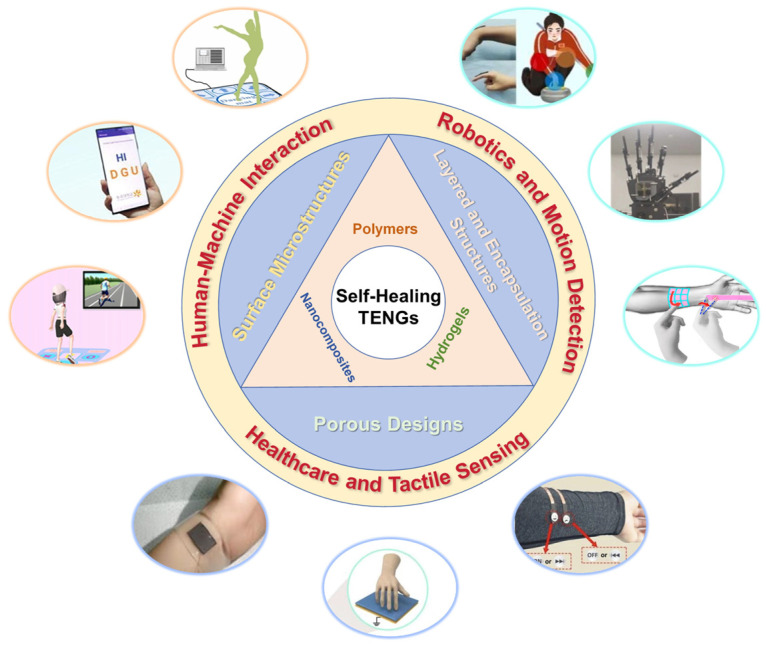
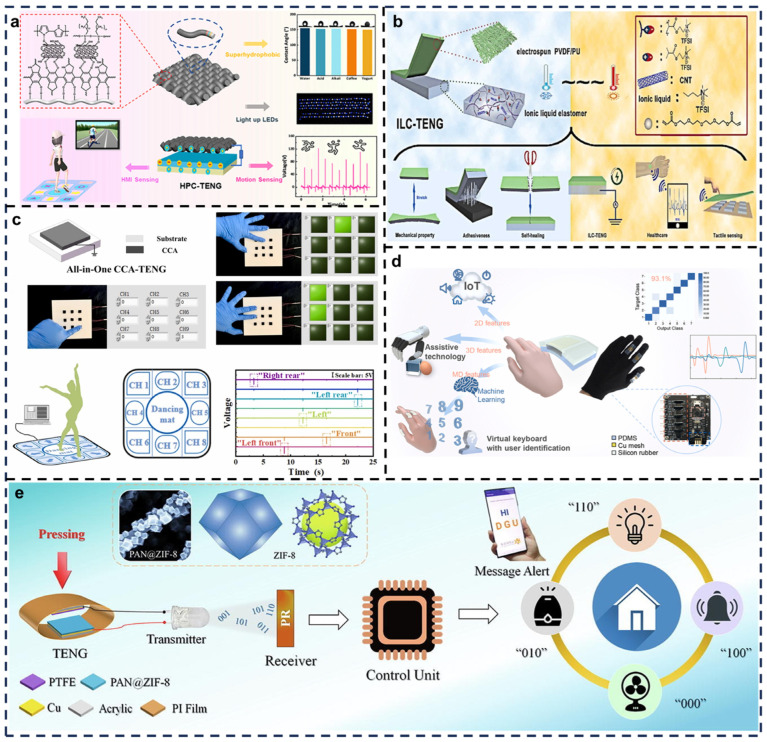
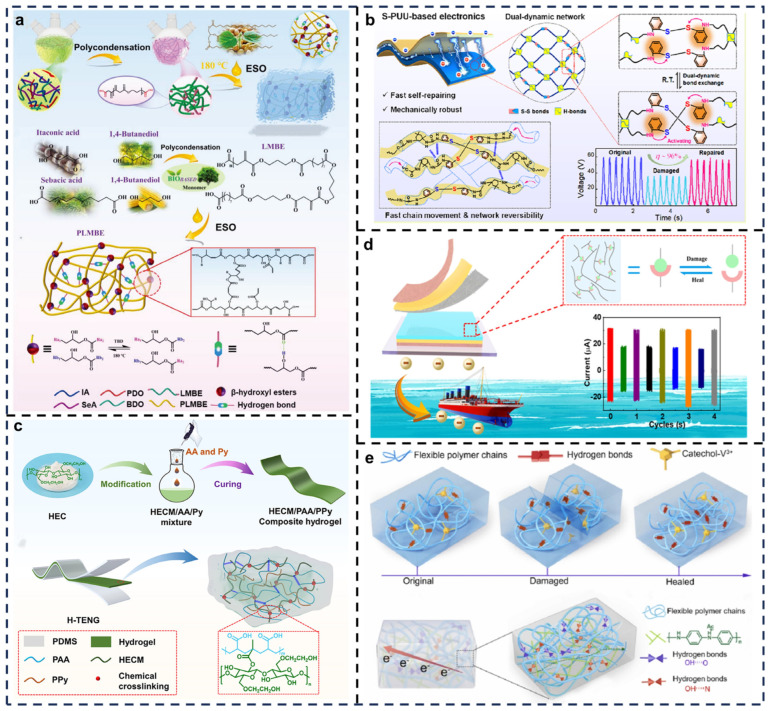
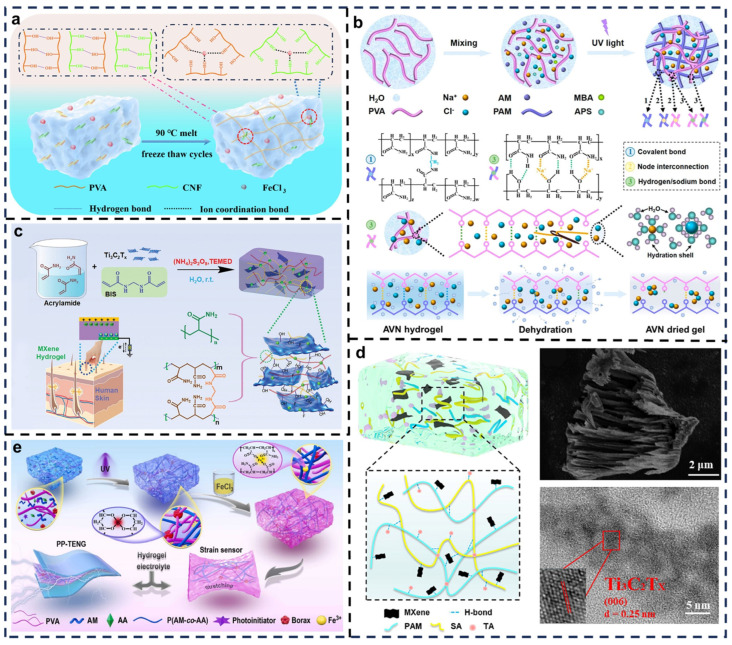
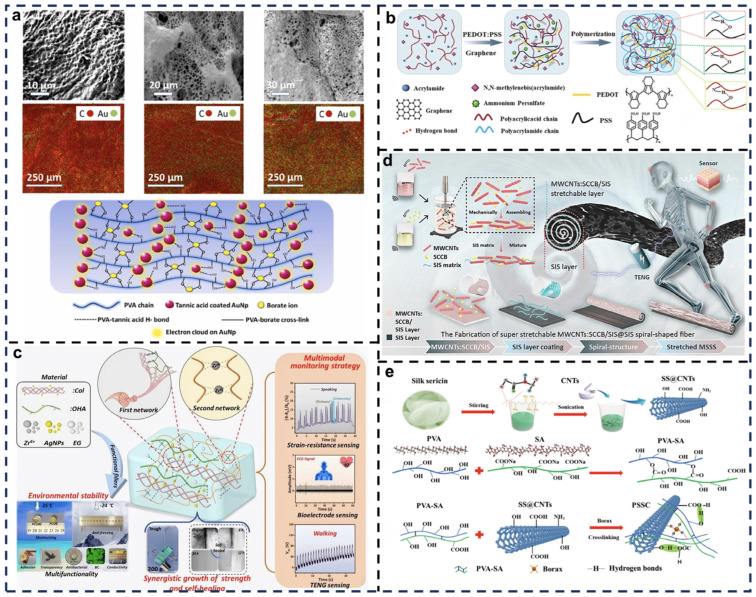
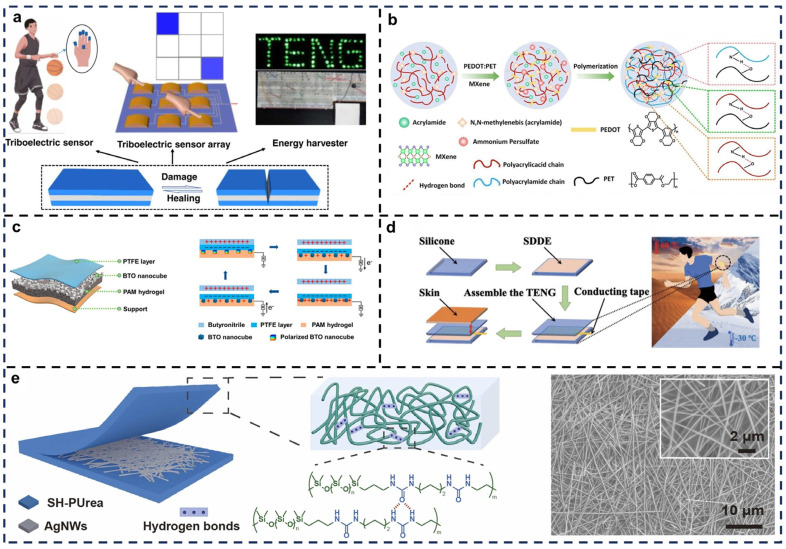
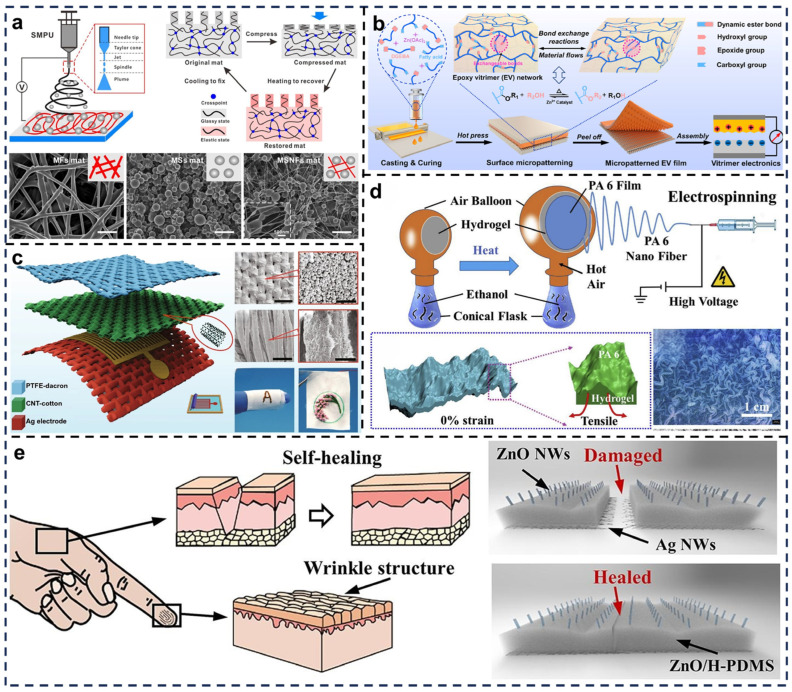
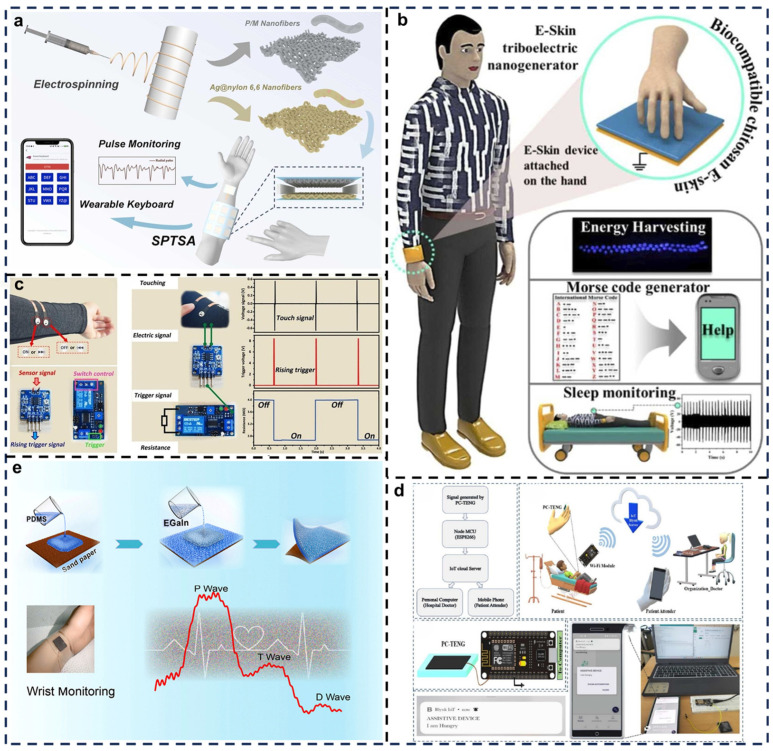
Self-healing triboelectric nanogenerators (TENGs), which incorporate self-healing materials capable of recovering their structural and functional properties after damage, are transforming the field of artificial skin by effectively addressing challenges associated with mechanical damage and functional degradation. This review explores the latest advancements in self-healing TENGs, emphasizing material innovations, structural designs, and practical applications. Key materials include dynamic covalent polymers, supramolecular elastomers, and ion-conductive hydrogels, which provide rapid damage recovery, superior mechanical strength, and stable electrical performance. Innovative structural configurations, such as layered and encapsulated designs, optimize triboelectric efficiency and enhance environmental adaptability. Applications span healthcare, human-machine interfaces, and wearable electronics, demonstrating the immense potential for tactile sensing and energy harvesting. Despite significant progress, challenges remain in scalability, long-term durability, and multifunctional integration. Future research should focus on advanced material development, scalable fabrication, and intelligent system integration to unlock the full potential of self-healing TENGs. This review provides a comprehensive overview of current achievements and future directions, underscoring the pivotal role of self-healing TENGs in artificial skin technology.
自修复摩擦纳米发电机(TENGs)通过有效应对与机械损伤和功能退化相关的挑战,正在改变人造皮肤领域。这种发电机采用了能够在受损后恢复其结构和功能特性的自修复材料。本文综述探讨了自修复TENGs的最新进展,重点介绍了材料创新、结构设计和实际应用。关键材料包括动态共价聚合物、超分子弹性体和离子导电水凝胶,它们能实现快速损伤恢复、具有卓越的机械强度和稳定的电气性能。创新的结构配置,如分层和封装设计,优化了摩擦电效率并增强了环境适应性。其应用涵盖医疗保健、人机界面和可穿戴电子设备,展示了触觉传感和能量收集的巨大潜力。尽管取得了重大进展,但在可扩展性、长期耐久性和多功能集成方面仍存在挑战。未来的研究应专注于先进材料开发、可扩展制造和智能系统集成,以释放自修复TENGs的全部潜力。本文综述全面概述了当前的成就和未来方向,强调了自修复TENGs在人造皮肤技术中的关键作用。