Szymulewska-Konopko Katarzyna, Reszeć-Giełażyn Joanna, Małeczek Monika
Department of Medical Pathomorphology, Medical University of Bialystok, 15-089 Białystok, Poland.
Curr Issues Mol Biol. 2025 Jan 16;47(1):60. doi: 10.3390/cimb47010060.
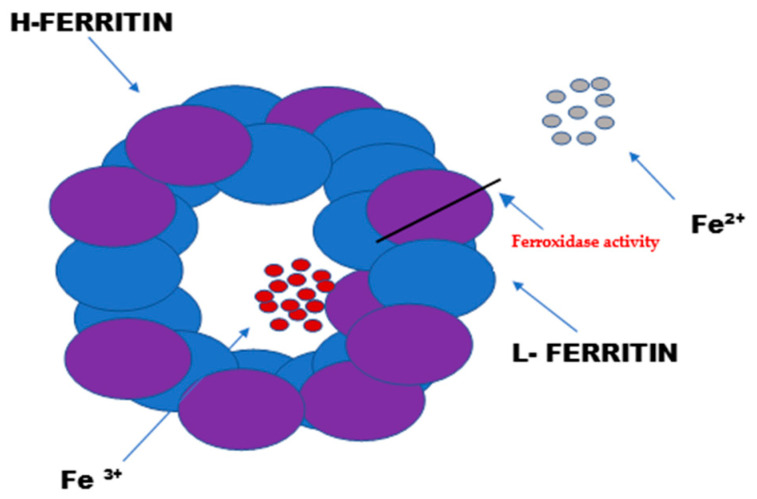
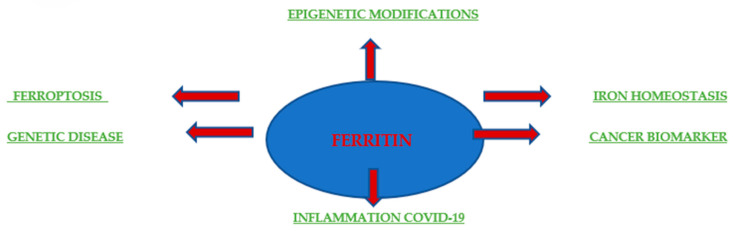
Ferritin is found in all cells of the body, serving as a reservoir of iron and protecting against damage to the molecules that make up cellular structures. It has emerged as a biomarker not only for iron-related disorders but also for inflammatory diseases and conditions in which inflammation plays a key role, including cancer, neurodegeneration, and infection. Oxidative stress, which can cause cellular damage, is induced by reactive oxygen species generated during the Fenton reaction, activating signaling pathways associated with tumor growth and proliferation. This review primarily emphasizes basic studies on the identification and function of ferritin, its essential role in iron metabolism, its involvement in inflammatory diseases, and its potential as an important prognostic factor and biomarker for cancer detection.
铁蛋白存在于人体所有细胞中,作为铁的储存库,并防止构成细胞结构的分子受到损伤。它不仅已成为与铁相关疾病的生物标志物,还成为炎症性疾病以及炎症起关键作用的病症(包括癌症、神经退行性疾病和感染)的生物标志物。氧化应激可导致细胞损伤,由芬顿反应过程中产生的活性氧诱导产生,激活与肿瘤生长和增殖相关的信号通路。本综述主要强调关于铁蛋白的鉴定和功能、其在铁代谢中的重要作用、其在炎症性疾病中的参与情况以及其作为癌症检测的重要预后因素和生物标志物的潜力的基础研究。