Xing Wenhui, Piao Jing Jing, Ren Tong, Liang Yujing, Li Qi, Gu Yanmei, Wang Rong
Department of Cardiovascular Surgery, The Sixth Medical Centre of PLA General Hospital, Beijing, China.
Hebei University of Chinese Medicine, Shijiazhuang, Hebei, China.
BMJ Open. 2025 Jan 23;15(1):e083909. doi: 10.1136/bmjopen-2024-083909.
To investigate the potential classification of kinesiophobia in patients after cardiac surgery under extracorporeal circulation from a psychosocial perspective, and analyse the characteristic differences among different latent levels of patients.
This is a cross-sectional study of Chinese adults after cardiac surgery under extracorporeal circulation, aged 18 years and older, recruited from a tertiary hospital in North China.
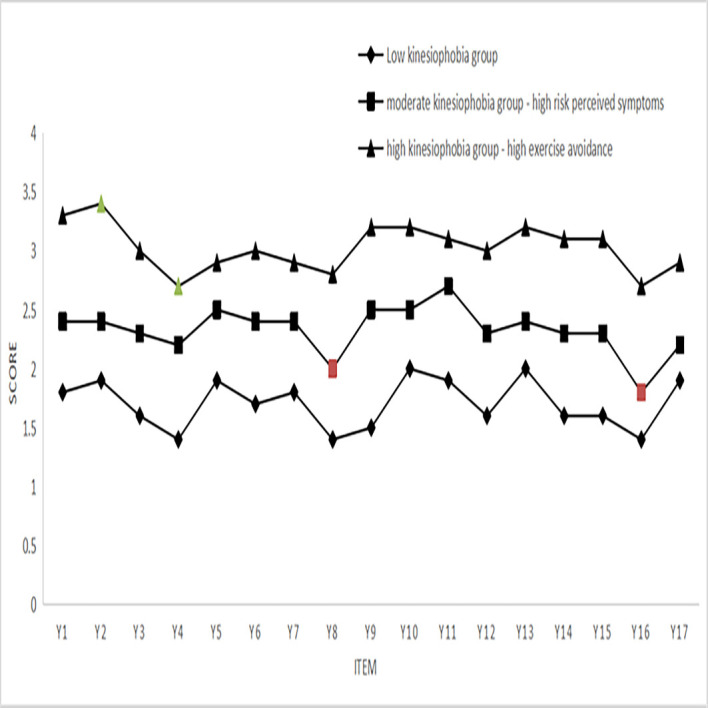
This study uses latent profile analysis to identify potential classifications of kinesiophobia in questionnaires from 348 patients undergoing cardiac surgery under extracorporeal circulation. Multiple logistic regression analysis was used to evaluate the influencing factors at different latent classifications.
The average performance of each indicator in Model 3 is best suited for analysis, Entropy=0.873 and bootstrap likelihood ratio test (p)<0.0001. The result of regression equation shows postoperative time (p<0.001), age, self-efficacy, pain and social support level (p<0.05) were the factors influencing the potential profile classification of patients after cardiac surgery under extracorporeal circulation.
The study identified three distinct classifications of patients: the low kinesiophobia group, the moderate kinesiophobia-high-risk perceived symptoms group and the high kinesiophobia-high exercise avoidance group (HK-HEAG). Addressing kinesiophobia, especially in older male patients during the early postoperative period, is crucial. Enhancing self-efficacy seems effective in reducing kinesiophobia, while increasing social support may not be as beneficial for the HK-HEAG. These findings provide a basis for implementing preventive interventions in cardiac rehabilitation.
The research is registered with the Chinese Clinical Trial Registry (ChiCTR2200057895).
从社会心理角度探讨体外循环心脏手术后患者运动恐惧的潜在分类,并分析不同潜在水平患者之间的特征差异。
这是一项对华北地区一家三级医院招募的18岁及以上体外循环心脏手术后中国成年人进行的横断面研究。
本研究采用潜在类别分析,从348例体外循环心脏手术患者的问卷中识别运动恐惧的潜在分类。采用多因素logistic回归分析评估不同潜在类别下的影响因素。
模型3中各指标的平均表现最适合分析,熵值=0.873,自抽样似然比检验(p)<0.0001。回归方程结果显示,术后时间(p<0.001)、年龄、自我效能感、疼痛和社会支持水平(p<0.05)是影响体外循环心脏手术后患者潜在类别分类的因素。
该研究确定了三种不同的患者分类:低运动恐惧组、中度运动恐惧-高风险感知症状组和高运动恐惧-高运动回避组(HK-HEAG)。解决运动恐惧问题,尤其是在术后早期的老年男性患者中,至关重要。增强自我效能感似乎能有效降低运动恐惧,而增加社会支持对HK-HEAG组可能没有那么有益。这些发现为心脏康复中实施预防性干预提供了依据。
该研究已在中国临床试验注册中心注册(ChiCTR2200057895)。