Bobotis Bianca Caroline, Khakpour Mohammadparsa, Braniff Olivia, de Andrade Elisa Gonçalves, Gargus Makenna, Allen Micah, Carrier Micaël, Baillargeon Joanie, Rangachari Manu, Tremblay Marie-Ève
Division of Medical Sciences, University of Victoria, Victoria, BC, Canada.
Centre for Advanced Materials and Related Technology (CAMTEC), University of Victoria, Victoria, BC, Canada.
J Neuroinflammation. 2025 Jan 24;22(1):18. doi: 10.1186/s12974-025-03341-6.
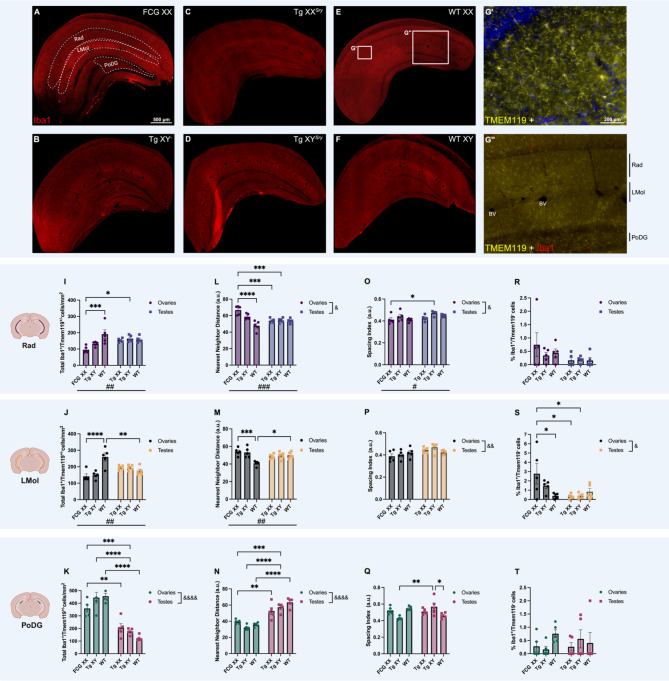
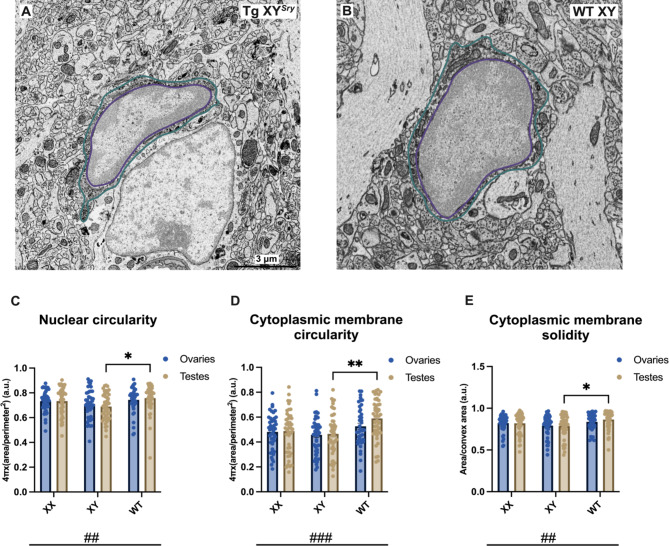
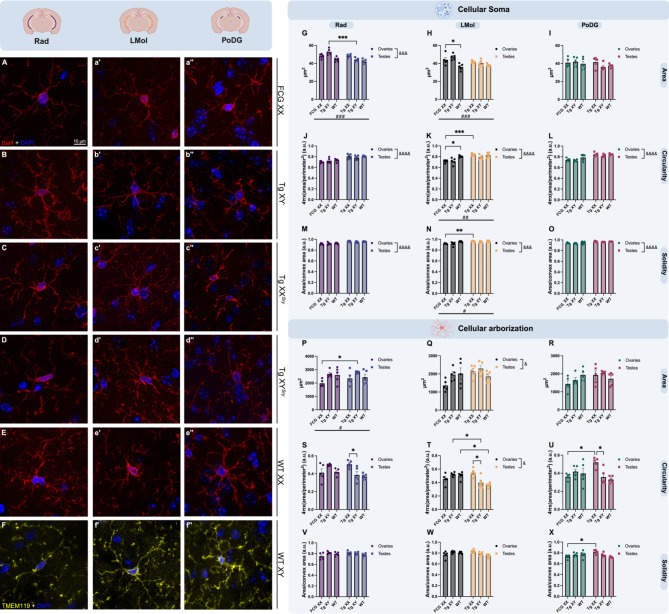
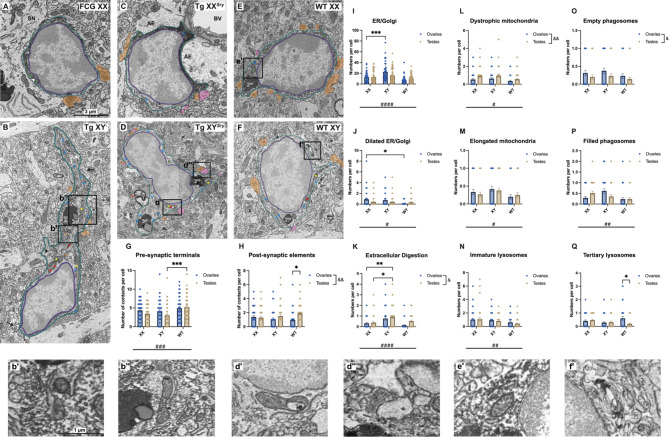
The brain presents various structural and functional sex differences, for which multiple factors are attributed: genetic, epigenetic, metabolic, and hormonal. While biological sex is determined by both sex chromosomes and sex hormones, little is known about how these two factors interact to establish this dimorphism. Sex differences in the brain also affect its resident immune cells, microglia, which actively survey the brain parenchyma and interact with sex hormones throughout life. However, microglial differences in density and distribution, morphology and ultrastructural patterns in physiological conditions during adulthood are largely unknown. Here, we investigated these aforementioned properties of microglia using the Four Core Genotypes (FCG) model, which allows for an independent assessment of gonadal hormones and sex chromosomal effects in four conditions: FCG XX and Tg XY (both ovaries); Tg XX and Tg XY (both testes). We also compared the FCG results with XX and XY wild-type (WT) mice. In adult mice, we focused our investigation on the ventral hippocampus across different layers: CA1 stratum radiatum (Rad) and CA1 stratum lacunosum-moleculare (LMol), as well as the dentate gyrus polymorphic layer (PoDG). Double immunostaining for Iba1 and TMEM119 revealed that microglial density is influenced by both sex chromosomes and sex hormones. We show in the Rad and LMol that microglia are denser in FCG XX compared to Tg XY mice, however, microglia were densest in WT XX mice. In the PoDG, ovarian animals had increased microglial density compared to testes animals. Additionally, microglial morphology was modulated by a complex interaction between hormones and chromosomes, affecting both their cellular soma and arborization across the hippocampal layers. Moreover, ultrastructural analysis showed that microglia in WT animals make overall more contacts with pre- and post-synaptic elements than in FCG animals. Lastly, microglial markers of cellular stress, including mitochondrion elongation, and dilation of the endoplasmic reticulum and Golgi apparatus, were mostly chromosomally driven. Overall, we characterized different aspects of microglial properties during normal physiological conditions that were found to be shaped by sex chromosomes and sex hormones, shading more light onto how sex differences affect the brain immunity at steady-state.
大脑呈现出各种结构和功能上的性别差异,这归因于多种因素:基因、表观遗传、代谢和激素。虽然生物性别由性染色体和性激素共同决定,但对于这两个因素如何相互作用以建立这种二态性,我们知之甚少。大脑中的性别差异也会影响其驻留免疫细胞——小胶质细胞,小胶质细胞会积极监测脑实质并在一生中与性激素相互作用。然而,成年期生理条件下小胶质细胞在密度和分布、形态以及超微结构模式方面的差异在很大程度上尚不清楚。在这里,我们使用四核心基因型(FCG)模型研究了小胶质细胞的上述特性,该模型允许在四种条件下独立评估性腺激素和性染色体的影响:FCG XX和Tg XY(均为卵巢);Tg XX和Tg XY(均为睾丸)。我们还将FCG的结果与XX和XY野生型(WT)小鼠进行了比较。在成年小鼠中,我们将研究重点放在腹侧海马体的不同层:CA1辐射层(Rad)和CA1腔隙-分子层(LMol),以及齿状回多形层(PoDG)。对Iba1和TMEM119进行双重免疫染色显示,小胶质细胞密度受性染色体和性激素的影响。我们发现在Rad和LMol中,与Tg XY小鼠相比,FCG XX小鼠的小胶质细胞密度更高,然而,WT XX小鼠的小胶质细胞密度最高。在PoDG中,与睾丸动物相比,卵巢动物的小胶质细胞密度增加。此外,小胶质细胞形态受到激素和染色体之间复杂相互作用的调节,影响其细胞体和海马各层的分支。此外,超微结构分析表明,与FCG动物相比,WT动物中的小胶质细胞与突触前和突触后元件的总体接触更多。最后,细胞应激的小胶质细胞标志物,包括线粒体延长以及内质网和高尔基体扩张,大多由染色体驱动。总体而言,我们描述了正常生理条件下小胶质细胞特性的不同方面,发现这些特性由性染色体和性激素塑造,进一步揭示了性别差异如何在稳态下影响大脑免疫。