Burdusel Daiana, Doeppner Thorsten R, Surugiu Roxana, Hermann Dirk M, Olaru Denissa Greta, Popa-Wagner Aurel
Experimental Research Center for Normal and Pathological Aging, University of Medicine and Pharmacy Craiova, 200349 Craiova, Romania.
Department of Neurology, University of Giessen Medical School, 35392 Giessen, Germany.
Biomolecules. 2024 Dec 26;15(1):18. doi: 10.3390/biom15010018.
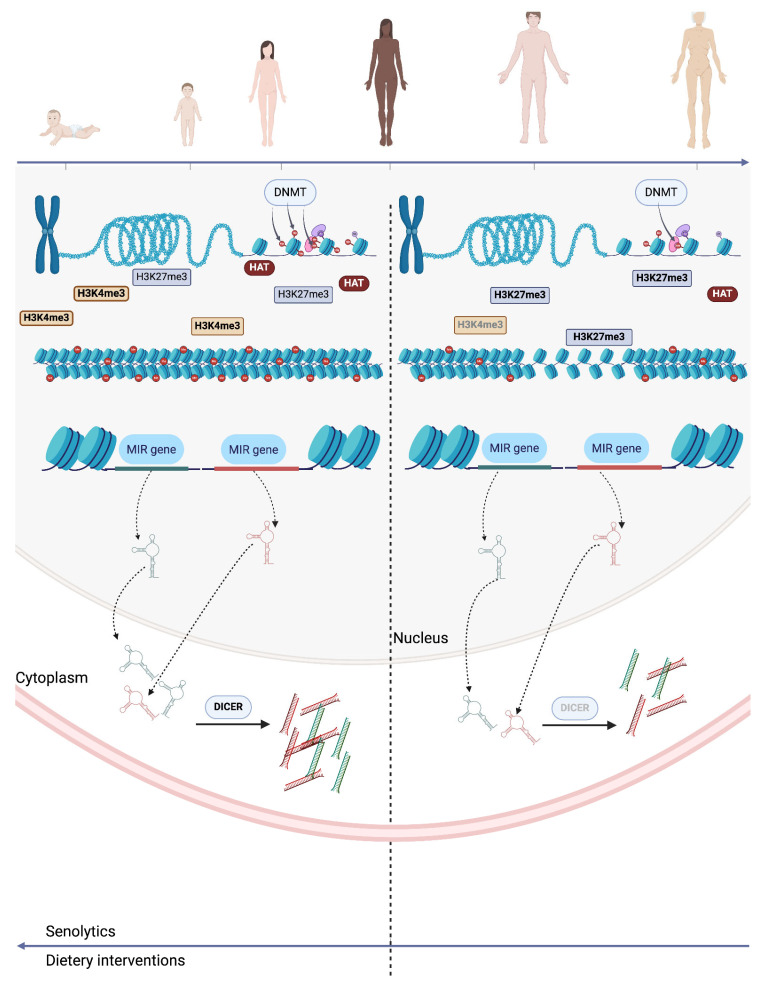
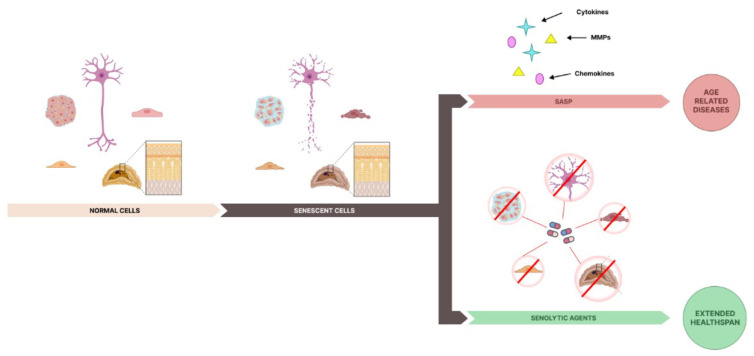
The biological process of aging is influenced by a complex interplay of genetic, environmental, and epigenetic factors. Recent advancements in the fields of epigenetics and senolytics offer promising avenues for understanding and addressing age-related diseases. Epigenetics refers to heritable changes in gene expression without altering the DNA sequence, with mechanisms like DNA methylation, histone modification, and non-coding RNA regulation playing critical roles in aging. Senolytics, a class of drugs targeting and eliminating senescent cells, address the accumulation of dysfunctional cells that contribute to tissue degradation and chronic inflammation through the senescence-associated secretory phenotype. This scoping review examines the intersection of epigenetic mechanisms and senolytic therapies in aging, focusing on their combined potential for therapeutic interventions. Senescent cells display distinct epigenetic signatures, such as DNA hypermethylation and histone modifications, which can be targeted to enhance senolytic efficacy. Epigenetic reprogramming strategies, such as induced pluripotent stem cells, may further complement senolytics by rejuvenating aged cells. Integrating epigenetic modulation with senolytic therapy offers a dual approach to improving healthspan and mitigating age-related pathologies. This narrative review underscores the need for continued research into the molecular mechanisms underlying these interactions and suggests future directions for therapeutic development, including clinical trials, biomarker discovery, and combination therapies that synergistically target aging processes.
衰老的生物学过程受到遗传、环境和表观遗传因素复杂相互作用的影响。表观遗传学和衰老细胞溶解疗法领域的最新进展为理解和解决与年龄相关的疾病提供了有前景的途径。表观遗传学是指在不改变DNA序列的情况下基因表达的可遗传变化,DNA甲基化、组蛋白修饰和非编码RNA调控等机制在衰老过程中起着关键作用。衰老细胞溶解剂是一类靶向并消除衰老细胞的药物,通过衰老相关分泌表型解决导致组织退化和慢性炎症的功能失调细胞的积累问题。本综述探讨了衰老过程中表观遗传机制与衰老细胞溶解疗法的交叉点,重点关注它们在治疗干预方面的联合潜力。衰老细胞表现出独特的表观遗传特征,如DNA高甲基化和组蛋白修饰,这些可以作为靶点来提高衰老细胞溶解剂的疗效。表观遗传重编程策略,如诱导多能干细胞,可能通过使衰老细胞恢复活力进一步补充衰老细胞溶解剂。将表观遗传调节与衰老细胞溶解疗法相结合,为改善健康寿命和减轻与年龄相关的病理状况提供了一种双重方法。本叙述性综述强调需要继续研究这些相互作用背后的分子机制,并提出治疗发展的未来方向,包括临床试验、生物标志物发现以及协同靶向衰老过程的联合疗法。