Punsuwun Sasinun, Oerther Sarah, Reangsing Chuntana
School of Nursing, University of Phayao, Muang District, Phayao, Thailand.
Goldfarb School of Nursing, Barnes-Jewish College, Saint Louis City, MO, USA.
Heliyon. 2025 Jan 3;11(1):e41664. doi: 10.1016/j.heliyon.2025.e41664. eCollection 2025 Jan 15.
While electroconvulsive therapy and antidepressants are standard treatments for depressed pregnant women, they are not without threats. The objective of this study was to quantitative synthesis of the literature regarding the effect of yoga interventions on depressive symptoms in pregnant women.
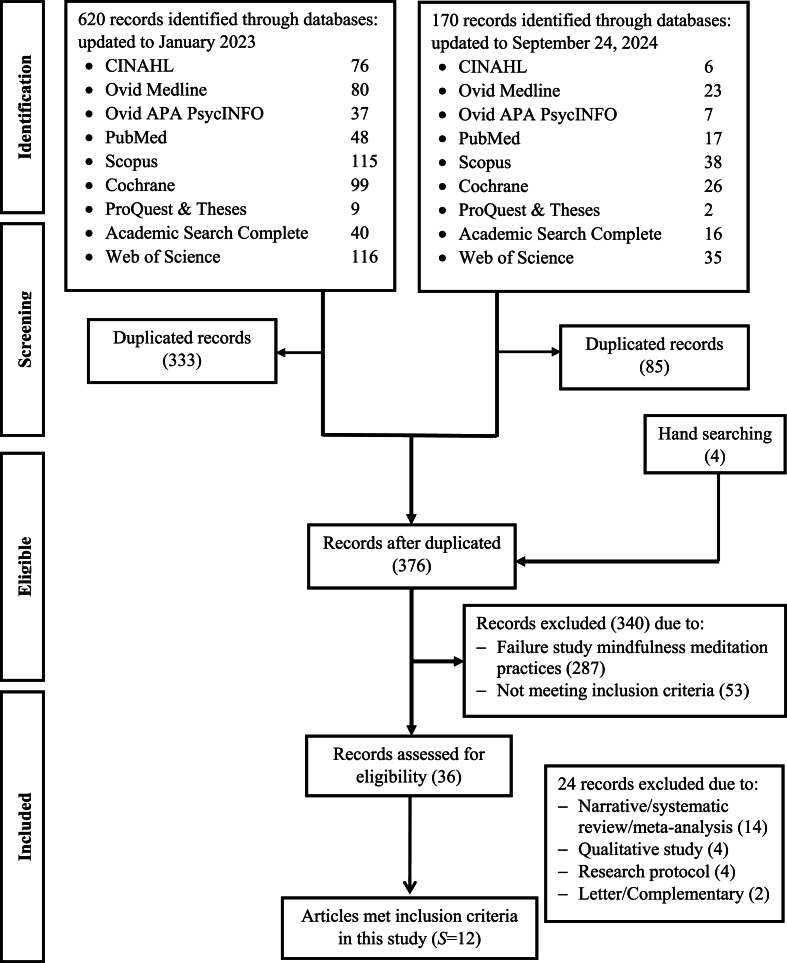
Nine electronic databases were searched for primary studies with pregnant women with depression measured as outcomes and written in English. Based on the random-effects model, we used Hedges' g to compute the effect size and examined the subgroup analysis.
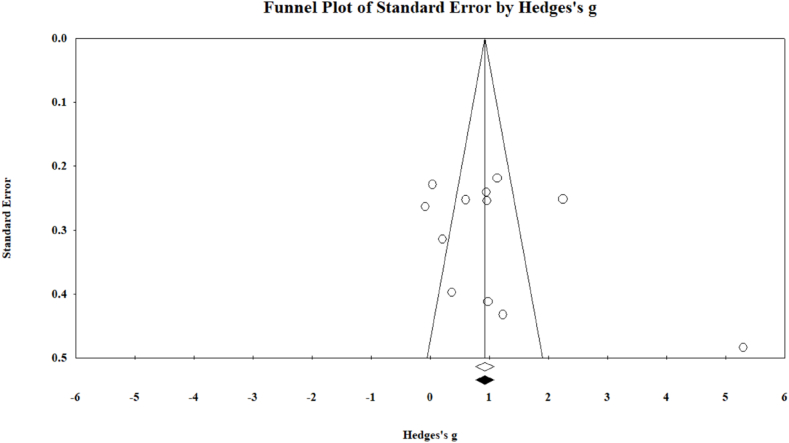
We found twelve primary studies which included 738 participants who were 28.43 ± 1.92 years old across studies. The overall effect size using random-effects model was = 1.120 (95%CI .52, 1.72, < .001). Providing yoga to pregnant women with mood disorder had a lesser effect size ( = .10) than providing yoga to pregnant women without a mood disorder ( = 1.45). Funded studies had a lesser ES (g = .51) than those with unfunded (g = 1.98). Proving yoga in Eastern countries had a greater ES (g = 1.82) than providing yoga in Western (g = .40). No quality indicators showed moderator effects.
When compared to controls, pregnant women who practiced yoga reported significantly improved depressive symptoms. Yoga might be an alternative complementary therapy that clinicians and other healthcare professionals might think about utilizing to help pregnant women who are depressed.
虽然电休克疗法和抗抑郁药是治疗抑郁症孕妇的标准方法,但它们并非没有风险。本研究的目的是对有关瑜伽干预对孕妇抑郁症状影响的文献进行定量综合分析。
检索了九个电子数据库,以寻找以抑郁症孕妇为研究对象、以英文撰写的主要研究。基于随机效应模型,我们使用Hedges' g来计算效应量,并进行亚组分析。
我们找到了12项主要研究,这些研究共纳入738名参与者,各研究中参与者的年龄为28.43±1.92岁。使用随机效应模型得出的总体效应量为g = 1.120(95%CI:0.52,1.72,P < 0.001)。为患有情绪障碍的孕妇提供瑜伽的效应量(g = 0.10)低于为未患情绪障碍的孕妇提供瑜伽的效应量(g = 1.45)。有资助的研究的效应量(g = 0.51)低于无资助的研究(g = 1.98)。在东方国家提供瑜伽的效应量(g = 1.82)高于在西方国家提供瑜伽的效应量(g = 0.40)。没有质量指标显示出调节效应。
与对照组相比,练习瑜伽的孕妇报告其抑郁症状有显著改善。瑜伽可能是一种可供临床医生和其他医疗保健专业人员考虑用于帮助抑郁症孕妇的替代补充疗法。