Sallam Mohammed, Oliver Albert, Allam Doaa, Kassem Rana, Damani Mais
Department of Pharmacy, Mediclinic Parkview Hospital, Mediclinic Middle East, Dubai, ARE.
Department of Management, Mediclinic Parkview Hospital, Mediclinic Middle East, Dubai, ARE.
Cureus. 2024 Dec 25;16(12):e76377. doi: 10.7759/cureus.76377. eCollection 2024 Dec.
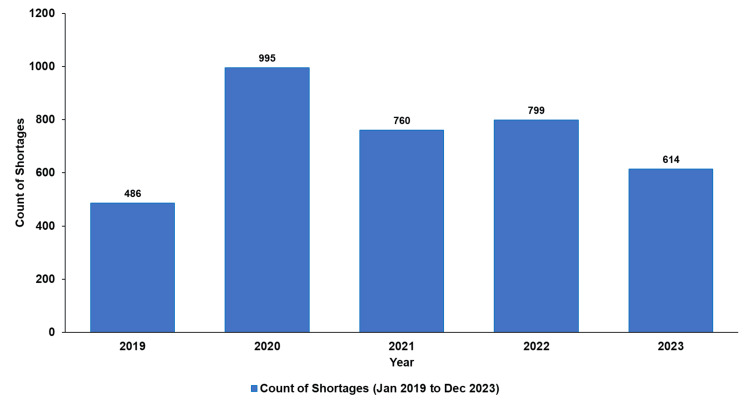
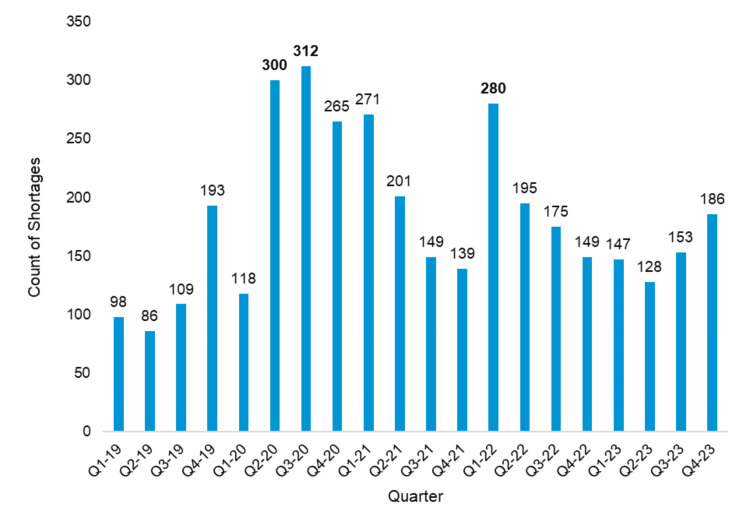
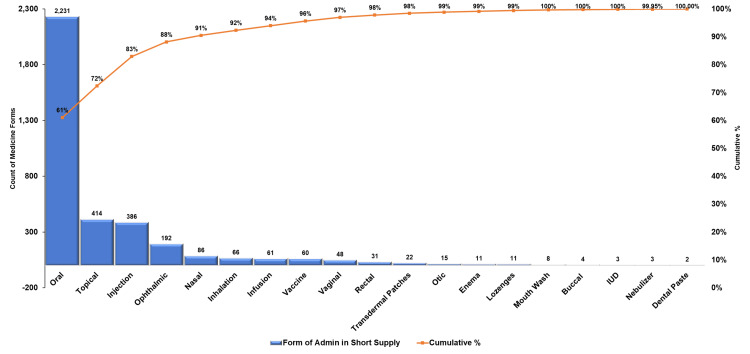
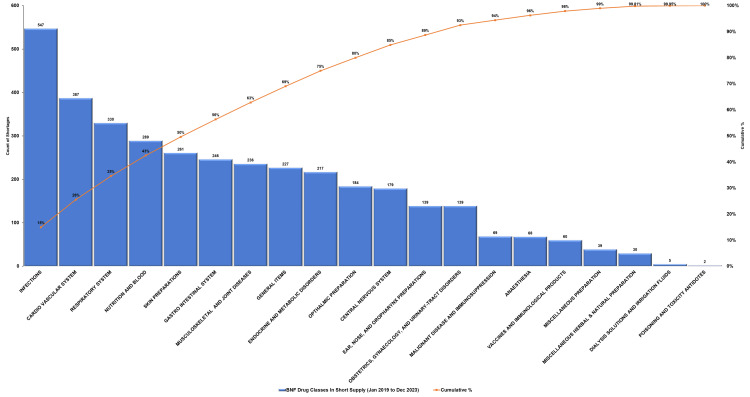
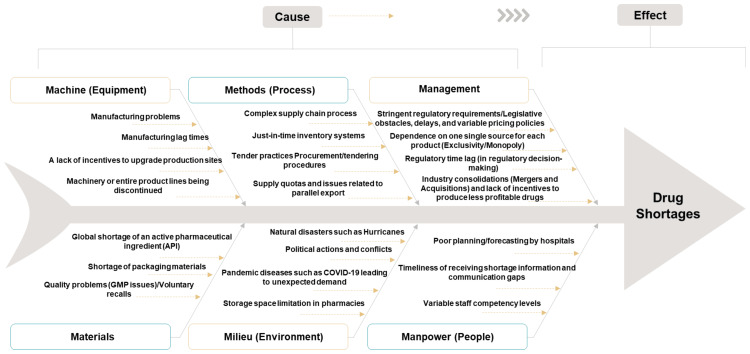
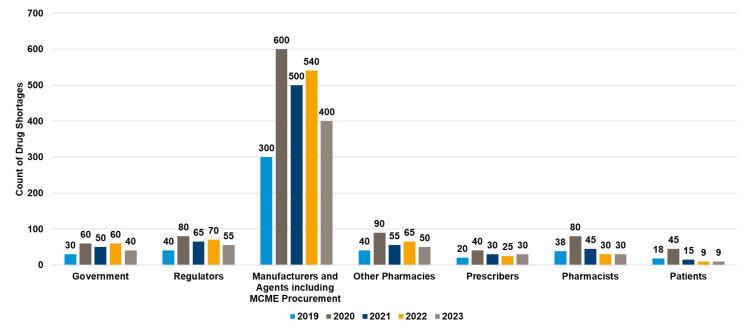
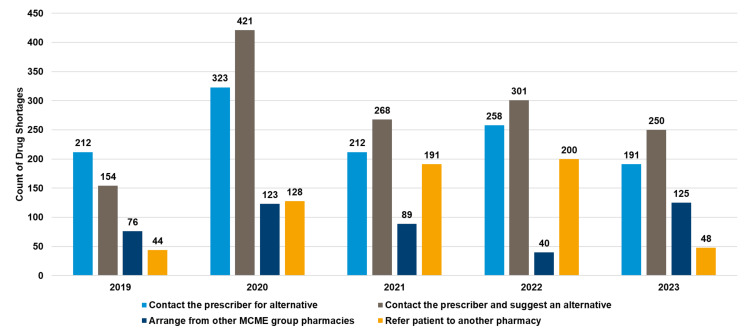
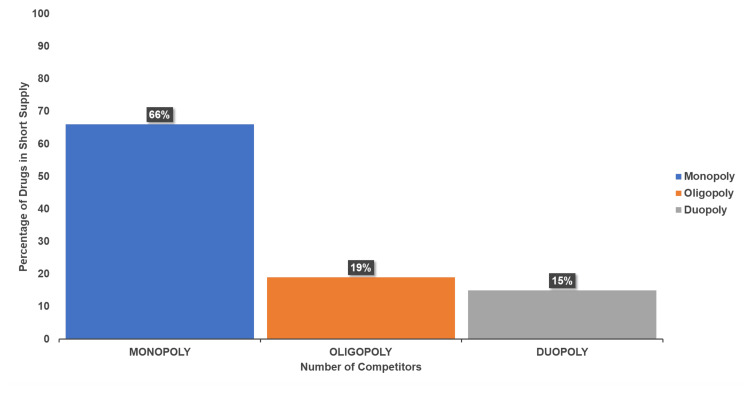
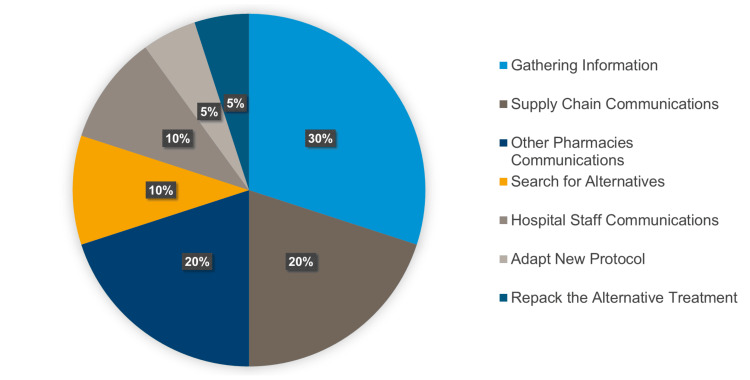
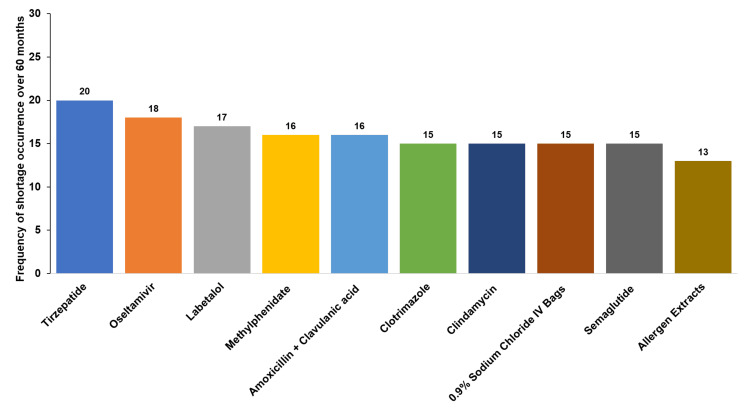
Background Drug shortages have become a significant challenge globally, affecting healthcare delivery and patient outcomes. This study aimed to assess drug shortages' prevalence, causes, and impact at a tertiary care hospital in Dubai, the United Arab Emirates (UAE), providing actionable insights for future mitigation strategies. Methods A retrospective descriptive study was conducted at Mediclinic Parkview (MPAR) Hospital, part of Mediclinic Middle East (MCME), UAE. Data were collected from January 2019 to December 2023. Reported drug shortages were analyzed to assess their frequency, duration, causes, and management, with a focus on identifying trends and underlying factors. Results Drug shortages peaked at 995 in 2020, particularly during the COVID-19 pandemic. The median time spent managing shortages reached 19.5 days per shortage in Q3 2020. Oral forms accounted for the highest frequency (n = 2231), representing 61% of all shortages, followed by topical forms (n = 414, 11%) and injection forms (n = 386, 10%). Most affected drugs were in the infectious disease (n = 547, 15%), cardiovascular (n = 387, 11%), and respiratory (n = 330, 9%) categories. Drug shortages were driven by regulatory issues and manufacturing delays (39%), unknown reasons (29%), and supply chain disruptions exacerbated by the pandemic (10%). A monopoly environment worsened the situation and limited sourcing flexibility, with 66% of shortages linked to zero supply competitors. Tirzepatide (n = 20) and oseltamivir (n = 18) were the drugs most frequently reported to be unavailable over the 60-month study interval. Regarding management efforts, 80% of the time was spent gathering information and communicating with the different stakeholders. The hospital's response included contacting prescribers for alternatives and increased reliance on internal procurement and inter-pharmacy coordination. These shortages caused significant operational strain, with increased workloads and higher costs. Conclusion The study highlighted the need for adopting proactive measures, improved strategies, enhanced communication, and better preparedness to address future drug shortages. Key actions involved investing in technology, strengthening supplier relationships, and advocating for policy reforms to mitigate risks and ensure continuity of care.
药品短缺已成为全球一项重大挑战,影响着医疗服务的提供和患者的治疗结果。本研究旨在评估阿拉伯联合酋长国(阿联酋)迪拜一家三级护理医院药品短缺的发生率、原因及影响,为未来的缓解策略提供可行的见解。方法:在阿联酋 Mediclinic Middle East(MCME)旗下的 Mediclinic Parkview(MPAR)医院开展了一项回顾性描述性研究。收集了 2019 年 1 月至 2023 年 12 月的数据。对报告的药品短缺情况进行分析,以评估其发生频率、持续时间、原因及管理情况,重点是识别趋势和潜在因素。结果:药品短缺在 2020 年达到峰值 995 次,尤其是在新冠疫情期间。2020 年第三季度,处理每次短缺的平均时间达到 19.5 天。口服剂型的短缺频率最高(n = 2231),占所有短缺的 61%,其次是外用剂型(n = 414,11%)和注射剂型(n = 386,10%)。受影响最大的药物类别为传染病类(n = 547,15%)、心血管类(n = 387,11%)和呼吸类(n =