Kobanawa Masato, Iwami Nanako, Hanaoka Masachi, Enatsu Kunihiro, Ichiyama Takuhiko
Gynecology, Kobanawa Clinic, Ibaraki, JPN.
Reproductive Medicine, Kamiya Ladies Clinic, Hokkaido, JPN.
Cureus. 2024 Dec 25;16(12):e76371. doi: 10.7759/cureus.76371. eCollection 2024 Dec.
This study compared the cost-effectiveness of two recombinant follicle-stimulating hormones (rFSH) formulations, Follitropin Delta and Follitropin Alfa, in controlled ovarian stimulation using cumulative live birth rates as an efficacy indicator.
This retrospective study was conducted across five clinics in Japan from April 2022 to December 2023, involving 446 first assisted reproductive technology (ART) cycles (200 with Follitropin Delta and 246 with Follitropin Alfa) were treated with rFSH monotherapy using either Follitropin Delta or Follitropin Alfa. We compared clinical outcomes such as cumulative pregnancy and live birth rates and analyzed cost-effectiveness using the cumulative live birth rates as the efficacy indicator and the incremental cost-effectiveness ratio (ICER).
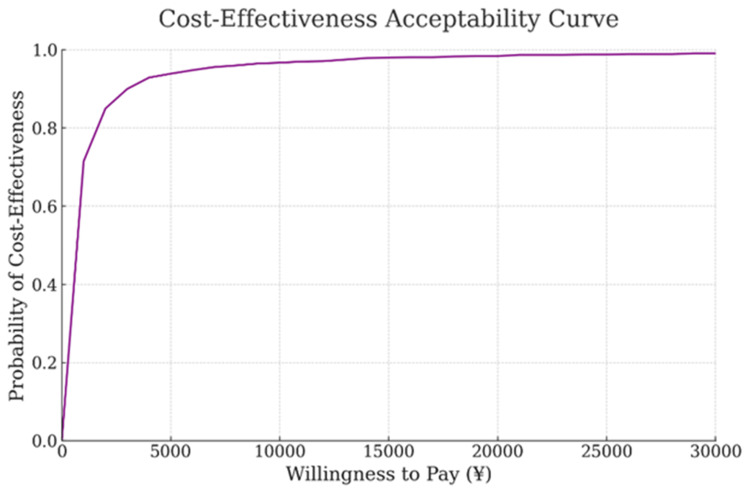
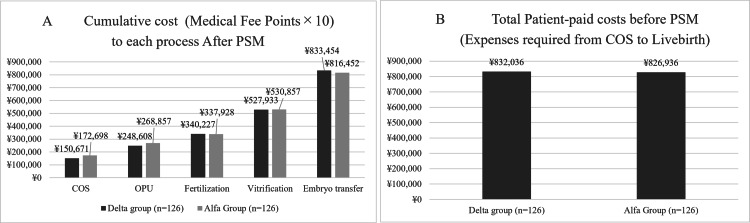
The Follitropin Delta group had a significantly lower incidence of ovarian hyperstimulation syndrome (15.90% vs. 27.00%, = 0.045) and higher cumulative pregnancy rates than the Follitropin Alfa group (87.30% vs. 76.20 %; = 0.03) after propensity score matching (PSM). Although cumulative live birth rates showed no significant differences (85.70% vs. 76.20%, = 0.08) and Follitropin Delta demonstrated higher cost than Follitropin AlfaFollitropin Alfa (832,036 yen and 826,936 yen), ICER indicated low costs per percentage of live births (538.58 yen/%: 95% confidence interval [CI]: 275.34-12,568.69 yen).
Using Follitropin Delta for controlled ovarian stimulation in ART may be more cost-effective than Follitropin Alfa under Japan's Health Care Insurance System, offering higher cumulative live birth rates and minimal additional costs.
本研究比较了两种重组促卵泡生成素(rFSH)制剂,即注射用重组促卵泡素β和注射用重组人促卵泡激素,在控制性卵巢刺激中以累积活产率作为疗效指标时的成本效益。
本回顾性研究于2022年4月至2023年12月在日本的五家诊所进行,纳入446个首次辅助生殖技术(ART)周期(200个使用注射用重组促卵泡素β,246个使用注射用重组人促卵泡激素),采用注射用重组促卵泡素β或注射用重组人促卵泡激素进行rFSH单药治疗。我们比较了累积妊娠率和活产率等临床结局,并以累积活产率作为疗效指标,采用增量成本效益比(ICER)分析成本效益。
倾向得分匹配(PSM)后,注射用重组促卵泡素β组的卵巢过度刺激综合征发生率显著低于注射用重组人促卵泡激素组(15.90%对27.00%,P = 0.045),累积妊娠率高于注射用重组人促卵泡激素组(87.30%对76.20%;P = 0.03)。虽然累积活产率无显著差异(85.70%对76.20%,P = 0.08),且注射用重组促卵泡素β的成本高于注射用重组人促卵泡激素(832,036日元和826,936日元),但ICER表明每活产百分比的成本较低(538.58日元/%:95%置信区间[CI]:275.34 - 12,568.69日元)。
在日本的医疗保险制度下,在ART中使用注射用重组促卵泡素β进行控制性卵巢刺激可能比注射用重组人促卵泡激素更具成本效益,可提供更高的累积活产率且额外成本最小。