Zheng Yingying, Corrêa-Silva Simone, Rodrigues Regina Maria, Corrêa de Souza Eloisa, Macaferri da Fonseca Fernanda A, Gilio Alfredo Elias, Carneiro-Sampaio Magda, Palmeira Patricia
Department of Pediatrics, Faculdade de Medicina, Universidade de Sao Paulo, Sao Paulo, Brazil.
Laboratorio de Pediatria Clinica (LIM36), Hospital das Clinicas HCFMUSP, Faculdade de Medicina, Universidade de Sao Paulo, Sao Paulo, Brazil.
Front Immunol. 2025 Jan 10;15:1481416. doi: 10.3389/fimmu.2024.1481416. eCollection 2024.
Chemokines and their receptors are essential for leukocyte migration to several tissues, including human milk. Here, we evaluated the homing of T and B lymphocyte subsets to breast milk in response to ongoing respiratory infections in the nursing infant.
Blood and mature milk were collected from healthy mothers of nurslings with respiratory infections (Group I) and from healthy mothers of healthy nurslings (Group C). Total lymphocyte, T and B cells, their subset numbers, and the expression of the homing receptors CCR5, CCR6, CCR10, and CXCR3 in these cells were evaluated in milk. Maternal serum and milk chemokine, cytokine, and IgA and IgG antibody levels were also quantified.
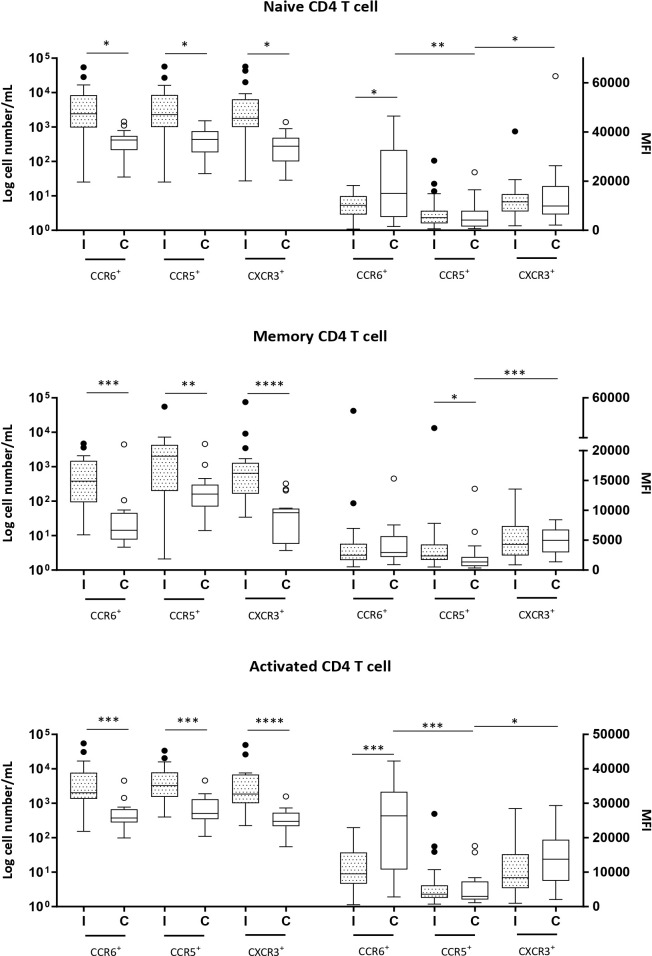
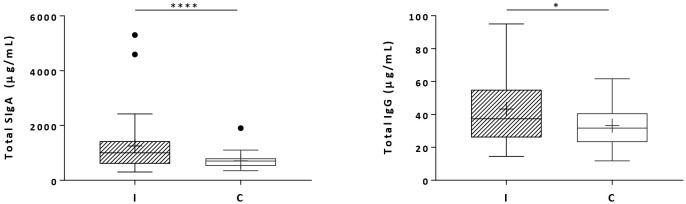
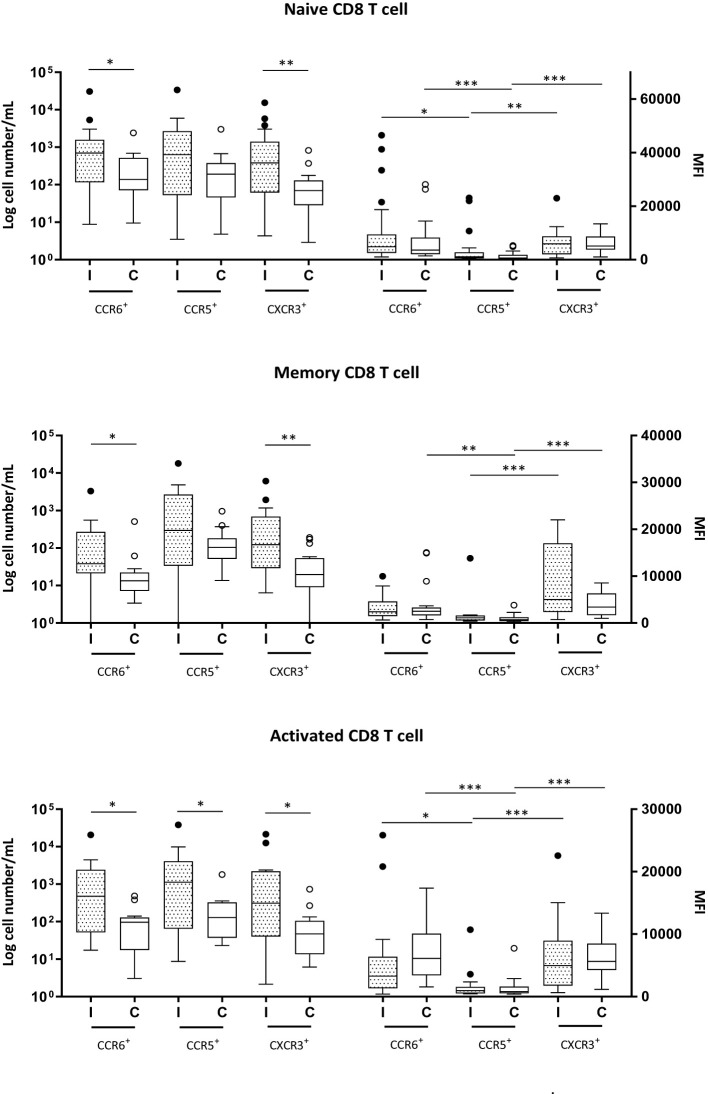
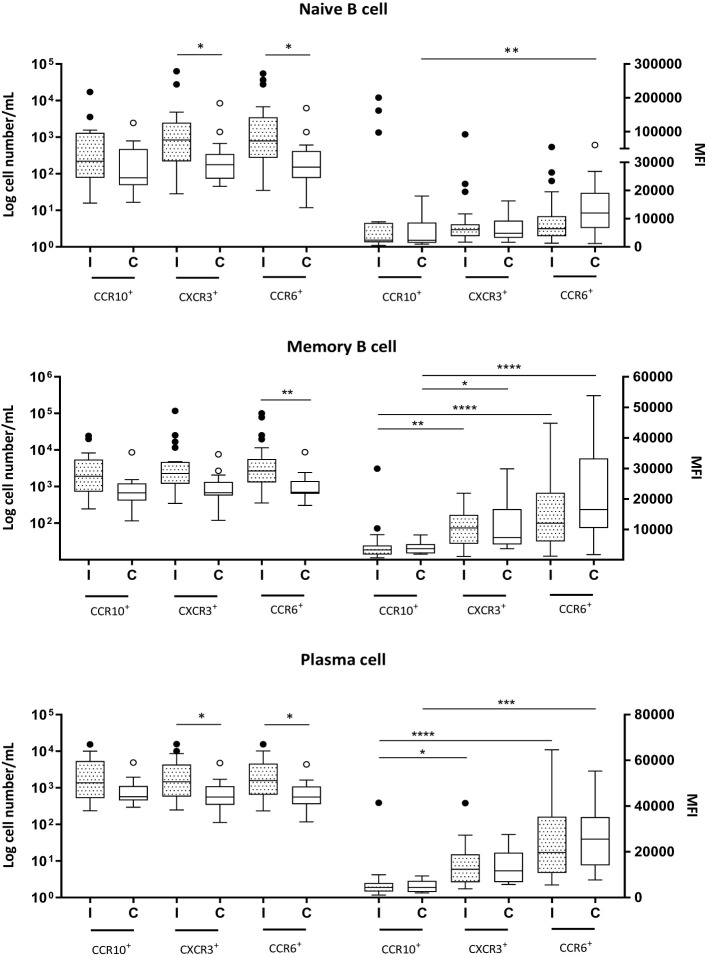
All milk lymphocyte numbers were greater in Group I than in Group C. All CD4 T-cell subsets expressing CCR5, CCR6, and CXCR3 were higher in Group I. Within the CD8 T-cell subsets, only CCR6 and CXCR3 were higher in Group I, while CCR5 expression was higher in Group I exclusively for activated CD8 T cells. Group I showed greater numbers of all CCR6+ B-cell subsets and CXCR3+ naive B cells and plasma cells than did Group C. Infection of the nurslings promoted increased CCL20, CXCL10, IL-6, IL-8, total IgA, and IgG levels in the milk.
Respiratory infections in nursing infants stimulate an increase in cytokines and chemokines in breast milk, facilitating the recruitment and activation of lymphocytes. This process may promote immunological tolerance and help in the maturation of the infant's immune system, providing an additional strategy for passive maternal-infant protection.
趋化因子及其受体对于白细胞迁移至包括人乳在内的多种组织至关重要。在此,我们评估了哺乳婴儿发生持续性呼吸道感染时T和B淋巴细胞亚群向母乳的归巢情况。
从患有呼吸道感染的哺乳婴儿的健康母亲(I组)以及健康哺乳婴儿的健康母亲(C组)中采集血液和成熟乳汁。对乳汁中的总淋巴细胞、T细胞和B细胞、它们的亚群数量以及这些细胞中归巢受体CCR5、CCR6、CCR10和CXCR3的表达进行评估。还对母体血清和乳汁中的趋化因子、细胞因子以及IgA和IgG抗体水平进行了定量分析。
I组的所有乳汁淋巴细胞数量均高于C组。I组中所有表达CCR5、CCR6和CXCR3的CD4 T细胞亚群均更高。在CD8 T细胞亚群中,I组仅CCR6和CXCR3更高,而CCR5表达仅在I组的活化CD8 T细胞中更高。I组中所有CCR6 + B细胞亚群以及CXCR3 + 幼稚B细胞和浆细胞的数量均多于C组。婴儿感染促使乳汁中CCL20、CXCL10、IL - 6、IL - 8、总IgA和IgG水平升高。
哺乳婴儿的呼吸道感染会刺激母乳中细胞因子和趋化因子增加,促进淋巴细胞的募集和活化。这一过程可能促进免疫耐受并有助于婴儿免疫系统成熟,为母婴被动保护提供额外策略。