Gunaratne Gihan S, Gallant Joseph P, Ott Kendahl L, Broome Payson L, Celada Sasha, West Jayden L, Mixdorf Jason C, Aluicio-Sarduy Eduardo, Engle Jonathan W, Boros Eszter, Meimetis Labros, Lang Joshua M, Zhao Shuang G, Hernandez Reinier, Kosoff David, LeBeau Aaron M
Department of Pathology and Laboratory Medicine, University of Wisconsin School of Medicine and Public Health, Madison, WI 53705, USA.
Molecular and Cellular Pharmacology Program, University of Wisconsin School of Medicine and Public Health, Madison, WI, 53705, USA.
bioRxiv. 2025 Jan 13:2025.01.13.632555. doi: 10.1101/2025.01.13.632555.
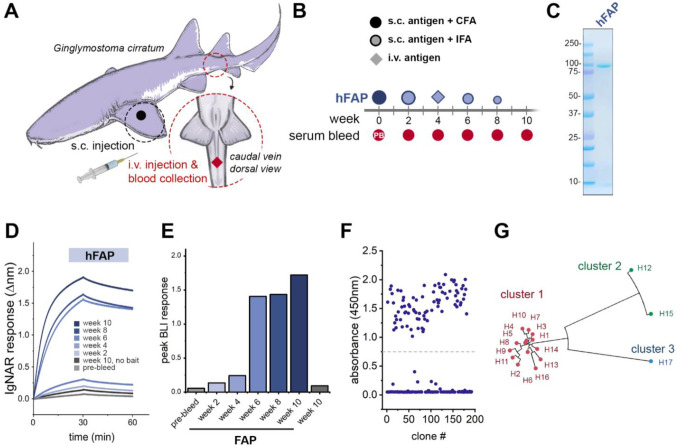
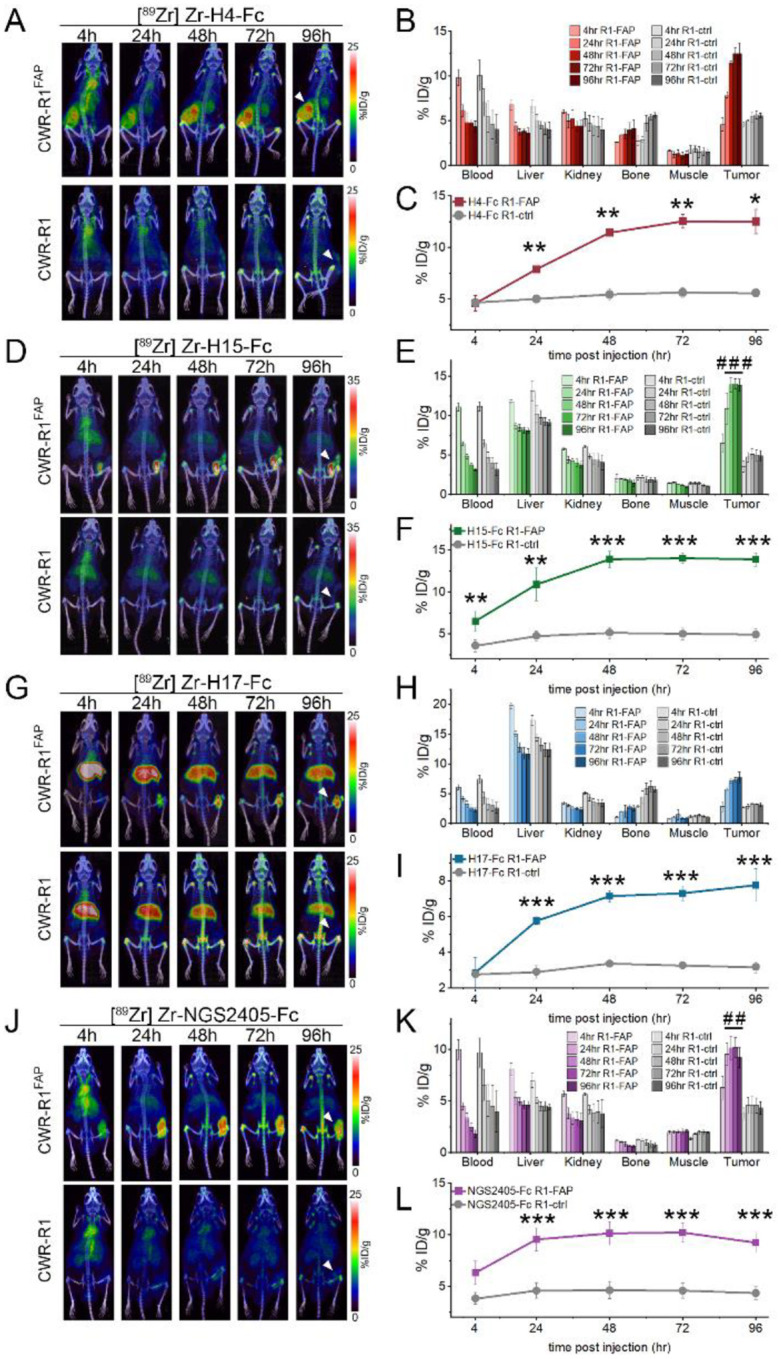
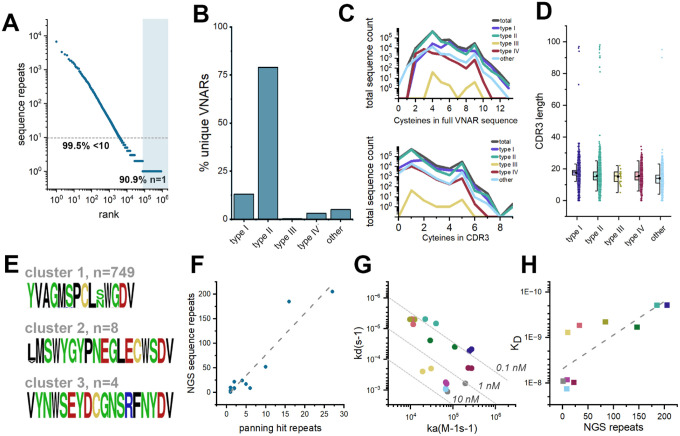
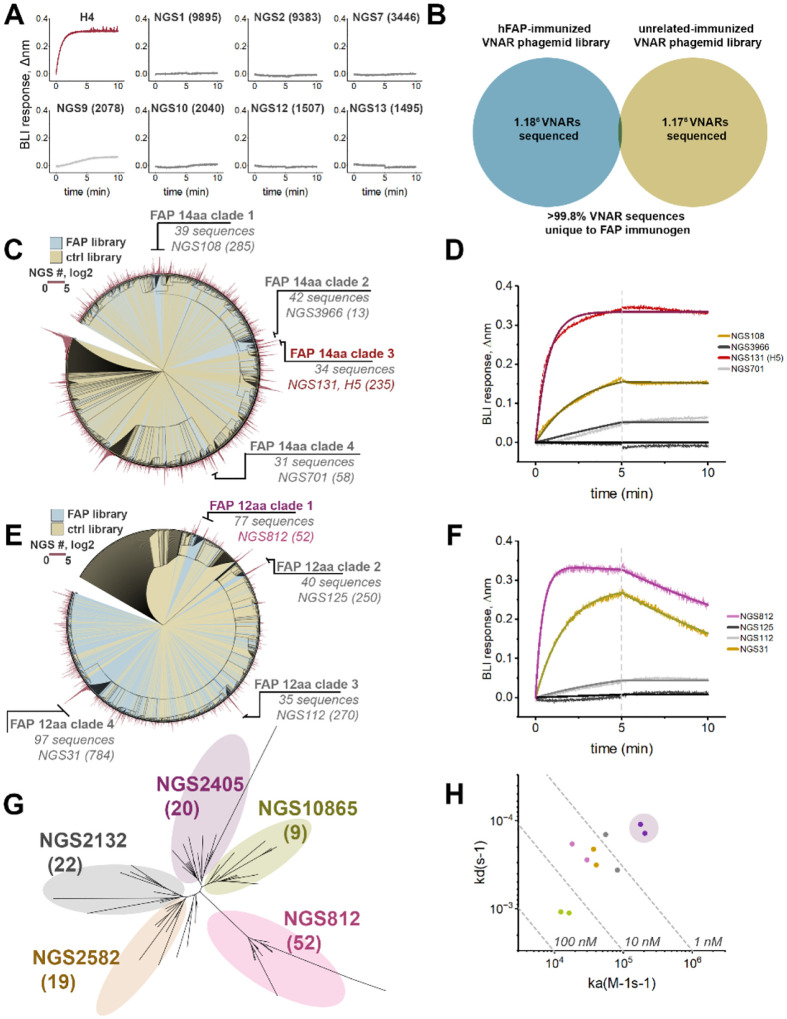
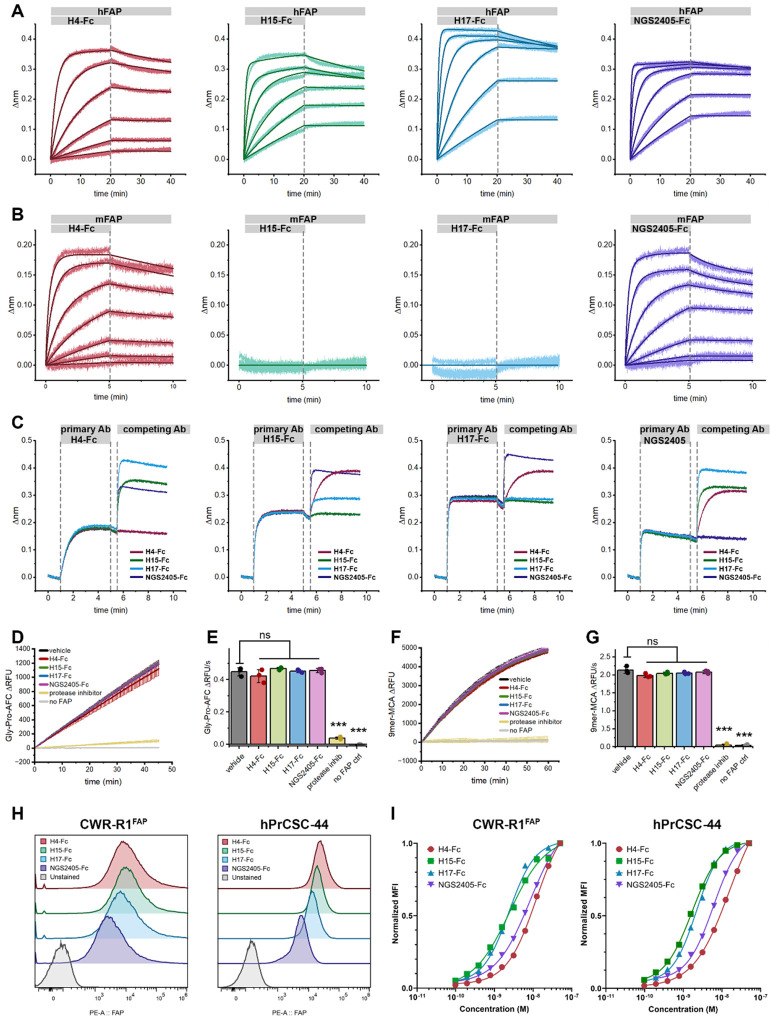
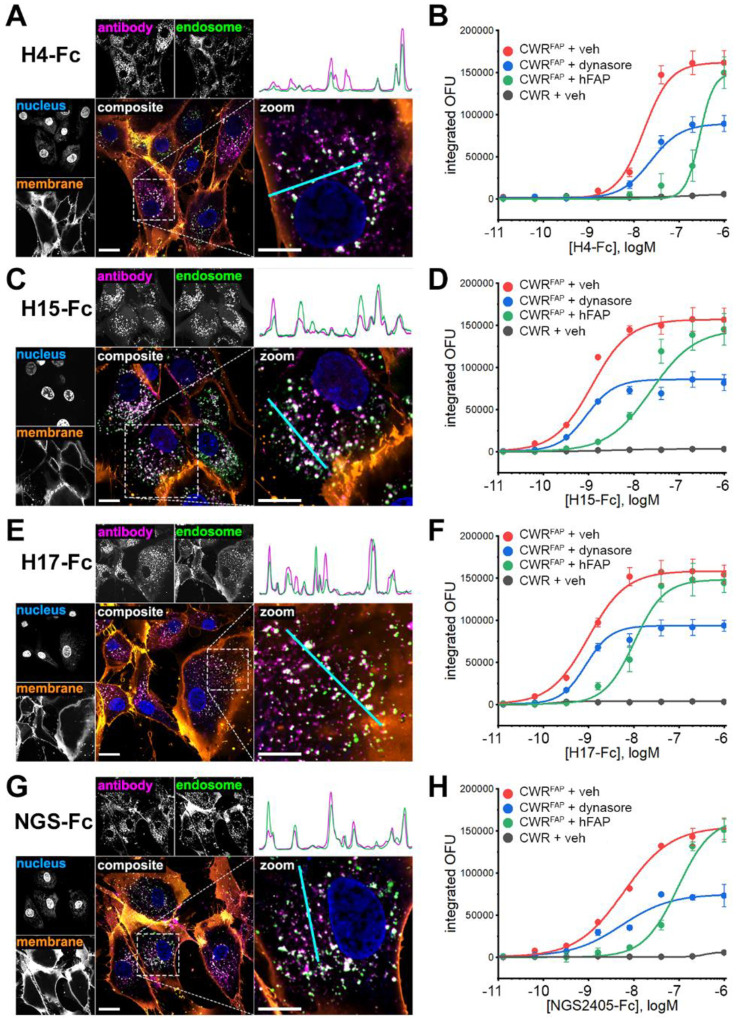
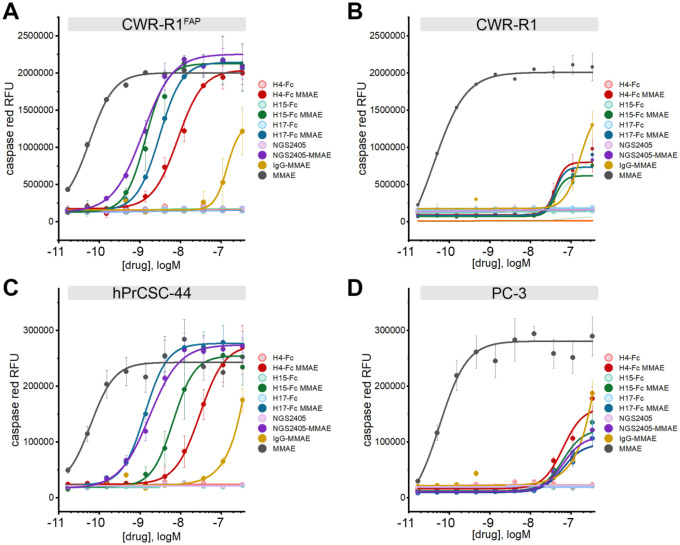
Cancer-associated fibroblasts (CAFs) in the stroma of solid tumors promote an immunosuppressive tumor microenvironment (TME) that drives resistance to therapies. The expression of the protease fibroblast activation protein (FAP) on the surface of CAFs has made FAP a target for development of therapies to dampen immunosuppression. Relatively few biologics have been developed for FAP and none have been developed that exploit the unique engagement properties of Variable New Antigen Receptors (VNARs) from shark antibodies. As the smallest binding domain in nature, VNARs cleverage unique geometries and recognize epitopes conventional antibodies cannot. By directly immunizing a nurse shark with FAP, we created a large anti-FAP VNAR phage display library. This library allowed us to identify a suite of anti-FAP VNARs through traditional biopanning and also by an approach that did not require any prior affinity-based enrichment . We investigated four VNAR-Fc fusion proteins for theranostic properties and found that all four recognized FAP with high affinity and were rapidly internalized by FAP-positive cells. As a result, the VNAR-Fc constructs were effective antibody-drug conjugates and were able to localize to FAP-positive xenografts . Our findings establish VNAR-Fc constructs as a versatile platform for theranostic development that could yield innovative cancer therapies targeting the TME.
实体瘤基质中的癌症相关成纤维细胞(CAF)会促进免疫抑制性肿瘤微环境(TME)的形成,从而导致对治疗产生抗性。CAF表面蛋白酶成纤维细胞活化蛋白(FAP)的表达使FAP成为开发抑制免疫抑制疗法的靶点。针对FAP开发的生物制剂相对较少,且尚未开发出利用鲨鱼抗体可变新抗原受体(VNAR)独特结合特性的生物制剂。作为自然界中最小的结合结构域,VNAR利用独特的几何结构,识别传统抗体无法识别的表位。通过用FAP直接免疫护士鲨,我们创建了一个大型抗FAP VNAR噬菌体展示文库。该文库使我们能够通过传统的生物淘选以及一种不需要任何基于亲和力的预先富集的方法,鉴定出一组抗FAP VNAR。我们研究了四种VNAR-Fc融合蛋白的诊疗特性,发现这四种蛋白均以高亲和力识别FAP,并被FAP阳性细胞迅速内化。因此,VNAR-Fc构建体是有效的抗体-药物偶联物,能够定位于FAP阳性异种移植物。我们的研究结果将VNAR-Fc构建体确立为一种多功能的诊疗开发平台,有望产生针对TME的创新癌症疗法。