Farroni Chiara, Altera Anna Maria Gerarda, Salmi Andrea, Vanini Valentina, Cuzzi Gilda, Lindestam Arlehamn Cecilia S, Sette Alessandro, Delogu Giovanni, Palucci Ivana, Sbarra Settimia, Aiello Alessandra, Picchianti-Diamanti Andrea, Gualano Gina, Palmieri Fabrizio, Goletti Delia, Petruccioli Elisa
Translational Research Unit, National Institute for Infectious Diseases Lazzaro Spallanzani-IRCCS, Rome, Italy.
Unità Operativa Semplice (UOS) Professioni Sanitarie Tecniche, National Institute for Infectious Diseases Lazzaro Spallanzani-IRCCS, Rome, Italy.
Front Immunol. 2025 Jan 13;15:1484143. doi: 10.3389/fimmu.2024.1484143. eCollection 2024.
Subjects with immune-mediated inflammatory diseases (IMID), such as rheumatoid arthritis, with tuberculosis infection (TBI), have a high probability of progressing to tuberculosis disease (TB). We aim to characterize the impact of IMID on the immune response to (Mtb) in patients with TBI and TB disease.
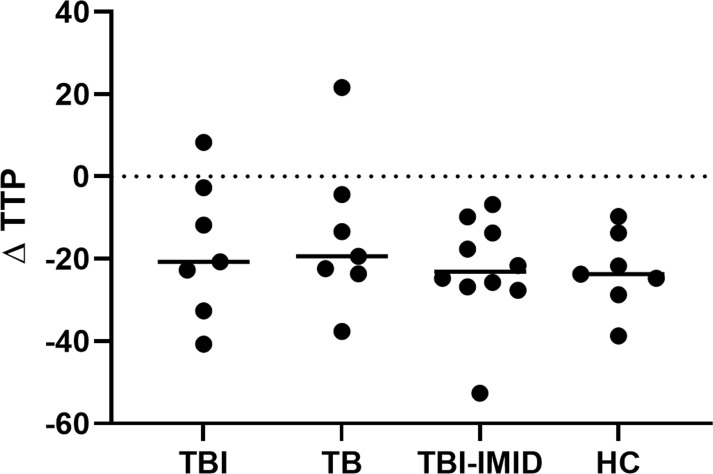
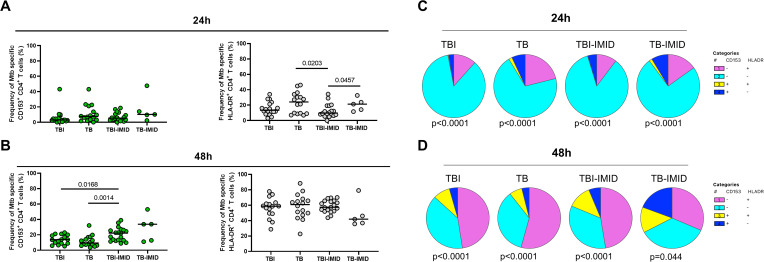
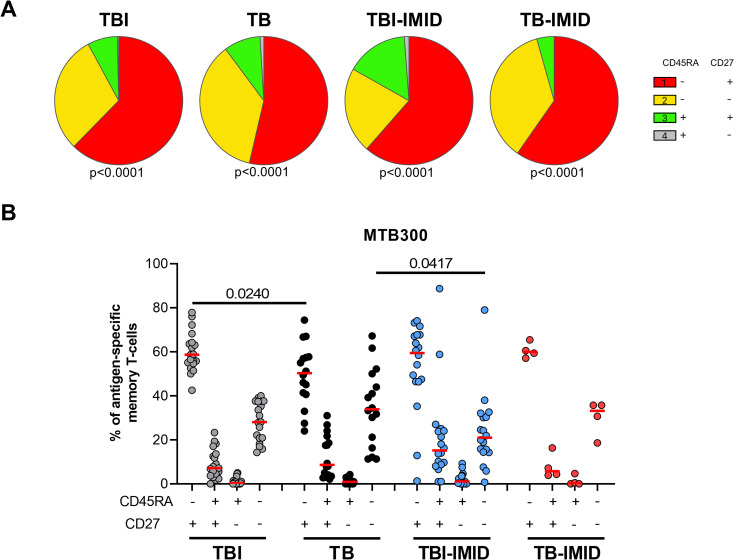
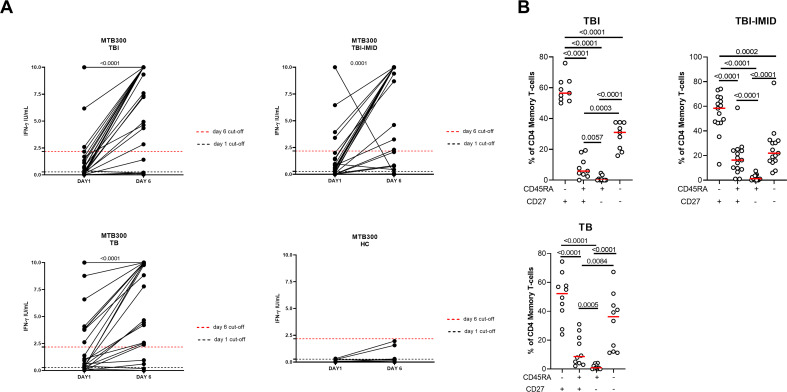
We enrolled TBI and TB patients with and without IMID. Peripheral blood mononuclear cells (PBMCs) were stimulated with Mtb-derived epitopes (MTB300). By flow-cytometry, we identified the Mtb-specific CD4 T cells as cytokine-producing T cells or as CD25 CD134 CD4 T cells. Memory and activation status of Mtb-specific T cells were assessed by evaluating: CD153, HLA-DR, CD45RA, CD27. Mycobacterial growth inhibition assay (MGIA) was used to evaluate the ability of PBMCs to inhibit mycobacteria growth. A long-term stimulation assay was used to detect a memory response.
The IMID status and therapy did not affect the magnitude of response to Mtb-antigen stimulation and the number of responders. TBI-IMID showed a cytokine profile like TBI and TB patients. The Mtb response of TBI-IMID patients was characterized by an effector memory and central memory phenotype as in TBI and TB groups. This memory phenotype allowed the increased IFN-γ production after 6 days of MTB300-stimulation. HLA-DR expression on Mtb-specific T cells was associated with TB, whereas CD153 was associated with TBI status. Finally, the TBI-IMID had an MGIA response like TBI and TB patients.
IMID condition does not affect key aspects of the immune response to Mtb, such as the cytokine response, memory and activation profile, and the ability to contain the mycobacteria replication. The immunological characterization of the fragile population of TBI-IMID patients is fundamental to understanding the correlation between protection and disease.
患有免疫介导的炎症性疾病(IMID)(如类风湿性关节炎)且合并结核感染(TBI)的患者发展为结核病(TB)的可能性很高。我们旨在描述IMID对TBI和TB疾病患者针对结核分枝杆菌(Mtb)免疫反应的影响。
我们纳入了患有和未患有IMID的TBI和TB患者。用Mtb衍生表位(MTB300)刺激外周血单个核细胞(PBMC)。通过流式细胞术,我们将Mtb特异性CD4 T细胞鉴定为产生细胞因子的T细胞或CD25 CD134 CD4 T细胞。通过评估CD153、HLA-DR、CD45RA、CD27来评估Mtb特异性T细胞的记忆和激活状态。采用分枝杆菌生长抑制试验(MGIA)评估PBMC抑制分枝杆菌生长的能力。采用长期刺激试验检测记忆反应。
IMID状态和治疗不影响对Mtb抗原刺激的反应强度和反应者数量。TBI-IMID表现出与TBI和TB患者相似的细胞因子谱。TBI-IMID患者对Mtb的反应特征是具有效应记忆和中枢记忆表型,与TBI和TB组相同。这种记忆表型使得在MTB300刺激6天后IFN-γ产生增加。Mtb特异性T细胞上的HLA-DR表达与TB相关,而CD153与TBI状态相关。最后,TBI-IMID具有与TBI和TB患者相似的MGIA反应。
IMID状态不影响对Mtb免疫反应的关键方面,如细胞因子反应、记忆和激活谱以及抑制分枝杆菌复制的能力。对TBI-IMID患者这一脆弱群体进行免疫特征分析对于理解保护与疾病之间的相关性至关重要。