Doratt Brianna M, True Heather E, Sureshchandra Suhas, Qiao Qi, Rincon Monica, Marshall Nicole E, Messaoudi Ilhem
Department of Microbiology, Immunology and Molecular Genetics, University of Kentucky, Lexington, KY, United States.
Department of Pharmaceutical Sciences, University of Kentucky, Lexington, KY, United States.
Front Immunol. 2025 Jan 13;15:1506305. doi: 10.3389/fimmu.2024.1506305. eCollection 2024.
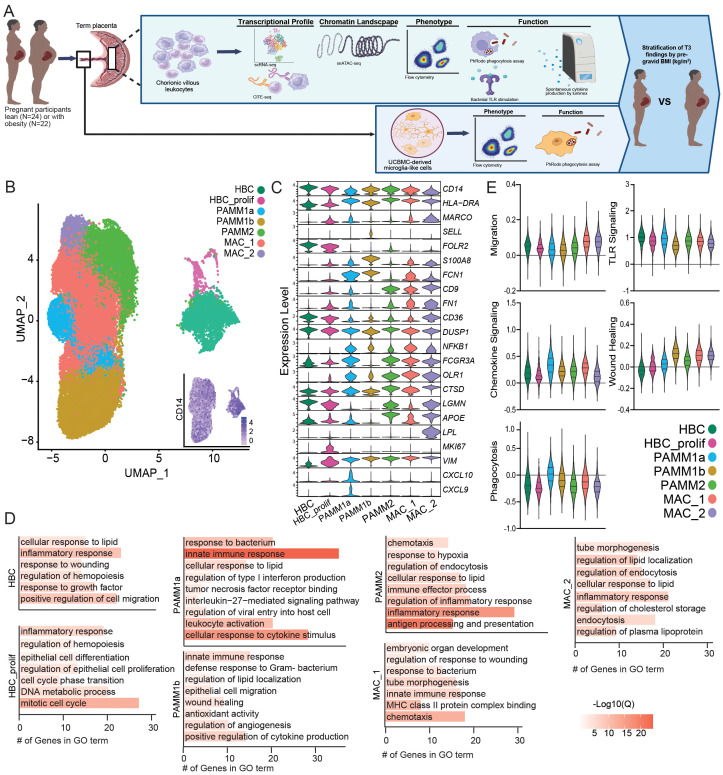
The immune compartment within fetal chorionic villi is comprised of fetal Hofbauer cells (HBC) and invading placenta-associated maternal monocytes and macrophages (PAMM). Recent studies have characterized the transcriptional profile of the first trimester (T1) placenta; however, the phenotypic and functional diversity of chorionic villous immune cells at term (T3) remain poorly understood.
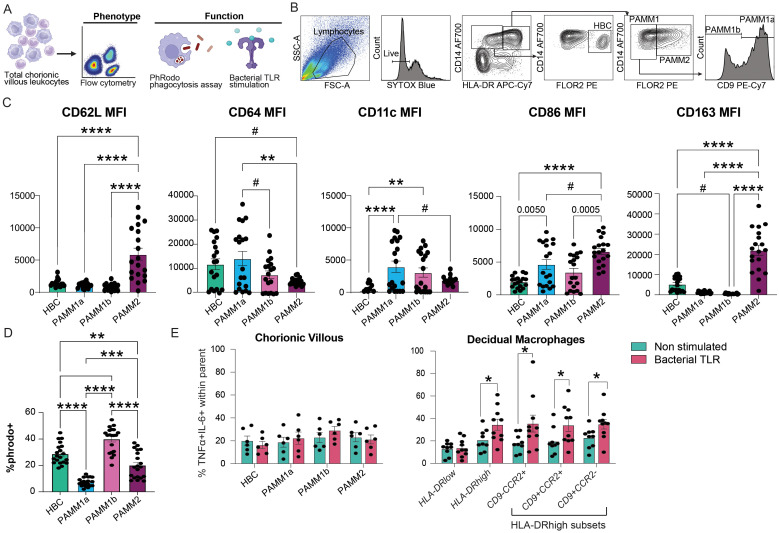
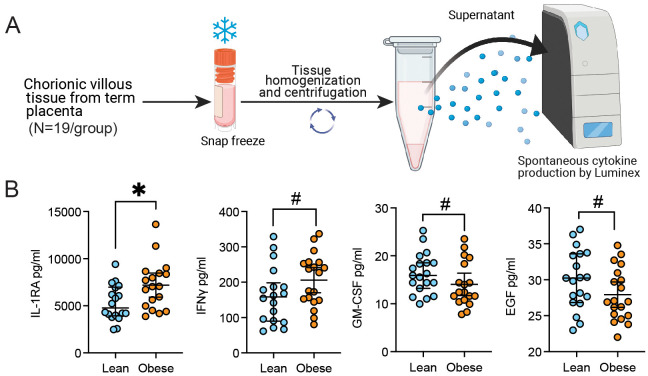
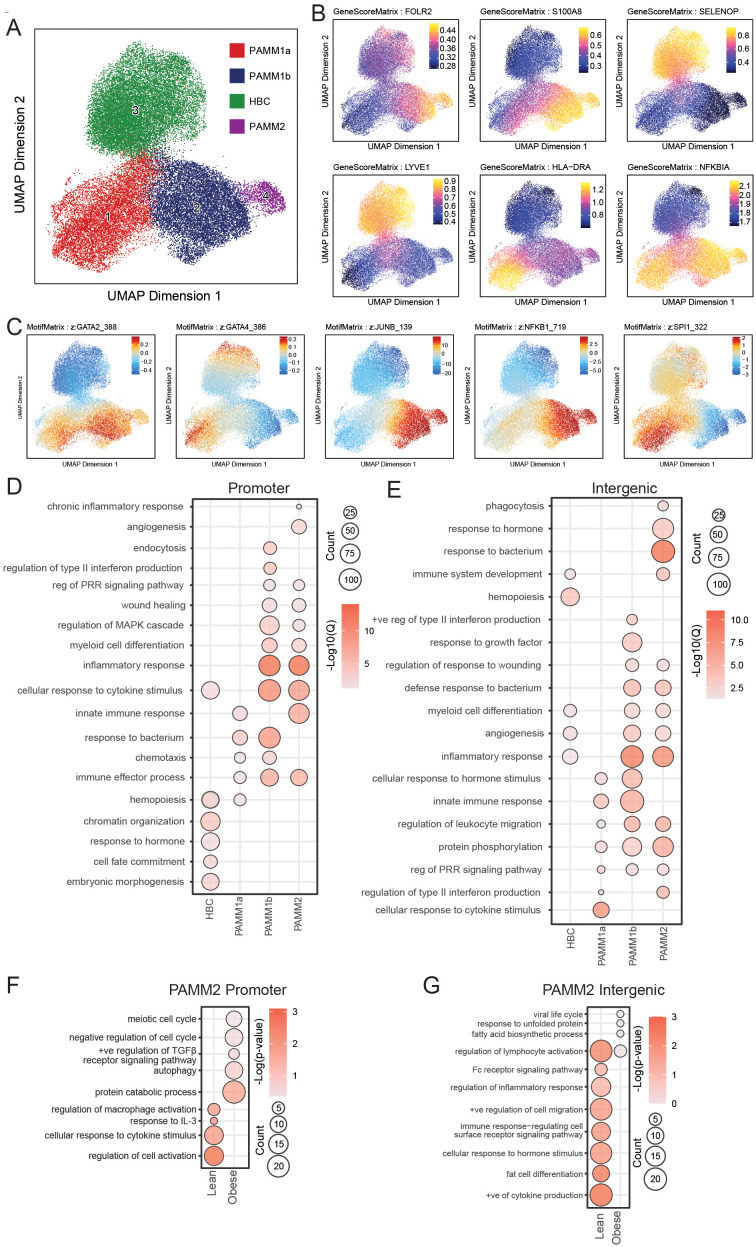
To address this knowledge gap, immune cells from human chorionic villous tissues obtained from full-term, uncomplicated pregnancies were deeply phenotyped using a combination of flow cytometry, single-cell RNA sequencing (scRNA-seq, CITE-seq) and chromatin accessibility profiling (snATAC-seq).
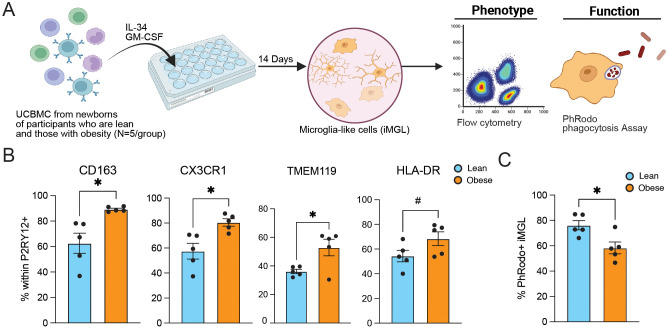
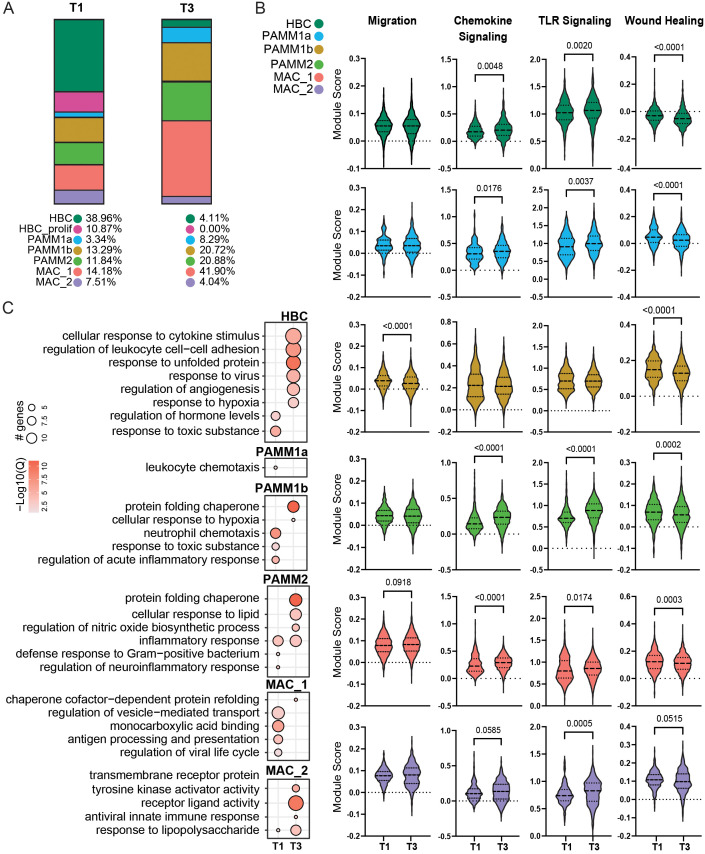
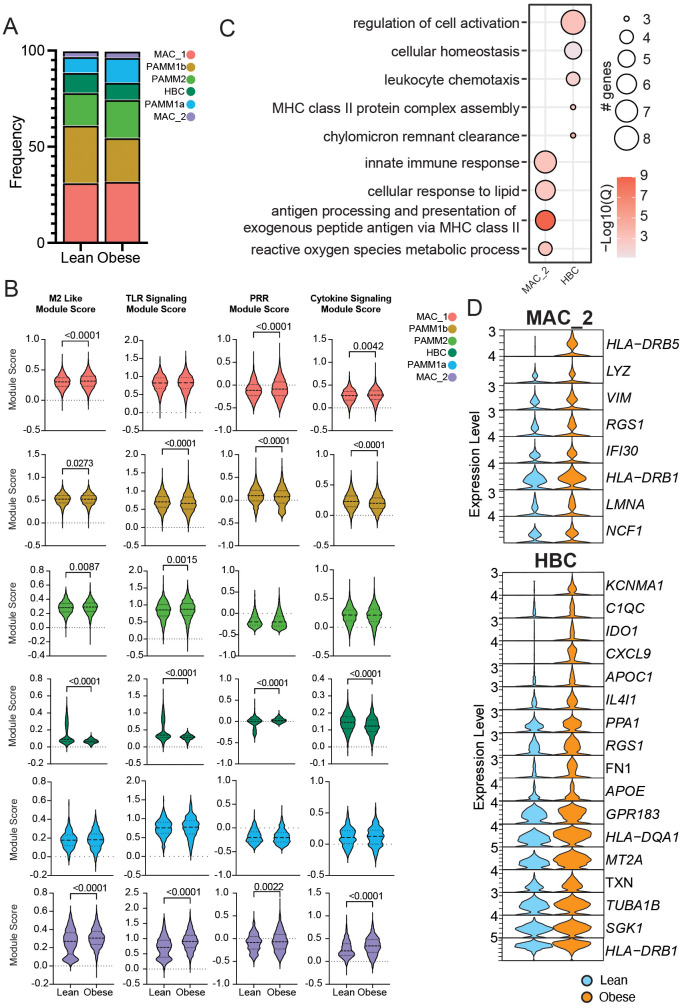
Our results indicate that, relative to the first trimester, the frequency of fetal macrophages (HBC, proliferating HBC) is significantly reduced, whereas that of infiltrating maternal monocytes/macrophages (PAMM1b, PAMM1a, PAMM2, MAC_1) increased in T3. PAMM1b and HBCs exhibit the most phagocytic capacity at term highlighting their regulatory role in tissue homeostasis in late pregnancy. The transcriptional profiles of resident villous immune subsets exhibit a heightened activation state relative to the relative to T1, likely to support labor and parturition. Additionally, we provide one of the first insights into the chromatin accessibility profile of villous myeloid cells at term. We next stratified our findings by pre-pregnancy BMI since maternal pregravid obesity is associated with several adverse pregnancy outcomes. Pregravid obesity increased inflammatory gene expression, particularly among HBC and PAMM1a subsets, but dampened the expression of antimicrobial genes, supporting a tolerant-like phenotype of chorionic villous myeloid cells. We report a decline in HBC abundance accompanied by an increase in infiltrating maternal macrophages, which aligns with reports of heightened chorionic villous inflammatory pathologies with pregravid obesity. Finally, given the shared fetal yolk-sac origin of HBCs and microglia, we leveraged an model of umbilical cord blood-derived microglia to investigate the impact of pregravid obesity on fetal neurodevelopment. Our findings reveal increased expression of activation markers albeit dampened phagocytic capacity in microglia with pregravid obesity.
Overall, our study highlights immune adaptations in the fetal chorionic villous with gestational age and pregravid obesity, as well as insight towards microglia dysfunction possibly underlying poor neurodevelopmental outcomes in offspring of women with pregravid obesity.
胎儿绒毛膜绒毛内的免疫区室由胎儿霍夫鲍尔细胞(HBC)以及侵入的胎盘相关母体单核细胞和巨噬细胞(PAMM)组成。最近的研究已经对孕早期(T1)胎盘的转录谱进行了表征;然而,足月(T3)时绒毛膜绒毛免疫细胞的表型和功能多样性仍知之甚少。
为了填补这一知识空白,我们使用流式细胞术、单细胞RNA测序(scRNA-seq、CITE-seq)和染色质可及性分析(snATAC-seq)相结合的方法,对来自足月、无并发症妊娠的人绒毛膜绒毛组织中的免疫细胞进行了深入的表型分析。
我们的结果表明,相对于孕早期,胎儿巨噬细胞(HBC、增殖性HBC)的频率显著降低,而浸润的母体单核细胞/巨噬细胞(PAMM1b、PAMM1a、PAMM2、MAC_1)在T3期增加。PAMM1b和HBC在足月时表现出最强的吞噬能力,突出了它们在妊娠晚期组织稳态中的调节作用。相对于T1期,常驻绒毛免疫亚群的转录谱表现出更高的激活状态,可能支持分娩和产程。此外,我们首次对足月时绒毛髓样细胞的染色质可及性谱有了一定的了解。接下来,我们根据孕前BMI对研究结果进行分层,因为孕前肥胖与多种不良妊娠结局相关。孕前肥胖增加了炎症基因的表达,特别是在HBC和PAMM1a亚群中,但抑制了抗菌基因的表达,支持绒毛膜绒毛髓样细胞的类似耐受的表型。我们报告HBC丰度下降,同时浸润的母体巨噬细胞增加,这与孕前肥胖时绒毛膜绒毛炎症病理增加的报道一致。最后,鉴于HBC和小胶质细胞具有共同的胎儿卵黄囊起源,我们利用脐带血来源的小胶质细胞模型来研究孕前肥胖对胎儿神经发育的影响。我们的研究结果显示,孕前肥胖的小胶质细胞中激活标志物的表达增加,尽管吞噬能力受到抑制。
总体而言,我们的研究突出了胎儿绒毛膜绒毛随孕周和孕前肥胖的免疫适应性,以及对孕前肥胖女性后代可能存在的神经发育不良结局潜在的小胶质细胞功能障碍的见解。