An Lingyue, Li Shujue, Chang Zhenglin, Lei Min, He Zhican, Xu Peng, Zhang Shike, Jiang Zheng, Iqbal Muhammad Sarfaraz, Sun Xinyuan, Liu Hongxing, Duan Xiaolu, Wu Wenqi
Department of Urology, The Second Affiliated Hospital of Guangzhou Medical University, Guangzhou, Guangdong, China.
Guangdong Key Laboratory of Urology, The First Affiliated Hospital of Guangzhou Medical University, Guangzhou, China.
Gut Microbes. 2025 Dec;17(1):2457490. doi: 10.1080/19490976.2025.2457490. Epub 2025 Jan 28.
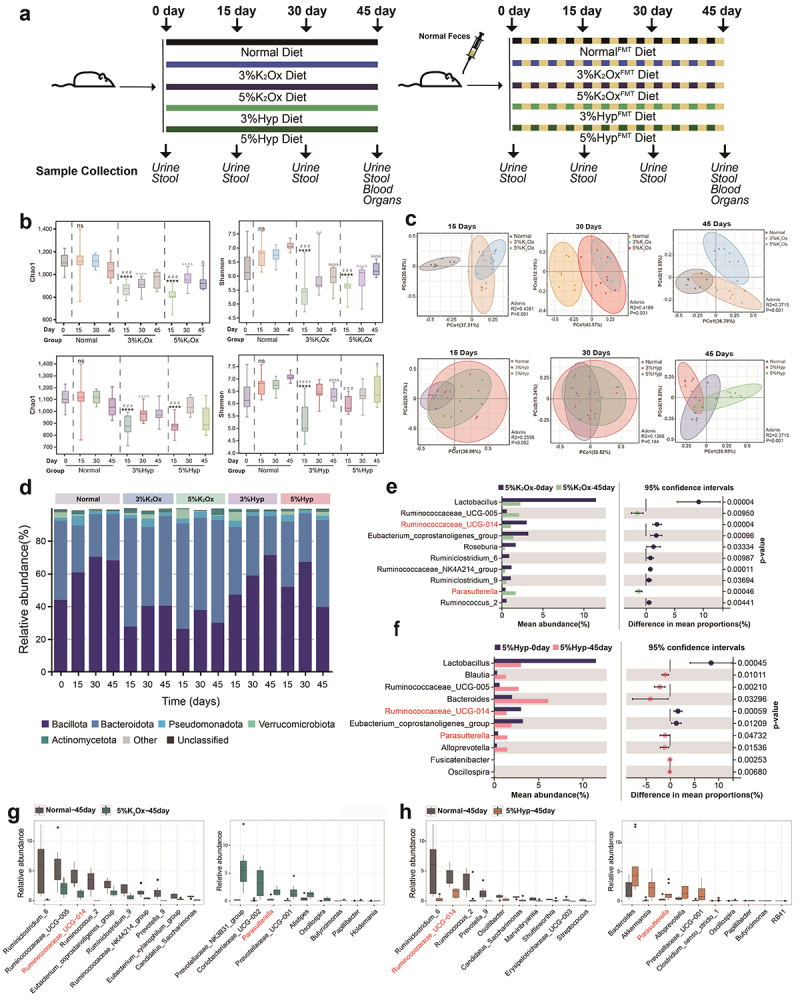
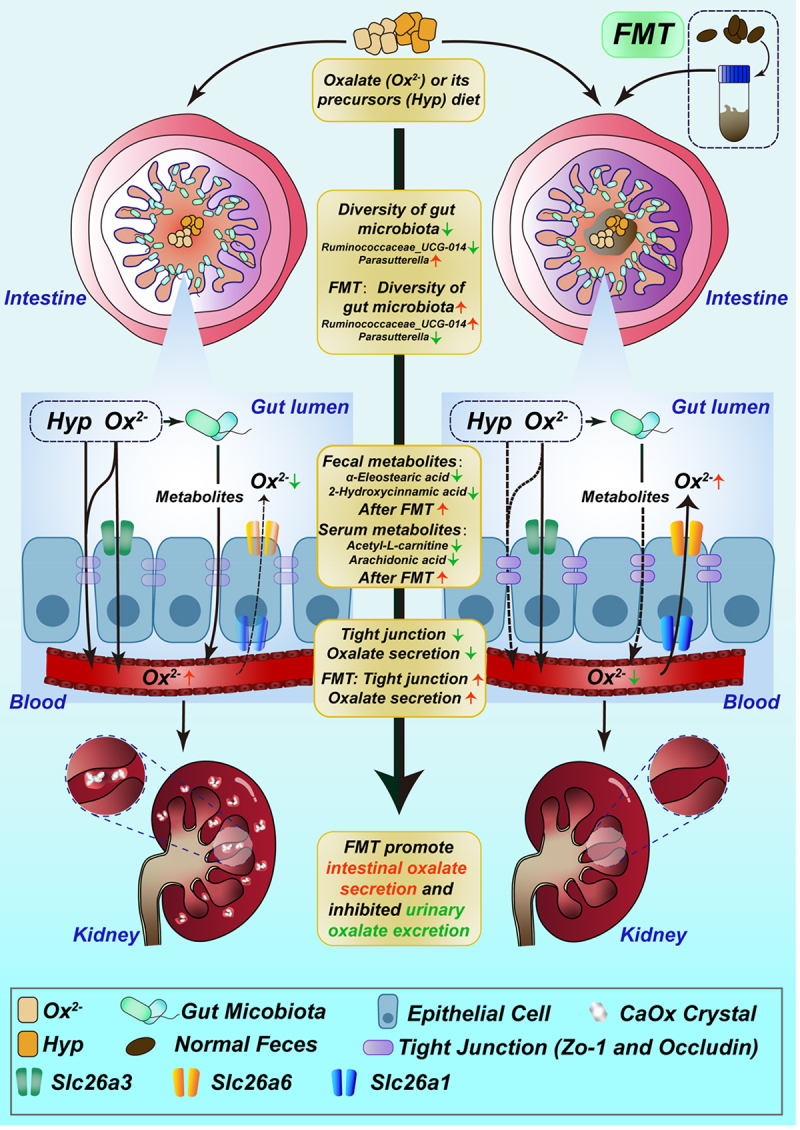
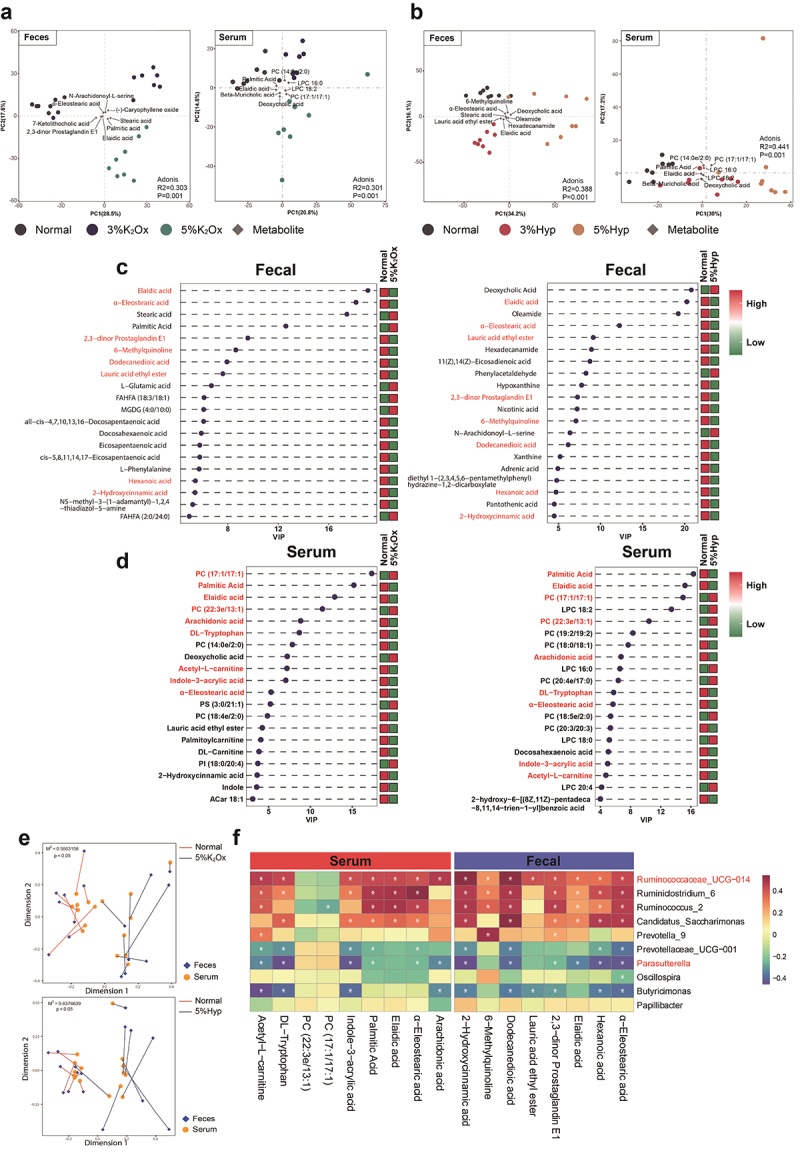
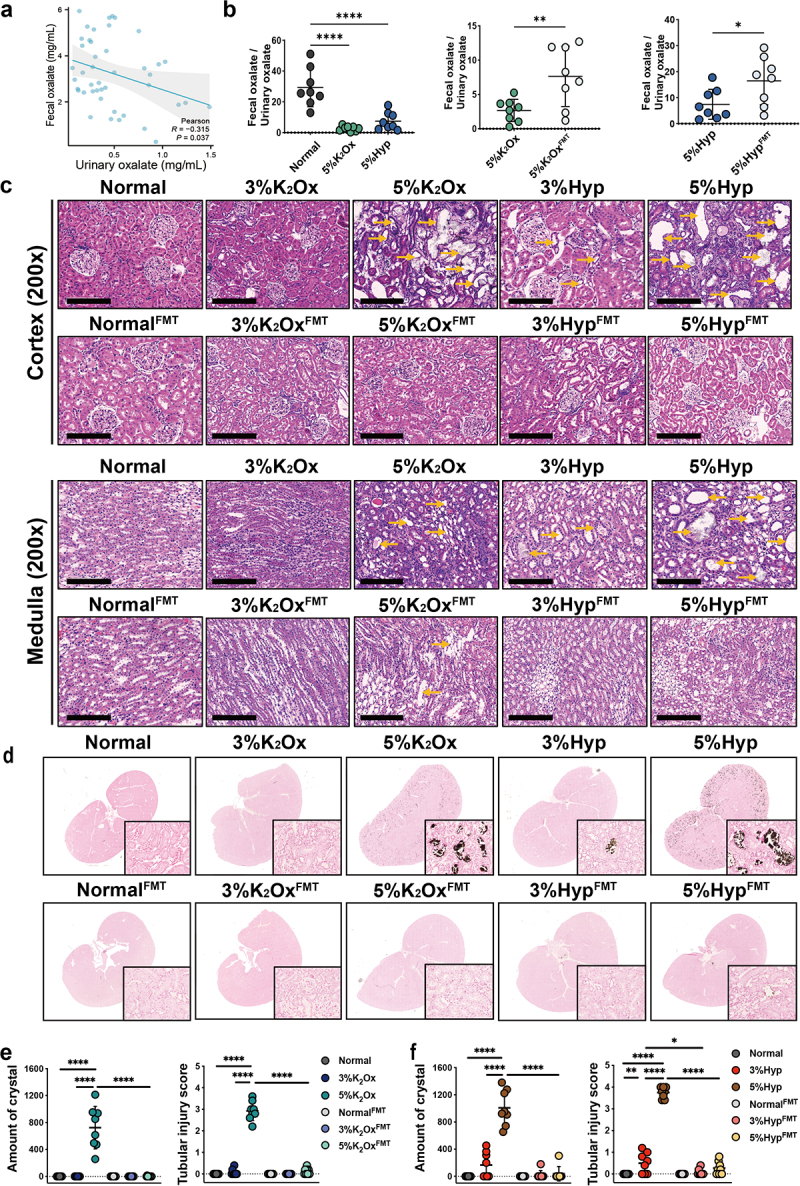
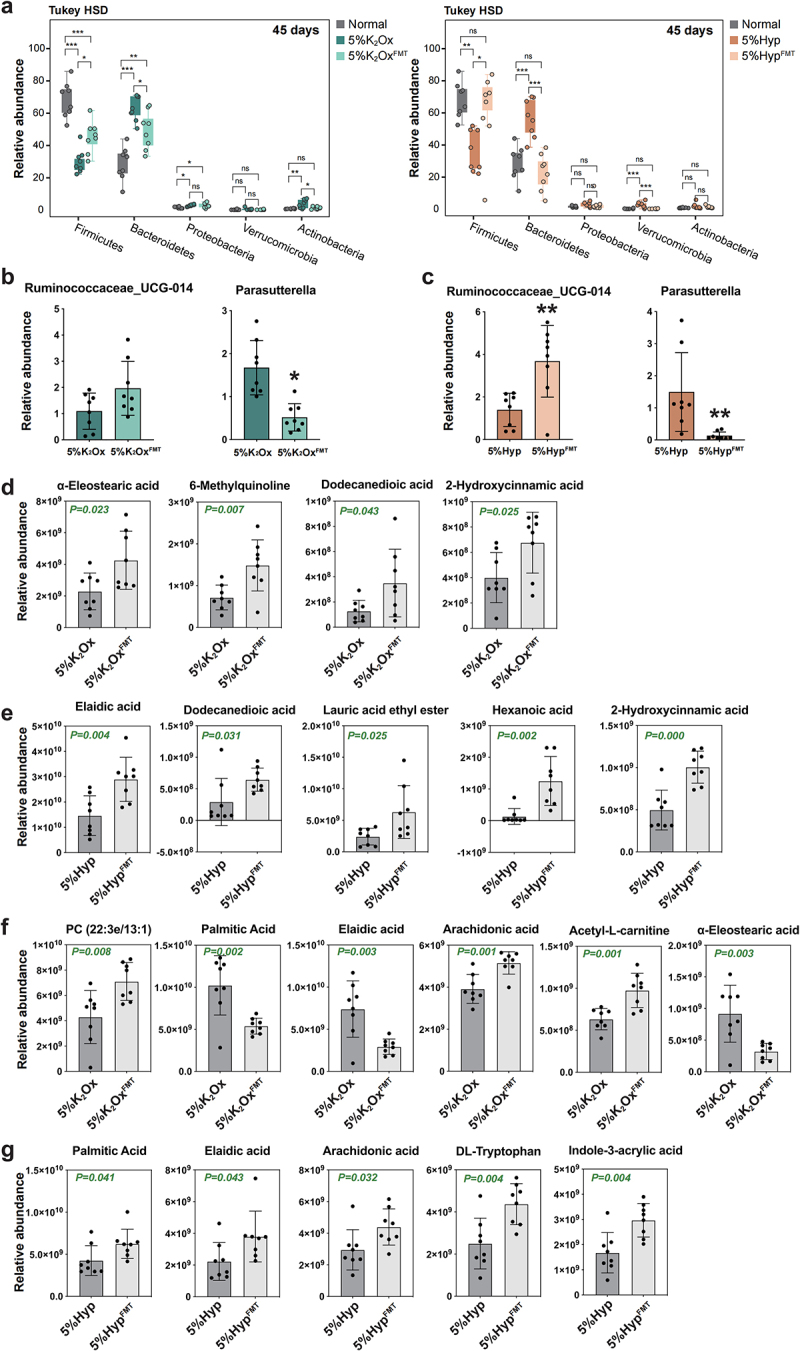
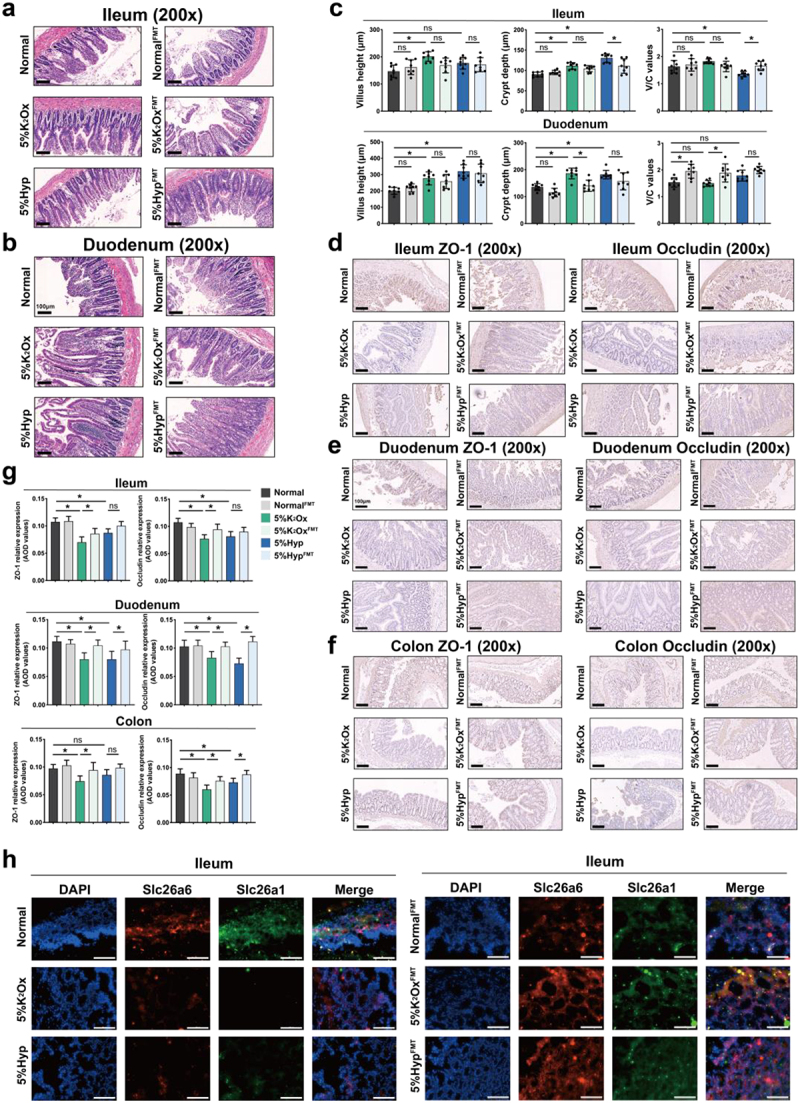
Hyperoxaluria, including primary and secondary hyperoxaluria, is a disorder characterized by increased urinary oxalate excretion and could lead to recurrent calcium oxalate kidney stones, nephrocalcinosis and eventually end stage renal disease. For secondary hyperoxaluria, high dietary oxalate (HDOx) or its precursors intake is a key reason. Recently, accumulated studies highlight the important role of gut microbiota in the regulation of oxalate homeostasis. However, the underlying mechanisms involving gut microbiota and metabolite disruptions in secondary hyperoxaluria remain poorly understood. Here, we investigated the therapeutic efficacy of fecal microbiota transplantation (FMT) sourced from healthy rats fed with standard pellet diet against urinary oxalate excretion, renal damage and calcium oxalate (CaOx) crystal depositions via using hyperoxaluria rat models. We observed dose-dependent increases in urinary oxalate excretion and CaOx crystal depositions due to hyperoxaluria, accompanied by significant reductions in gut microbiota diversity characterized by shifts in and composition. Metabolomic analysis validated these findings, revealing substantial decreases in key metabolites associated with these microbial groups. Transplanting microbes from healthy rats effectively reduced HDOx-induced urinary oxalate excretion and CaOx crystal depositions meanwhile restoring and populations and their associated metabolites. Furthermore, FMT treatment could significantly decrease the urinary oxalate excretion and CaOx crystal depositions in rat kidneys via, at least in part, upregulating the expressions of intestinal barrier proteins and oxalate transporters in the intestine. In conclusion, our study emphasizes the effectiveness of FMT in countering HDOx-induced hyperoxaluria by restoring gut microbiota and related metabolites. These findings provide insights on the complex connection between secondary hyperoxaluria caused by high dietary oxalate and disruptions in gut microbiota, offering promising avenues for targeted therapeutic strategies.
高草酸尿症,包括原发性和继发性高草酸尿症,是一种以尿草酸排泄增加为特征的疾病,可导致复发性草酸钙肾结石、肾钙质沉着症,并最终发展为终末期肾病。对于继发性高草酸尿症,高膳食草酸盐(HDOx)或其前体的摄入是一个关键原因。最近,越来越多的研究强调了肠道微生物群在草酸稳态调节中的重要作用。然而,继发性高草酸尿症中涉及肠道微生物群和代谢物破坏的潜在机制仍知之甚少。在这里,我们通过使用高草酸尿症大鼠模型,研究了来自喂食标准颗粒饲料的健康大鼠的粪便微生物群移植(FMT)对尿草酸排泄、肾损伤和草酸钙(CaOx)晶体沉积的治疗效果。我们观察到,由于高草酸尿症,尿草酸排泄和CaOx晶体沉积呈剂量依赖性增加,同时肠道微生物群多样性显著降低,其特征是[具体微生物种类1]和[具体微生物种类2]组成发生变化。代谢组学分析验证了这些发现,揭示了与这些微生物群相关的关键代谢物大幅减少。移植来自健康大鼠的微生物可有效减少HDOx诱导的尿草酸排泄和CaOx晶体沉积,同时恢复[具体微生物种类1]和[具体微生物种类2]种群及其相关代谢物。此外,FMT治疗可至少部分通过上调肠道屏障蛋白和肠道草酸转运蛋白的表达,显著降低大鼠肾脏中的尿草酸排泄和CaOx晶体沉积。总之,我们的研究强调了FMT通过恢复肠道微生物群和相关代谢物来对抗HDOx诱导的高草酸尿症的有效性。这些发现为高膳食草酸盐引起的继发性高草酸尿症与肠道微生物群破坏之间的复杂联系提供了见解,为靶向治疗策略提供了有前景的途径。