Nephrology, Dialysis and Transplantation Unit, Department of Precision and Regenerative Medicine and Ionian Area (DiMePRe-J), University of Bari "Aldo Moro", Piazza G. Cesare 11, 70124 Bari, Italy.
Toxins (Basel). 2023 Jan 31;15(2):115. doi: 10.3390/toxins15020115.
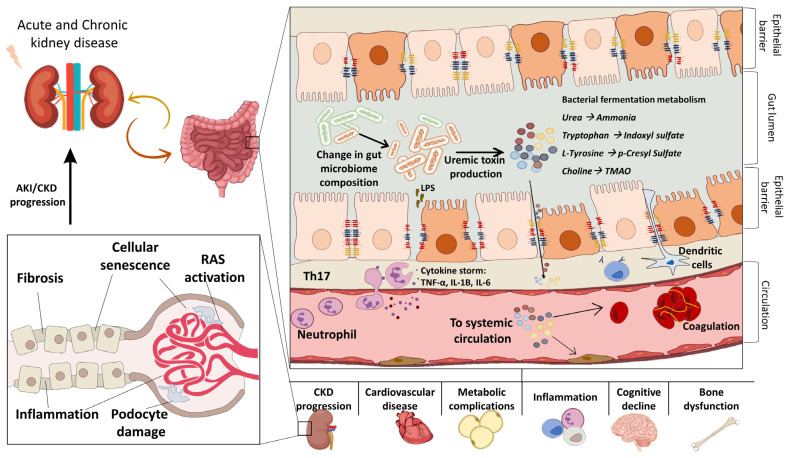
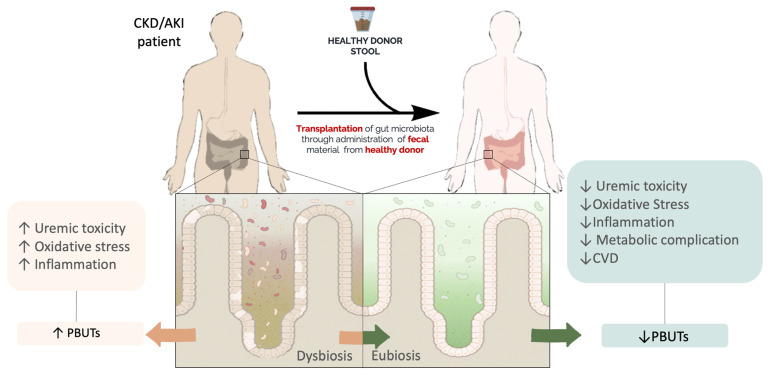
During the past decades, the gut microbiome emerged as a key player in kidney disease. Dysbiosis-related uremic toxins together with pro-inflammatory mediators are the main factors in a deteriorating kidney function. The toxicity of uremic compounds has been well-documented in a plethora of pathophysiological mechanisms in kidney disease, such as cardiovascular injury (CVI), metabolic dysfunction, and inflammation. Accumulating data on the detrimental effect of uremic solutes in kidney disease supported the development of many strategies to restore eubiosis. Fecal microbiota transplantation (FMT) spread as an encouraging treatment for different dysbiosis-associated disorders. In this scenario, flourishing studies indicate that fecal transplantation could represent a novel treatment to reduce the uremic toxins accumulation. Here, we present the state-of-the-art concerning the application of FMT on kidney disease to restore eubiosis and reverse the retention of uremic toxins.
在过去几十年中,肠道微生物组已成为肾脏病的关键因素。与菌群失调相关的尿毒症毒素和促炎介质是导致肾功能恶化的主要因素。尿毒症化合物的毒性在肾脏病的许多病理生理机制中已有充分的记录,如心血管损伤(CVI)、代谢功能障碍和炎症。越来越多的关于尿毒症溶质在肾脏病中的有害作用的数据支持了许多恢复正常菌群的策略的发展。粪便微生物群移植(FMT)作为一种治疗多种与菌群失调相关疾病的有效方法得到了广泛应用。在这种情况下,大量研究表明粪便移植可能是一种减少尿毒症毒素积累的新治疗方法。在这里,我们介绍了粪便移植在肾脏病中应用的最新进展,以恢复正常菌群并逆转尿毒症毒素的蓄积。