Cheng Ling, Meliala Ian, Kong Yidi, Chen Jingyuan, Proud Christopher G, Björklund Mikael
Centre for Cellular Biology and Signalling, Zhejiang University-University of Edinburgh (ZJU-UoE) Institute, Haining, China.
Lifelong Health, South Australian Health & Medical Research Institute, Adelaide, Australia.
Elife. 2025 Jan 29;13:RP102852. doi: 10.7554/eLife.102852.
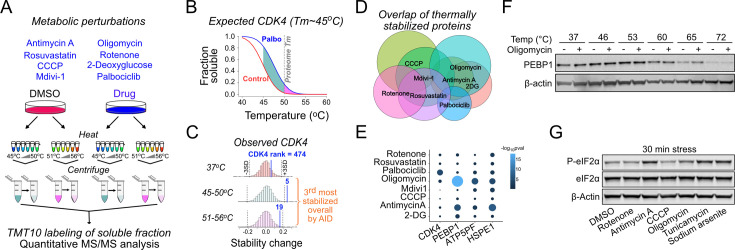
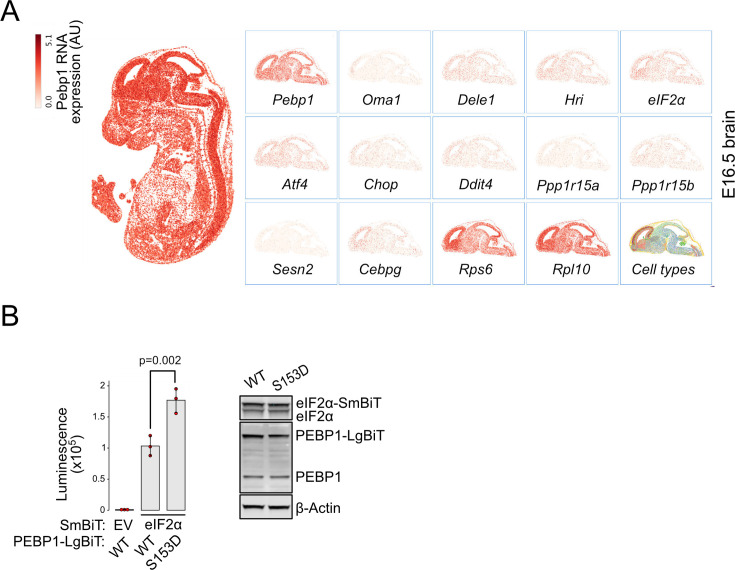
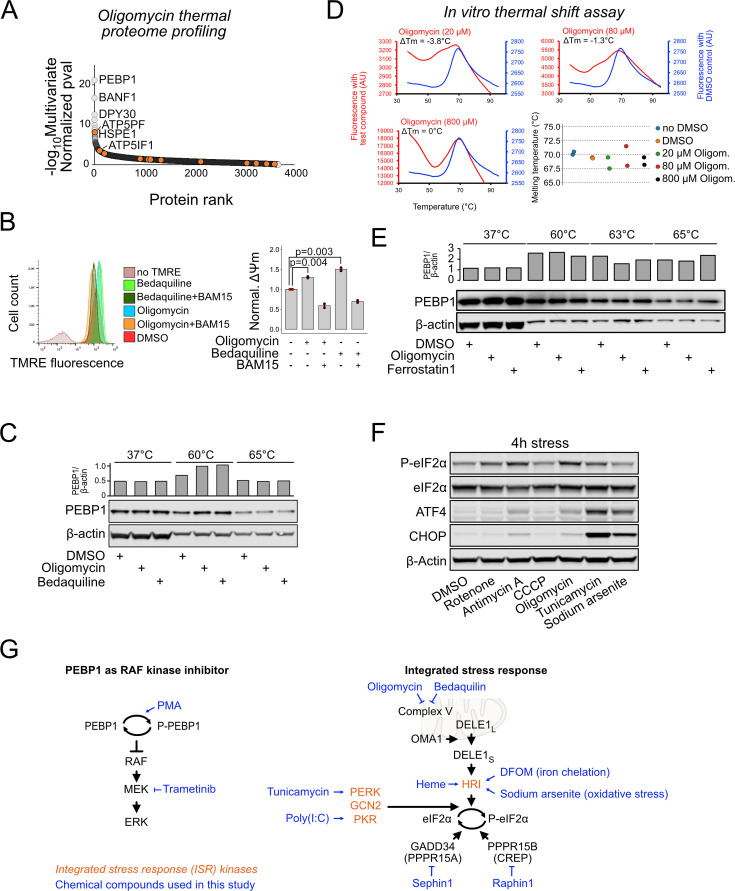
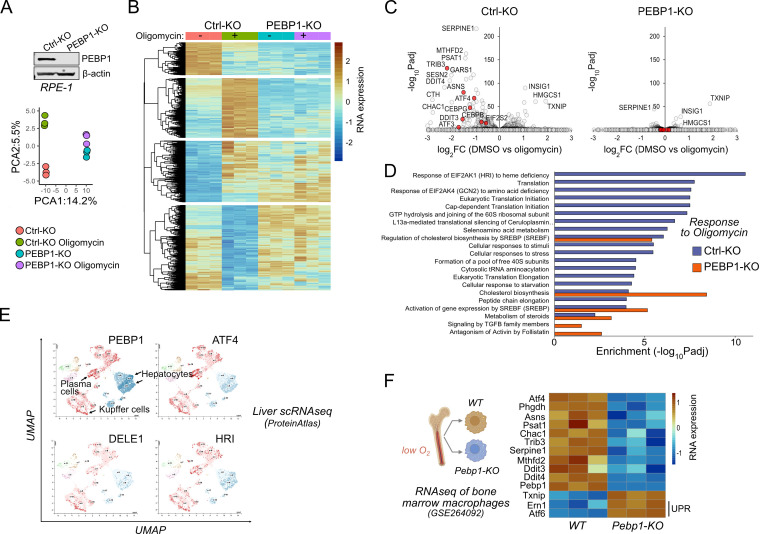
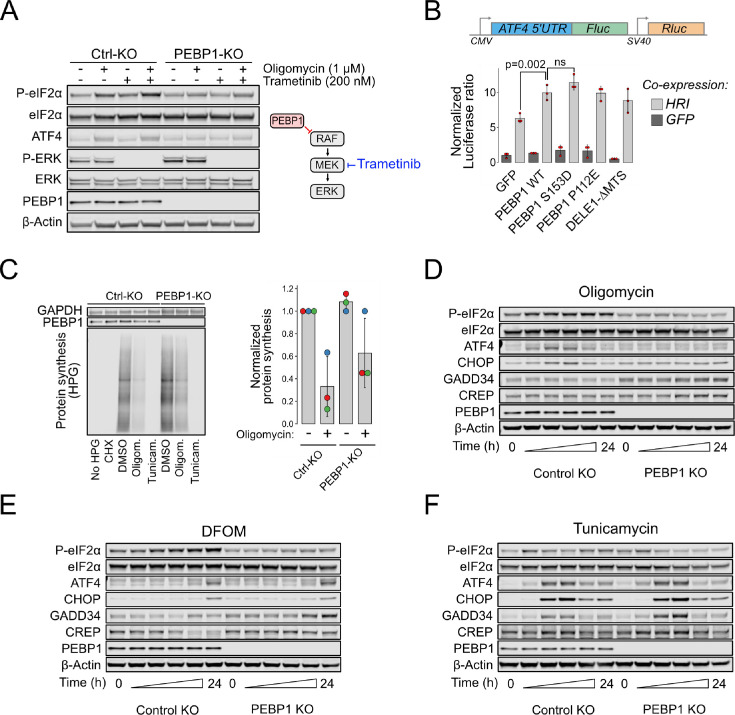
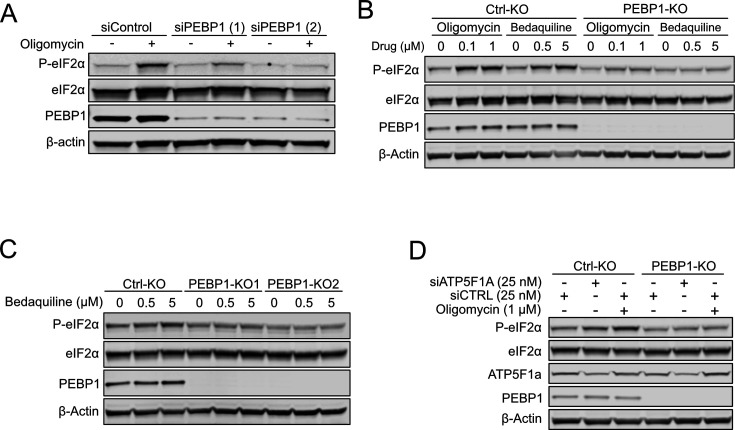
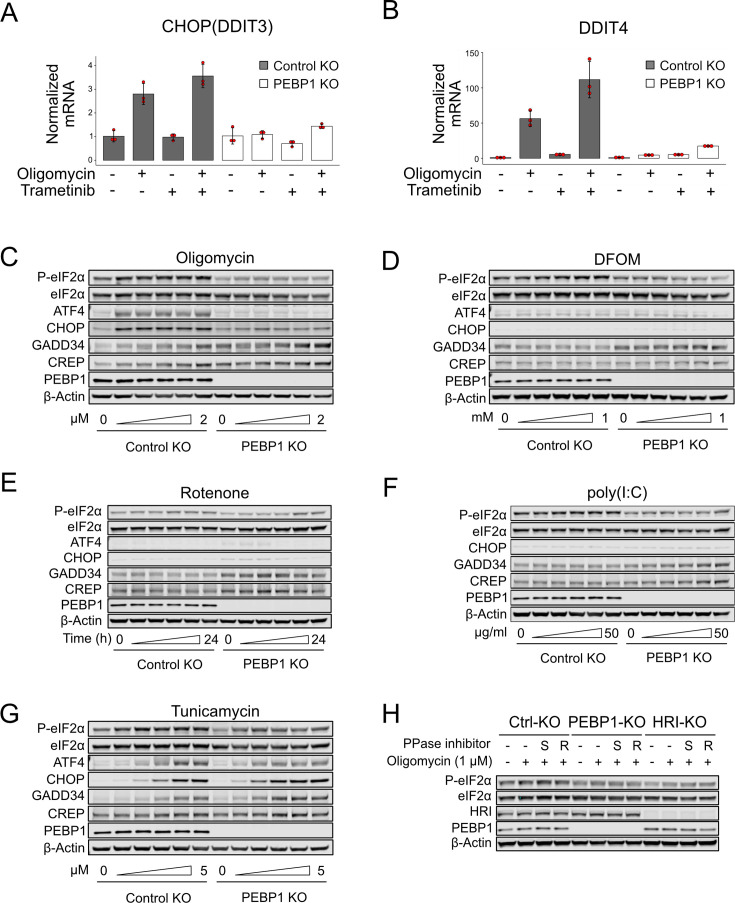
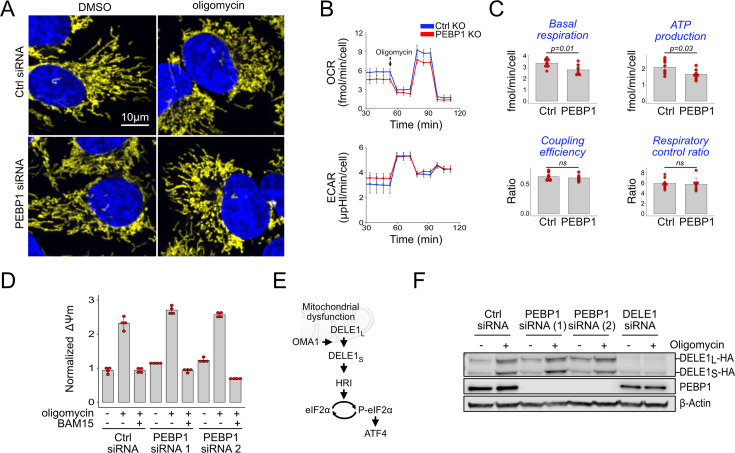
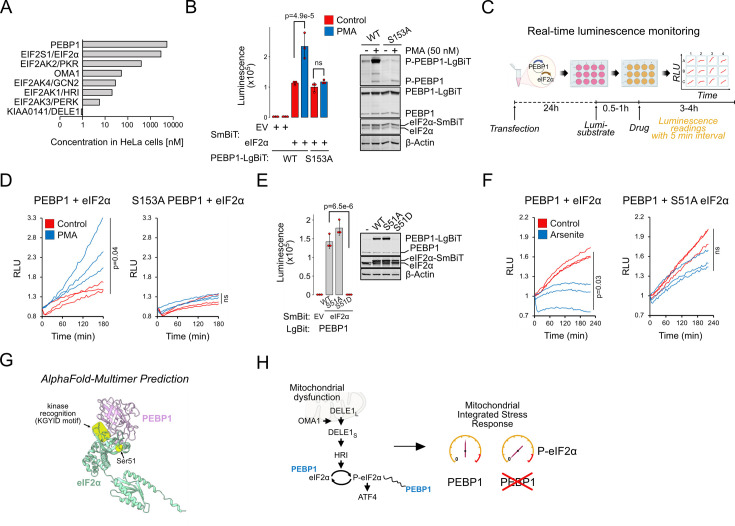
Mitochondrial dysfunction is involved in numerous diseases and the aging process. The integrated stress response (ISR) serves as a critical adaptation mechanism to a variety of stresses, including those originating from mitochondria. By utilizing mass spectrometry-based cellular thermal shift assay (MS-CETSA), we uncovered that phosphatidylethanolamine-binding protein 1 (PEBP1), also known as Raf kinase inhibitory protein (RKIP), is thermally stabilized by stresses which induce mitochondrial ISR. Depletion of PEBP1 impaired mitochondrial ISR activation by reducing eukaryotic translation initiation factor 2α (eIF2α) phosphorylation and subsequent ISR gene expression, which was independent of PEBP1's role in inhibiting the RAF/MEK/ERK pathway. Consistently, overexpression of PEBP1 potentiated ISR activation by heme-regulated inhibitor (HRI) kinase, the principal eIF2α kinase in the mitochondrial ISR pathway. Real-time interaction analysis using luminescence complementation in live cells revealed an interaction between PEBP1 and eIF2α, which was disrupted by eIF2α S51 phosphorylation. These findings suggest a role for PEBP1 in amplifying mitochondrial stress signals, thereby facilitating an effective cellular response to mitochondrial dysfunction. Therefore, PEBP1 may be a potential therapeutic target for diseases associated with mitochondrial dysfunction.
线粒体功能障碍与多种疾病及衰老过程相关。综合应激反应(ISR)是细胞对包括源自线粒体的多种应激的关键适应机制。通过基于质谱的细胞热迁移分析(MS-CETSA),我们发现磷脂酰乙醇胺结合蛋白1(PEBP1),也称为Raf激酶抑制蛋白(RKIP),在诱导线粒体ISR的应激下热稳定性增强。PEBP1的缺失通过降低真核翻译起始因子2α(eIF2α)磷酸化及随后的ISR基因表达而损害线粒体ISR激活,这与PEBP1在抑制RAF/MEK/ERK途径中的作用无关。同样,PEBP1的过表达增强了血红素调节抑制剂(HRI)激酶(线粒体ISR途径中的主要eIF2α激酶)介导的ISR激活。利用活细胞中的发光互补进行实时相互作用分析揭示了PEBP1与eIF2α之间的相互作用,该相互作用被eIF2α S51磷酸化破坏。这些发现表明PEBP1在放大线粒体应激信号中起作用,从而促进细胞对线粒体功能障碍的有效反应。因此,PEBP1可能是与线粒体功能障碍相关疾病的潜在治疗靶点。