Citeroni-Clark Natasha L, D'Angelo Stefania, Crozier Sarah R, Kermack Alexandra, Godfrey Keith M, Cooper Cyrus, Harvey Nicholas C, Moon Rebecca J
MRC Lifecourse Epidemiology Centre, University of Southampton, Southampton General Hospital, Tremona Road, Southampton, SO16 6YD, UK.
MRC Lifecourse Epidemiology Centre, MRC Versus Arthritis Centre for Musculoskeletal Health and Work, University of Southampton, Southampton, UK.
Arch Gynecol Obstet. 2025 Apr;311(4):941-949. doi: 10.1007/s00404-025-07958-z. Epub 2025 Jan 30.
Observational studies have suggested negative associations between maternal 25-hydroxyvitamin D (25(OH)D) status and risk of hypertensive disorders of pregnancy [pregnancy-induced hypertension (PIH) and preeclampsia (PET)]. Data from intervention studies are limited. We hypothesised that vitamin D supplementation would lower maternal blood pressure (BP) during pregnancy and reduce the incidence of hypertensive disorders of pregnancy.
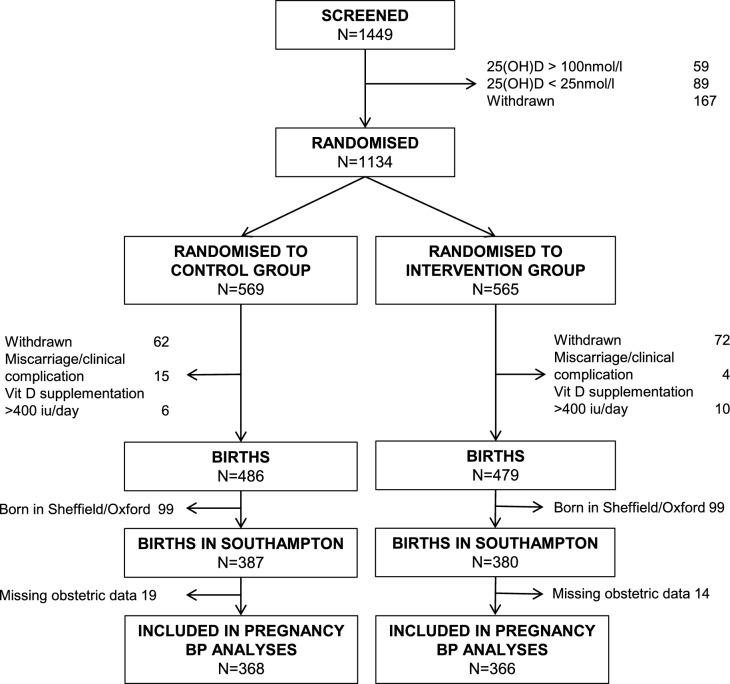
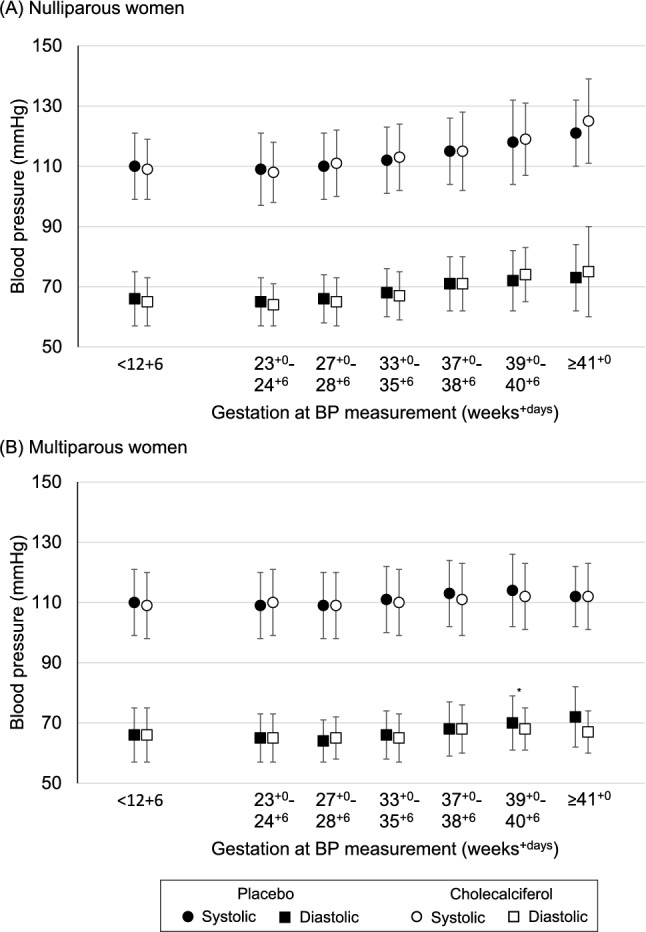
The Maternal Vitamin D Osteoporosis Study (MAVIDOS) was a randomised placebo-controlled trial. Pregnant women with a baseline 25(OH)D of 25-100 nmol/l were randomized to either 1000 IU/day cholecalciferol or placebo from 14 to 17 weeks' gestation until delivery. BP recordings documented during routine clinical pregnancy care were obtained from clinical records and grouped into gestational windows based on the schedule for routine antenatal care in the United Kingdom (23-24, 27-28, 33-35, 37-38, 39-40 and ≥ 41 weeks). Systolic and diastolic BP measurements in these gestational windows were compared between randomisation groups. Diagnoses of PIH or PET (in accordance with national guidelines) and the use of antihypertensive agents were also noted and compared between groups.
Data for 734 women (366 cholecalciferol, 368 placebo) were included. Maternal mean systolic and diastolic BP did not differ between the randomization groups at any of the gestations studied. The incidences of PIH (placebo 1.6%, cholecalciferol 3.6%, p = 0.10) and PET (placebo 3.3%, cholecalciferol 3.8%, p = 0.68) were similar between the two groups.
Gestational vitamin D supplementation with 1000 IU/day from 14 to 17 weeks gestation did not lower maternal BP or reduce the incidences of PIH or PET in this trial.
观察性研究表明,孕妇25-羟维生素D(25(OH)D)水平与妊娠高血压疾病[妊娠高血压(PIH)和子痫前期(PET)]风险之间存在负相关。干预研究的数据有限。我们假设补充维生素D可降低孕期孕妇血压(BP)并降低妊娠高血压疾病的发生率。
孕妇维生素D与骨质疏松症研究(MAVIDOS)是一项随机安慰剂对照试验。基线25(OH)D为25-100 nmol/l的孕妇从妊娠14至17周开始随机分为每日服用1000 IU胆钙化醇组或安慰剂组,直至分娩。从临床记录中获取常规临床孕期护理期间记录的血压值,并根据英国常规产前检查时间表(23-24、27-28、33-35、37-38、39-40及≥41周)分为不同孕周组。比较随机分组组之间这些孕周组的收缩压和舒张压测量值。还记录并比较两组中PIH或PET的诊断情况(根据国家指南)以及降压药物的使用情况。
纳入了734名女性的数据(366名胆钙化醇组,368名安慰剂组)。在任何研究孕周,随机分组组之间孕妇的平均收缩压和舒张压均无差异。两组之间PIH的发生率(安慰剂组1.6%,胆钙化醇组3.6%,p = 0.10)和PET的发生率(安慰剂组3.3%,胆钙化醇组3.8%,p = 0.68)相似。
在本试验中,妊娠14至17周期间每日补充1000 IU维生素D并不能降低孕妇血压或降低PIH或PET的发生率。