Xie Wen-Long, Xiang Dao-Chun, Li Yuan-Yuan, Ge Meng-Lan, Deng Ai-Ping
Department of Pharmacy, The Central Hospital of Wuhan, Tongji Medical College, Huazhong University of Science and Technology, Wuhan, 430014, China.
BMC Pharmacol Toxicol. 2025 Jan 30;26(1):24. doi: 10.1186/s40360-025-00858-7.
A number of pharmaceuticals, including antidepressants and antiepileptics, have a strong correlation with suicide risk. However, it is not entirely clear which of these medications are more strongly associated with suicide-related behaviors.
This study aims to elucidate the drugs responsible for drug-associated suicidal ideation or self-injurious, recognizing the severe consequences associated with such outcomes. However, it is not entirely clear which specific medications are associated with higher levels of suicide-related behavior. Real-world data from the FDA adverse event reporting system database were analyzed to identify medications correlated with suicidal ideation or self-injurious.
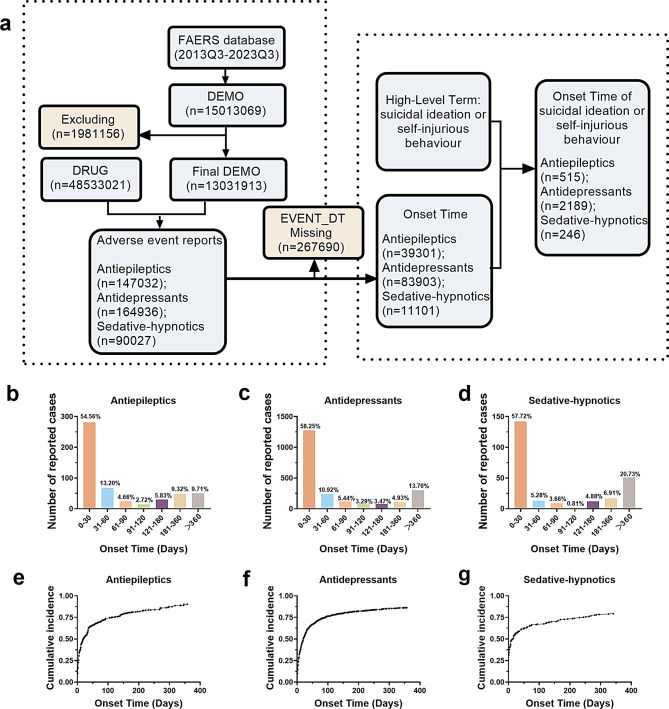
The reporting intensity of the High-Level Term "suicidal ideation or self-injurious behavior" and its Preferred Terms across distinct categories was assessed using the Reporting Odds Ratio (ROR) and Proportional Reporting Ratio (PRR).
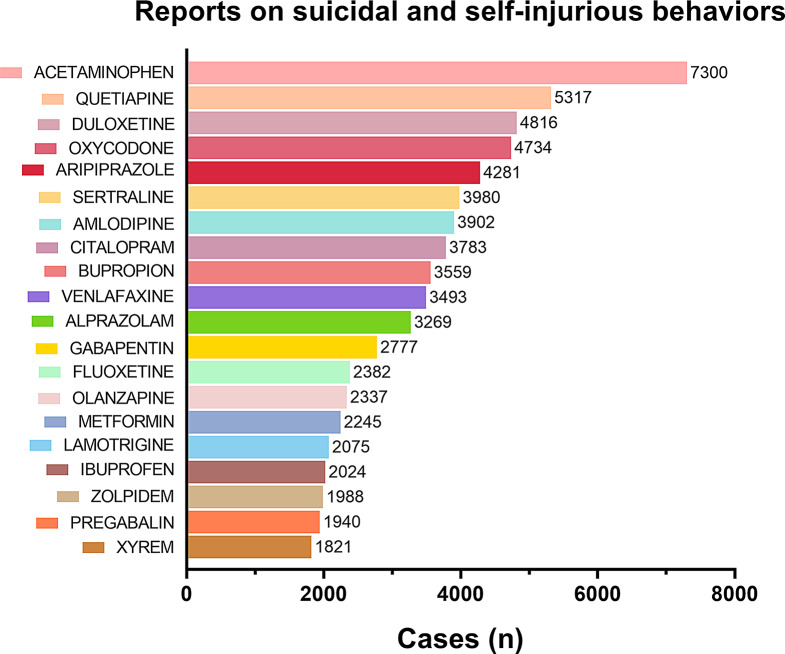
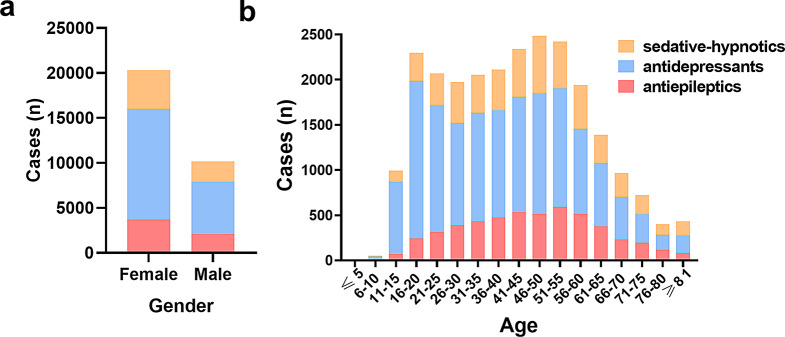
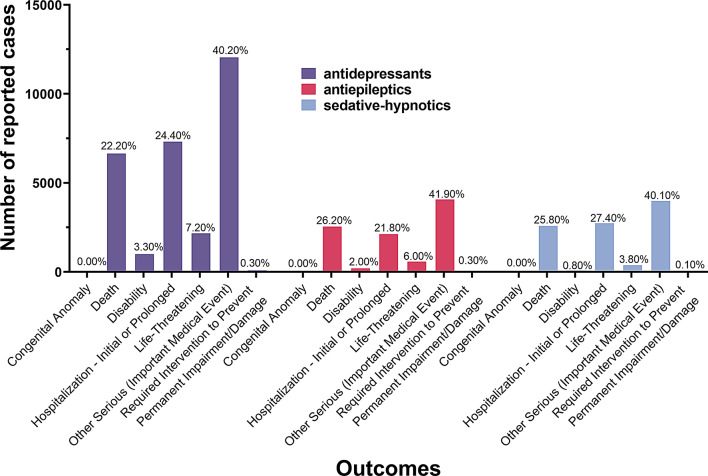
We identified the top 20 drugs with the highest reporting frequencies, spanning sedative-hypnotics, antidepressants, antipsychotics, antiepileptics, antihypertensives, antipyretic/analgesic drugs, and antihyperglycemic drugs. Ranking these medications according to ROR, the top five medications with ROR values related to suicidal ideation or self-injurious were alprazolam, zolpidem, amphetamine, quetiapine, and fluoxetine. Further analysis showed that suicide-related adverse events were more frequently reported in females. Antiepileptics had the highest frequency of reported adverse events in the 51-55 year age group, compared to 16-20 years for antidepressants and 46-50 years for sedative-hypnotics.
Our study provides valuable information for clinical drug selection by presenting a potential list of medication classes commonly associated with drug-associated suicidal ideation or self-injurious behavior. We observed a large number of adverse event reports of suicidal ideation with duloxetine and relatively few reports of suicide attempts. Acetaminophen and amlodipine had substantial adverse event reports of completed suicides, but may not be associated with drug-induced suicidal behavior. On the other hand, some drugs mentioned in this study, such as quetiapine, aripiprazole, and lamotrigine, are recommended to be used after assessing the risk level of suicide in patients.
包括抗抑郁药和抗癫痫药在内的多种药物与自杀风险密切相关。然而,目前尚不完全清楚这些药物中哪些与自杀相关行为的关联更强。
本研究旨在明确导致药物相关自杀意念或自我伤害行为的药物,同时认识到此类结果所带来的严重后果。然而,具体哪些特定药物与更高水平的自杀相关行为相关尚不完全清楚。对来自美国食品药品监督管理局(FDA)不良事件报告系统数据库的真实世界数据进行分析,以确定与自杀意念或自我伤害行为相关的药物。
使用报告比值比(ROR)和比例报告比(PRR)评估“自杀意念或自我伤害行为”这一高级术语及其在不同类别中的首选术语的报告强度。
我们确定了报告频率最高的前20种药物,涵盖镇静催眠药、抗抑郁药、抗精神病药、抗癫痫药、抗高血压药、解热镇痛药和抗高血糖药。根据ROR对这些药物进行排名,ROR值与自杀意念或自我伤害行为相关的前五种药物是阿普唑仑、唑吡坦、苯丙胺、喹硫平和氟西汀。进一步分析表明,女性报告的自杀相关不良事件更为频繁。在51 - 55岁年龄组中,抗癫痫药报告不良事件的频率最高,而抗抑郁药在16 - 20岁年龄组中报告不良事件的频率最高,镇静催眠药在46 - 50岁年龄组中报告不良事件的频率最高。
我们的研究通过列出一份通常与药物相关自杀意念或自我伤害行为相关的潜在药物类别清单,为临床药物选择提供了有价值的信息。我们观察到度洛西汀有大量关于自杀意念的不良事件报告,而自杀未遂的报告相对较少。对乙酰氨基酚和氨氯地平有大量关于自杀完成的不良事件报告,但可能与药物诱导的自杀行为无关。另一方面,本研究中提到的一些药物,如喹硫平、阿立哌唑和拉莫三嗪,建议在评估患者自杀风险水平后使用。